

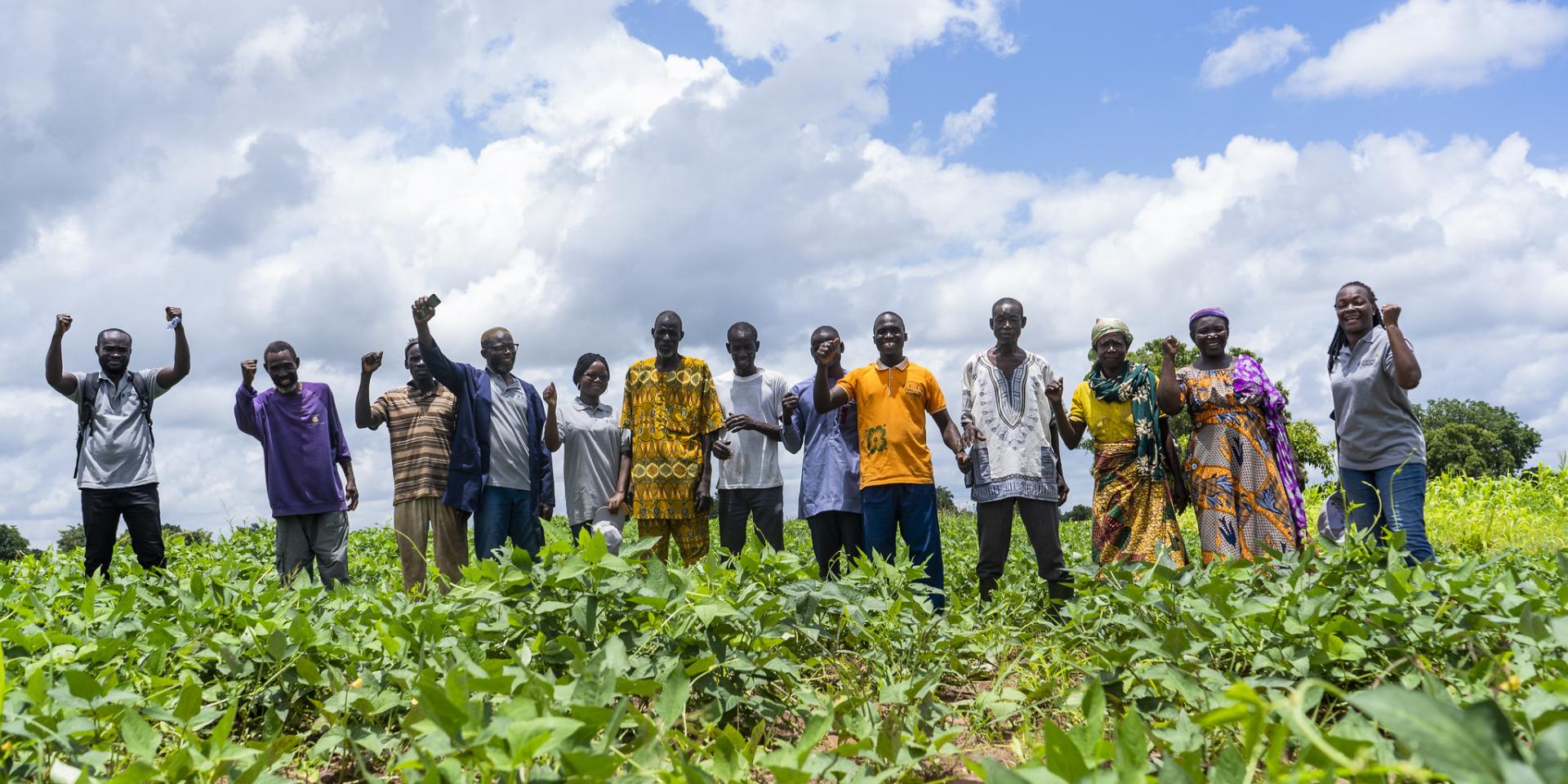
For decades agriculture remains one of the largest drivers of Ghana’s job sector, accounting for more than a third of the country’s total workforce. However employment growth in the sector is lagging behind other parts of the economy.
According to the 2026 Productivity, Employment and Growth Report by the Ghana Statistical Service (GSS), produced in collaboration with the International Labour Organization, agriculture accounted for 37.1 per cent of employment in 2025, compared with 44.9 per cent in services and 18 per cent in industry.
Manufacturing alone recorded 11.6 per cent of total employment.
The figures highlight a growing challenge for Ghana’s labour market: ensuring that productivity gains and economic expansion translate into more jobs and better incomes in sectors that employ a significant share of the population.
Between 2013 and 2025, information and communication recorded the fastest productivity growth, at more than 20 per cent annually, although the sector employs a relatively small share of the workforce.
Agriculture, meanwhile, recorded employment growth of just 4.8 per cent over the same period, while manufacturing’s workforce expanded by about 5 to 6 per cent annually.
Electricity and gas recorded the fastest employment growth, at approximately 15 per cent a year, but from a relatively small employment base.
The report also raises questions about how efficiently investment is translating into output across the economy.
Between 2013 and 2025, output grew by 73.6 per cent in agriculture, 52.5 per cent in industry and 80.8 per cent in services. Capital, however, expanded by 121.1 per cent in agriculture, 81.1 per cent in industry and 106 per cent in services over the same period.
Agriculture recorded the widest gap between capital accumulation and output growth. Output per worker increased by 65.7 per cent, while capital per worker rose by 110.6 per cent, suggesting that the growth in capital deployed per worker has outpaced improvements in productivity.
Nationally, labour productivity rose to GH¢15,197 in 2025, representing a 178 per cent increase over its 1991 level.
The findings place a sharper focus on the challenge facing policymakers: ensuring that investment translates into more productive jobs, stronger incomes and broader productivity gains, particularly in sectors employing the largest share of Ghanaians.
