

Controlling about 60 percent of cocoa production globally, the farmers in the two West African countries were hit harder as a result of the downturn of the commodity prices in the international market.
But in the midst of protests and mixed reactions, leaders in the helm of affairs from both countries gave assurances of better improvement with policy decisions that can go a long way to guard farmers against fluctuating international market prices.
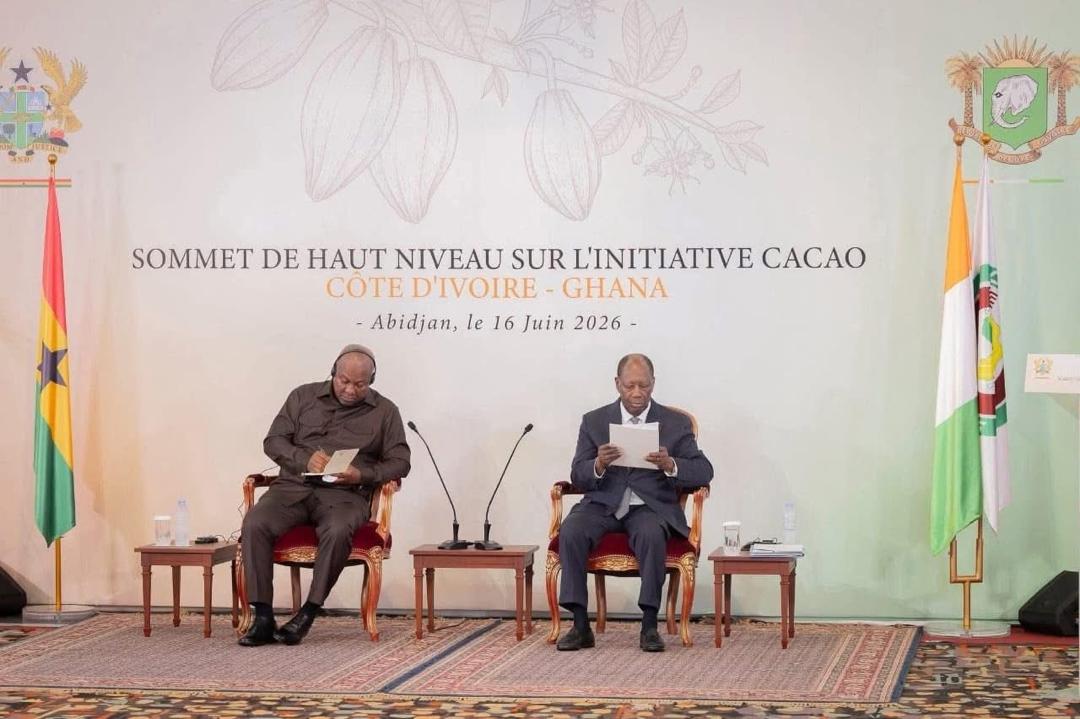
Ghanaian President, John Dramani Mahama and Ivorian President, Alassane Ouattara in a joint declaration have agreed to align key cocoa pricing and marketing policies in a renewed push to improve farmer incomes, stabilise the market and strengthen their influence over the global cocoa trade.
During a high-level summit on the future of the cocoa economy held in Abidjan on June 16, the two leaders have agreed on a joint strategy that seeks to secure better value for cocoa-producing countries and ensure the long-term sustainability of the sector.
Both countries have pledged to harmonise farm-gate pricing policies, align premiums and synchronise crop season calendars as part of efforts to improve producer income and deepen commercial cooperation.
The leaders reiterate that cocoa farmers remain central to governance and value distribution across the industry, adding that fair and decent remuneration is critical to sustaining production and maintaining social and economic stability.
The summit also touched on gains made under bilateral cooperation, including the establishment of the Côte d’Ivoire-Ghana Cocoa Initiative (CIGCI), implementation of the Living Income Differential (LID), harmonised producer price announcements, cocoa traceability systems and collaboration to combat Cocoa Swollen Shoot Virus Disease.
Meanwhile, Ghana and Cote D’Ivoire admit the growing pressures facing the sector, including global price volatility, impact of illegal mining in cocoa-growing areas, climate change, increasing use of cocoa substitutes and tightening international sustainability requirements.
Both countries also expressed commitment to increase earnings beyond raw exports by expanding domestic processing capacity, promoting regional trade and boosting consumption of cocoa-based products across Africa.
In the next phase of cooperation, they agreed to introduce the Côte d’Ivoire-Ghana Cocoa Initiative to other African cocoa-producing countries to strengthen collective bargaining power and coordinate responses to emerging market pressures.
