

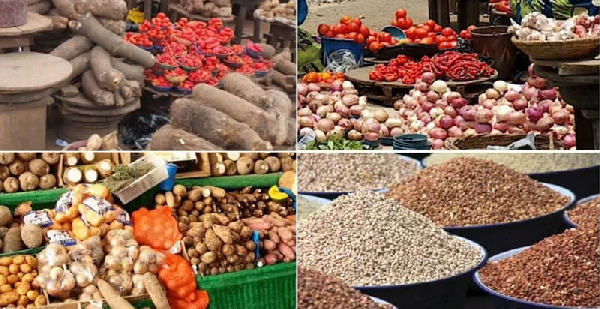
The national inflation rate of 4.6% conceals important differences as the rate for some food items remaining high.
The inflation rate for ginger was recorded at 111.3%, and fresh tomatoes 43.4%, the government statistician, Dr Alhassan Iddrisu, revealed.
He further announced that the rate for maize fell to 32.9% and kontomire recorded 41.2%.
These rates were all above the national rate of 4.6.
Dr Alhassan Iddrisu announced this during a press conference in Accra on Thursday, August 6.
“The national inflation rate of 4.6% conceals important differences: ginger rose 111.3% and fresh tomatoes 43.4%, while maize fell 32.9% and kontomire fell 41.2%; North East recorded 10.8% while Bono East recorded negative 3.8%. Inflation is not experienced uniformly, and it cannot be answered uniformly,” he stressed.
The national inflation rate slowed to 4.6% in July 2026, from 5.3% in June and 12.1% in July 2025. Dr Alhassan said this indicates that prices are still rising, but at a little over a third of last year’s pace.
Lower inflation is not lower prices: the relief is in the pace, not yet in the price tag, he said. Between June and July 2026, the general price level rose by just 0.1%, down from 0.2% in June.
Whilst the year-on-year rate compares prices today with July last year, the month-on month rate compares prices in July with June: it measures what shoppers actually met at the market in the past four weeks.
The pressure has moved off the market shelf and onto the monthly bill, Dr Alhassan said.
Services inflation is 8.5% against 3.4% for goods, and non-food items carried 67.6% of July’s inflation.
Housing, water, electricity and gas rose 8.3% and account for 22.8% of headline inflation, with payment for rents alone contributing 13.0%. Rent, school fees, transport fares and utilities are where July’s cost pressure concentrated.
Locally produced items rose 5.9% and carried 86.7% of July’s inflation; imported items rose 2.0% and carried 13.3%.
