

Rice is an essential crop in West Africa and plays a vital role in regional food security for both rural and urban populations. In 2017, rice imports from Asia accounted for 46% of total rice consumption in the region, indicating a growing demand for rice that has outpaced production.
Climate change poses a significant threat to rice production in the region, with increasing variability in climate events disrupting growing season calendars, shortening cropping seasons, and exacerbating dry spells, droughts, heatwaves, floods, and changes in the incidence and geographic range of pests and diseases. As a result, building climate resilience in rice production has become a top priority for West African countries.
Israel, with its arid and semi-arid climate, has become a leader in developing agritech solutions to farm in such environments. These technologies and practices can be adapted to the West African context, providing an opportunity to enhance rice productivity and resilience in the region.
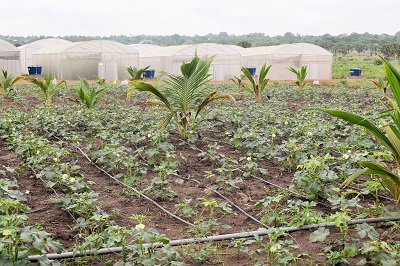
One of the solutions is the use of precision irrigation systems. In many parts of West Africa, water is scarce, and traditional flood irrigation practices can result in high water losses due to evaporation and runoff.
Precision irrigation systems, such as drip irrigation, allow for the targeted application of water to the roots of the plants, reducing water losses and increasing water use efficiency. In addition, these systems can be managed remotely, allowing farmers to optimize their water use based on real-time weather and soil data. This results in significant water savings and improved crop yields.
Another promising technology is weather forecasting and remote sensing to monitor crop health and predict climate events. By using satellite imagery and ground-based weather stations, farmers can access real-time information on rainfall patterns, temperature, humidity, and wind speed. This information can be used to optimize planting schedules, manage irrigation, and predict pest and disease outbreaks. By staying ahead of climate events, farmers can minimize crop losses and improve overall productivity.
In addition to these technological solutions, there are also agronomic practices that can improve climate resilience in rice production. One such practice is the use of conservation agriculture, which involves minimum tillage, cover cropping, and crop rotation. These practices can help to conserve soil moisture, reduce erosion, and improve soil health, leading to better yields and greater resilience to climate variability.
There are already examples of how these technologies and practices have been successfully implemented in West Africa. In Nigeria, for instance, Cross River State partnered with Israeli experts to train 12,000 rice farmers and the National Cereals Research Institute also partnered with Israeli agritech companies to develop precision irrigation and weather forecasting systems for rice production. These technologies have helped to increase rice yields by up to 50% while reducing water usage by up to 40%.
There are already examples of how these technologies and practices have been successfully implemented in West Africa. In Nigeria, for instance, Cross River State partnered with Israeli experts to train 12,000 rice farmers and the National Cereals Research Institute also partnered with Israeli agritech companies to develop precision irrigation and weather forecasting systems for rice production. These technologies have helped to increase rice yields by up to 50% while reducing water usage by up to 40%.
It is in this regard that the Israeli Economic and Trade Mission in Ghana is collaborating with the Ghana Professionals Network to organize a special forum on Building Climate Resilience in Rice Production with special focus on agritech solutions from Israel.
This forum seeks to galvanize key stakeholders from private, public and research institutions to share learnings and best practices to to help develop climate resilience rice production in Ghana. The forum hopes to introduce stakeholders within the rice production sector to innovative Israeli technologies that can help improve rice farming and production in Ghana.
here will be knowledge sharing as well as opportunity to address some of the key challenges facing rice production in Ghana. Participating Israeli companies include Ndrip, Salicrop, CropX, Netafim and Yields App.
In conclusion, building climate resilience in rice production is a critical challenge that requires innovative solutions. By adopting agritech solutions from Israel, Ghana can enhance its rice productivity and resilience in the face of increasing climate variability.
These solutions, such as precision irrigation, weather forecasting, and agronomic practices, offer promising potential for improving rice production while also conserving natural resources and ensuring food security for both rural and urban populations.
