

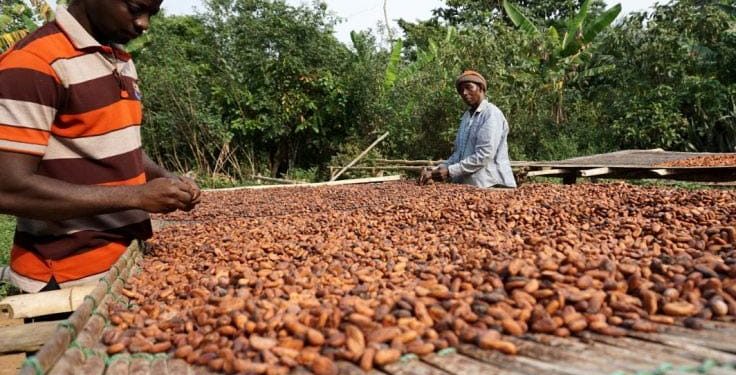
The CEO of the Ghana Cocoa Board, Dr. Randy Abbey has said that the Ghana Cocoa Board Bill 2026 marks a structural shift aimed at securing the long-term viability of Ghana’s cocoa economy.
Parliament passed the Ghana Cocoa Board Bill, 2026, on Thursday, July 30. The passage allows for major reforms in Ghana’s cocoa sector, including a guarantee that cocoa farmers will receive not less than 70 per cent of the Free on Board (FOB) export price by the Ghana Cocoa Board (COCOBOD).
Presenting the objectives of the Bill on the floor of Parliament on Thursday, July 30, Deputy Finance Minister Thomas Nyarko Ampem said the legislation sought to establish the Ghana Cocoa Board as the statutory body responsible for regulating, overseeing and monitoring activities across the cocoa value chain.
Dr Randy said that the Bill places farmers at the centre of governance.
He made the comments during the launch of a nationwide stakeholder engagement series to unpack the newly passed Ghana Cocoa Board Bill, 2026, opening the dialogue with key industry actors at Cocoa House in Accra on Tuesday.
“The Ghana Cocoa Board Bill, 2026 is not merely a legal document; it is a blueprint for the modernisation and sustainability of our cocoa sector,” Dr. Abbey stated.
“Our objective with this nationwide exercise is to ensure that every stakeholder from our buying companies to the farmer in the village—understands their rights, responsibilities, and the protection this new framework guarantees.”
Key focus areas of the discussions included farm protection mechanisms, enhanced supply chain traceability, updated licensing requirements, and the operational rollout of the Cocoa Farmer Pension Scheme.
Reacting to the presentation, representatives of Licensed Cocoa Buyers Association of Ghana LICOBAG welcomed the statutory updates regarding financing and licensing, noting that clarity on regulatory oversight will boost confidence among operational buyers.
“Clear rules of engagement benefit the entire value chain,” said a spokesperson for LICOBAG. “The detailed discussions on financing policy and licensing give licensed buyers a clearer roadmap for operations while aligning our practices with global traceability standards.”
Farmer-based organizations also expressed optimism regarding the bill’s provisions on price stabilization and pension security, while stressing the need for continuous education as the law takes effect.
“Our main priority has always been fair pricing, farm protection, and a dignified retirement for our farmers,” noted a senior representative from the cocoa farmer associations present.”
“Seeing these protections embedded in the legal framework gives us confidence, but the real work lies in ensuring these policies translate directly into the livelihoods of local farm communities.”
