

Ahead of the 2027 Budget presentation, Players in Ghana’s agricultural sector are urging the government to allocate at least 10% of the 2027 national budget, saying the industry’s continued underfunding has constrained efforts to boost agricultural production and improve food security.
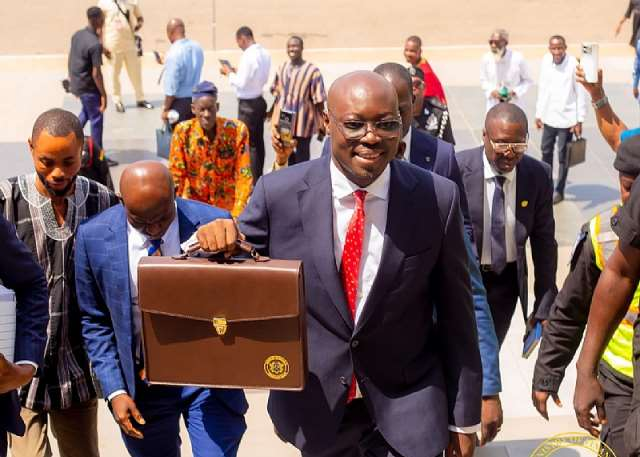
The 2027 Budget Statement and Economic Policy will be presented by Finance Minister, Dr Cassiel Ato Forson, on Thursday, November 12, 2026, at Parliament in Accra.
According to the farmers, the persistent allocation of single digits in previous national budgets is inadequate to address longstanding challenges across the sector.
The government, through the Ministry of Finance and Economic Planning, outlined several interventions to boost agricultural production and strengthen food security in the 2026 budget.
These included establishing 50 Farmer Service Centres, allocating GH¢200 million to the National Food Buffer Stock Company, installing 200 solar-powered boreholes, and rehabilitating livestock stations.
Overall, agriculture received an estimated GH¢13.9 billion in the 2026 Budget, representing an increase of GH¢1.5 billion over the previous year’s allocation.
However, stakeholders say funding constraints and delays in releasing approved allocations continue to undermine the implementation and impact of these interventions.
Even though there was an increase from the previous years, farmers insist that more investment is needed to address the sector’s funding gaps.
According to the Executive Director of the Peasant Farmers Association of Ghana, Bismark Nortey, the government must back its commitment with actions under the Comprehensive Africa Agriculture Development Programme (CAADP), which demands that African Union member states allocate at least 10% of their national budgets to agriculture.
In an interview with Citi Business News, Mr Nortey said Ghana has been a signatory to the programme since 2003 but has yet to consistently meet the 10% allocation target.
He said the association considers the target a minimum requirement for meaningful investment in the sector.
“We have, you know, Ghana is a signatory to the Comprehensive Africa Agriculture Development Programme (CAADP), which mandates all member states that we should allocate at least 10% of the national budget to the agricultural sector.
“And Ghana has been a signatory to this programme since 2003. And unfortunately, since that period, we’ve not had any consistent percentage allocation to the sector. So for us, our call has been consistent.
“The minimum that we expect Ghana to do is 10%. For us, it is non-negotiable,” he said.
Mr Nortey is also urging the government to translate its New Economy Agenda into increased public investment in agriculture.
He further stated that the sector must receive a significant share of the resources earmarked for the initiative, given its potential to stimulate broader economic growth.
“I have heard that the government is considering what they call the new economy. And our expectation is that agriculture should take a chunk of that new economy.
“In fact, if allocations to that new economy, in terms of financial allocation, anything less than 50% of that allocation not going to the sector is dead on arrival.
“Because you need the sector to stimulate the kind of growth that we want. And we show that you need that kind of injection,” he said.
