

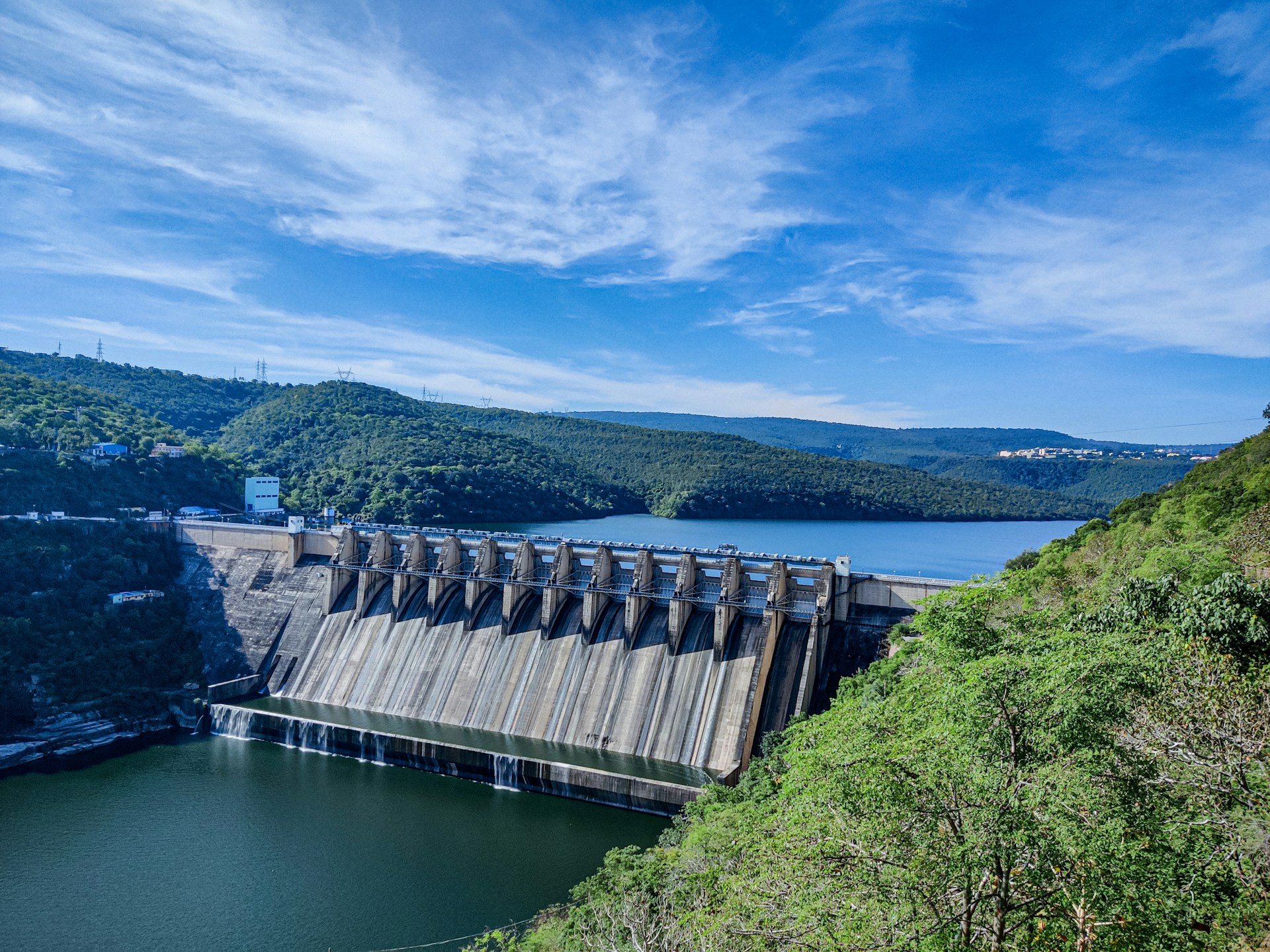
Government has announced a planned US$1 billion investment to complete the Pwalugu Multipurpose Dam, boost agricultural production, expand agro-processing, and strengthen Ghana’s energy supply.
While presenting the 2027 Budget Statement in Parliament, Finance Minister Dr Ato Forson said the project would support large-scale vegetable production, aquaculture, irrigation, and hydropower generation.
The project is expected to provide irrigation water for about 25,000 hectares of land earmarked for vegetable production, while the reservoir will have the capacity to accommodate 100,000 fish cages to support aquaculture development.
According to Dr Forson, the dam will promote year-round agricultural production, improve water security and provide flood protection along the White Volta corridor.
It is also expected to generate 77 megawatts of hydropower to support agro-industrial activities within and around the Pwalugu enclave.
“Pwalugu will support year-round vegetable production, flood protection, water security, agriculture and agribusiness across the dry water corridor,” he told Parliament.
Dr Forson explained that the electricity generated would power processing factories, irrigation systems, pack houses and cold storage facilities, enabling farmers and agribusinesses to add value to their produce closer to production centres.
He said the project would be executed in phases, with the first phase expected to be ready by early 2029 and full completion scheduled for December 2030.
“The first phase of the Pwalugu Multipurpose Dam will be ready by early 2029, with full completion by December 2030,” Dr Forson stated.
Beyond the dam, the government plans to establish service vegetable enclaves in other regions, alongside water harvesting systems and protected cultivation facilities to expand agricultural production.
The US$1 billion investment forms part of the government’s broader New Economy Programme, which seeks to transform commercial agriculture, strengthen local industries and create employment opportunities.
The Pwalugu Dam is built to control perennial flooding in northern Ghana caused by heavy rains and spillage from the Bagre Dam in Burkina Faso.
Since 1992, spillage from the Bagre Dam has caused annual flooding affecting Ghana’s Upper East, Upper West, North East and Northern Regions.
The flooding typically occurs between August and September when the Bagre Dam reaches its maximum capacity and Burkina Faso’s power company opens the spillways.
