

The term Agriculture is derived from two Latin words ager or agri meaning soil and cultura or Cultus meaning cultivation. Agriculture is the science of cultivating the soil, harvesting crops, and raising livestock and also the science or art of the production of plants and animals useful to man and in varying degrees the preparation of such products for man’s use.
As an art, it embraces knowledge of the way to perform the operations of the farm in a skillful manner but does not necessarily include the understanding of the principles underlying the farm practices.
As a science, it utilizes all technologies developed on scientific principles such as crop breeding, production techniques, crop protection, economics, etc. to maximize yield and profit. For example, new crops and varieties developed by hybridization, Transgenic crop varieties resistant to pests and diseases, hybrids in each crop, high fertilizer responsive varieties, water management, herbicides to control weeds, and use of bio-control agents to combat pests and diseases.
As the business, it aims at maximum net return through the management of land labour, water, and capital, employing the knowledge of various sciences for the production of food, feed, fiber, and fuel.
Edward W. Stewart, an Irish trade unionist, and politician made this eloquent observation on the importance of Agriculture: “Agriculture was the first occupation of man, and as it embraces the whole earth, it is the foundation of all other industries. No matter the amount of money a country has, no matter the wealth of its natural resources; what really counts is the level of your scientific effort, your investment in Agriculture, and the ability to encourage the human mind to flow freely and stimulate new ideas.”
The richest country in the world is advancing support for smaller holder farmers and making other facilities available for them. What’s the strategy for Ghana?
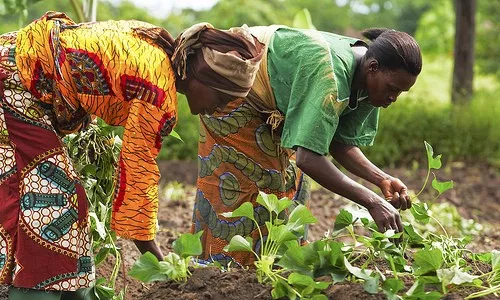
Ghana has a population of about 30 million with about 52 % of the labour force engaged in agriculture, 29 % in services, and 19 % in industry. Approximately, 39 % of the farm labour force is women.
Agriculture contributes to 54 % of Ghana’s GDP, and accounts for over 40 % of export earnings, while at the same time providing over 90 % of the food needs of the country. Ghana’s agriculture is predominantly smallholder, traditional and rain-fed. Why?, in this innovative and mechanized world?
As far back in the year 1962 when Ghana was still recovering from colonial dispensation, our political leaders then believed in Agriculture. An important yet neglected chapter of Ghana’s history is called Ghana’s State Farms the vision of Dr. Kwame Nkrumah.
State farms were designed to decrease agricultural imports, increase agricultural exports besides cocoa, and demonstrate the superiority of modern and technological agriculture. Besides those agronomic and political goals, state farms were also designed to prevent rural-to-urban migration, seen as a central cause of the unemployment problem of the new nation.
Two years later there were already 112 farms in Ghana, each of which employed between 100 and 500 workers. The farms were progressive in introducing formalized waged labour into agriculture, and by 1965 the total number of state farm employees reached 18,000. Yet, the ambitious project was short-lived and ceased with Nkrumah’s fall. Do we have a continuation policy or strategy as a country?
Also, another good agriculture food policy introduced was Operation feed yourself by then-head-of-state Ignatius Kutu Acheampong, which was prompted by food shortages. A national programme directed at increased production of food crops. Was it needful?
The question now is, “are our politicians thinking about what would benefit the nation in good fate or they are only interested in what is in their party manifesto and their personal interest, even if it would benefit the nation?”
What Ghanaians have not noticed is that it has virtually become taboo for our leaders to enroll their wards in Agriculture colleges; meanwhile, these are the same people formulating Agricultural policies for the country.
Their wards are forced to study programs like; Medicine, Law, Politics, Engineering, and Business Administration and are forced to go into Agriculture or Agribusiness. Why? Agriculture is a career for the poor and illiterate.
How then would they empathize with smallholder farmers and formulate good and innovative policies?
For me, the Agricultural Value Chain should not be entrusted into the hands of our politicians. It’s time to analyze our priorities in these trying moments and identify the crucial services; food and water.
Former US President Thomas Jefferson, once said, “Agriculture is our wisest pursuit, because it will, in the end, contribute most to real wealth, good morals, and happiness” but in Ghana, poor policies have made a lot of our young people turn their backs on Agriculture and the whole society is suffering today.
As the situation is getting worst, there are serious questions about the whole Agriculture Value Chain’s ability to cope. Who is controlling Pesticides and Agrochemicals? Who is controlling the seed market? Who is controlling pricing? Who formulate Agriculture policies for us? Who is controlling our imports and exports market?
As if that is not enough, shortage of farming inputs like fertilizers and veterinary medicines is further impacting food production in Ghana; who is in charge?
The disruption to the supply chain we have witnessed a few months ago when the dollar was not stable, Russia the Ukraine war tells us how fragile we are as a country. Is this signal to our politicians?
Conclusion
I believe that the foundation of every successful nation depends on how well the minds of its people are developed to analyze and interpret a particular policy and decisions made by leadership or politicians. The solution to Ghana’s economy can be found in the wisdom of great leaders or individuals.
The planting season is beginning and smallholder farmers need inputs like fertilizers, seeds, pesticides, and veterinary medicines readily available in the market. Are we seeing shortages this year too?
I also believe that it’s time we go back to the drawing table and consider improved technology as a key tool to help deal with agricultural challenges in the country i.e. irrigation, hybrid seeds, and genetically modified (GM) technology.
One of my favorite quotes says “If you want to change your life, you’re going to have to start taking 100 percent responsibility for it, and complaining is the hobbyhorse of a victim mentality. Start Right Where You Are, Fellow Ghanaians (Leaders) it’s time for us to stop Playing Politics with our Agriculture Sector. Our Agricultural problems need innovative approaches to their solutions.
I honestly think as a nation, let’s retool our mind to the fact that Agriculture must be seen as an art, as a science, and as a business.
The writer is an agriculturist, prize-winning journalist, project management professional, and founder of Motivating the Farmer Africa.
