

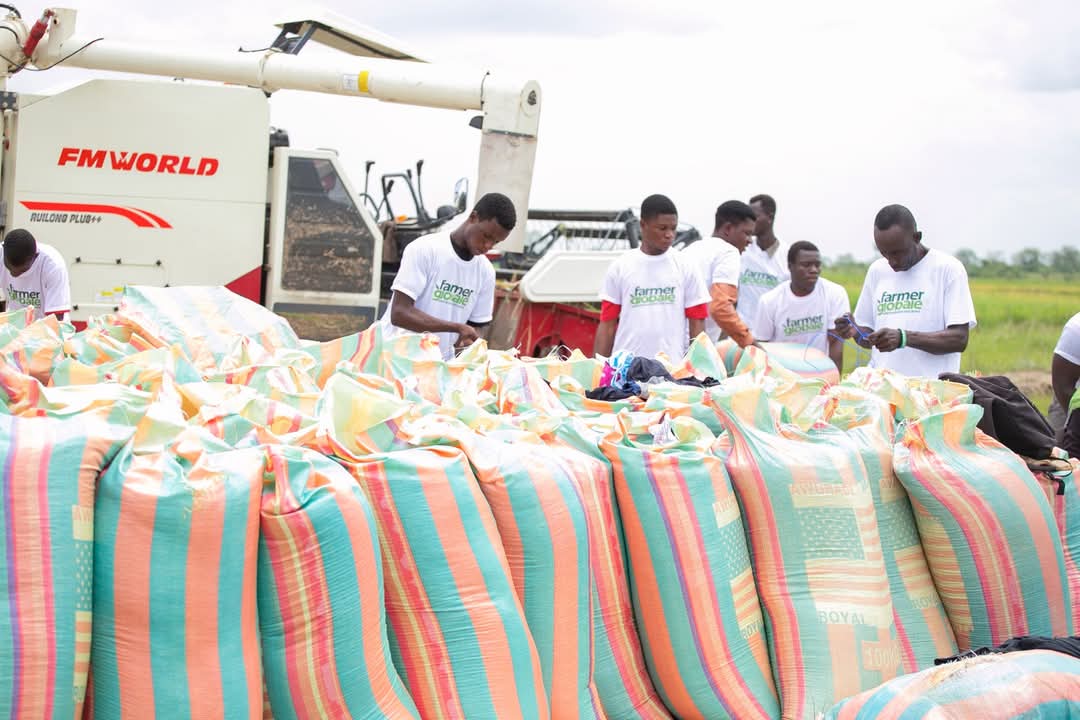
Today, Ghana joins the global community to commemorate World Food Day 2025 under the theme: “Hand in Hand for Better Food and a Better Future.” This year’s theme emphasizes the importance of partnerships and coordinated action across sectors and countries to build more inclusive, efficient, resilient, and sustainable food systems.
World Food Day, celebrated every year on 16th October, marks the founding of the Food and Agriculture Organization (FAO) of the United Nations in 1945. This year’s World Food Day also marks the 80th anniversary of the FAO.
It offers an opportunity to reflect on global progress in ending hunger, while assessing national food systems and agricultural policies.
Agriculture remains one of the most significant sectors of Ghana’s economy. The sector contributes 23.5% to GDP. Key staple crops produced include maize, cassava, yam, plantain, rice, and groundnuts.
Despite notable achievements in local food production, Ghana continues to face challenges including climate variability, rising food prices, dependence on some food imports (especially rice, wheat, and poultry), and limited access to irrigation infrastructure.
The government has therefore launched a number of policies and programmes to address these concerns, most recently the Feed Ghana Programme, introduced in early 2025.
The Feed Ghana Programme is the government’s flagship agricultural policy aimed at enhancing food self-sufficiency, reducing import dependence, creating jobs, and improving farmer livelihoods. The programme focuses on a value chain approach covering production, processing, marketing, and consumption.
The programme began with a 500 acre maize cultivation pilot in early 2025, with plans to scale up to 2,000 acres by September 2026.
Expansion is expected across rice, soybean, and groundnut value chains in priority agricultural zones.
The government allocated 1.5 billion cedis to the agricultural sector in the 2025 budget to support input subsidies, mechanisation, irrigation, and storage infrastructure under the Feed Ghana Program.
The Ministry of Food and Agriculture had also announced the deployment of 5,000 agriculture and veterinary science graduates to support farmers with technical assistance, data collection, and modern extension services.
A national poultry strategy, branded Nkoko Nketenkete, is underway to reduce Ghana’s annual poultry import bill of over $300 million.
The programme supports both commercial and household poultry production to increase domestic supply of eggs and chicken meat.
Feed Ghana is encouraging urban and peri-urban vegetable farming through the ‘Yɛredua’ initiative, promoting nutrition and reducing vegetable imports.
Focus has also been placed on crops like oil palm, coconut, cashew, mango, and shea, aimed at boosting export revenues and local agro-processing industries.
Agro-enclaves are being developed in various regions, particularly in the Bono East, Northern, and Volta zones, with improved access roads, irrigation, warehousing, and farmer aggregation centres.
These reforms are being implemented in partnership with district assemblies, farmer cooperatives, and private sector actors. This echos this year’s World Food Day theme of working “hand in hand”.
According to a May 2025 joint report by the Ministry of Food and Agriculture (MoFA), WFP, and partners, about 2.4 million Ghanaians(7.4% of the population) were projected to be food insecure during the lean season (March–May 2025). That number was expected to decrease to 2 million between June and August, thanks to harvests and interventions.
Ghana remains moderately food secure. However, despite global advances, an estimated 8.2 percent of the global population (about 673 million people) experienced hunger in 2024.
In many parts of the world, particularly Sub-Saharan Africa and parts of Asia, communities are grappling with food shortages, rising prices, and fragile supply chains worsened by conflict, economic shocks, and extreme weather events.
The country still depends on significant imports of rice, wheat, and poultry, despite strong performance in cassava, yam, and maize production. Feed Ghana and its complementary interventions aim to close these supply gaps.
Youth participation in agriculture is growing through startups and digital platforms such as The Ghanaian Farmer.
In parallel, development partners like the FAO, WFP, and African Development Bank are working alongside the government under the Hand-in-Hand Initiative to target high-poverty zones with high agricultural potential.
As Ghana marks World Food Day 2025, it’s clear that sustainable food systems are not achieved by governments alone, but through coordinated efforts between farmers, private investors, consumers, NGOs, and international partners.
World Food Day is not just a celebration, but a reminder of our collective responsibility. With bold policies like the Feed Ghana, inclusive planning, and strong partnerships, Ghana is taking concrete steps toward a future where everyone regardless of location or income can access safe, nutritious, and affordable food.
Story By: Caris Adjei London
