

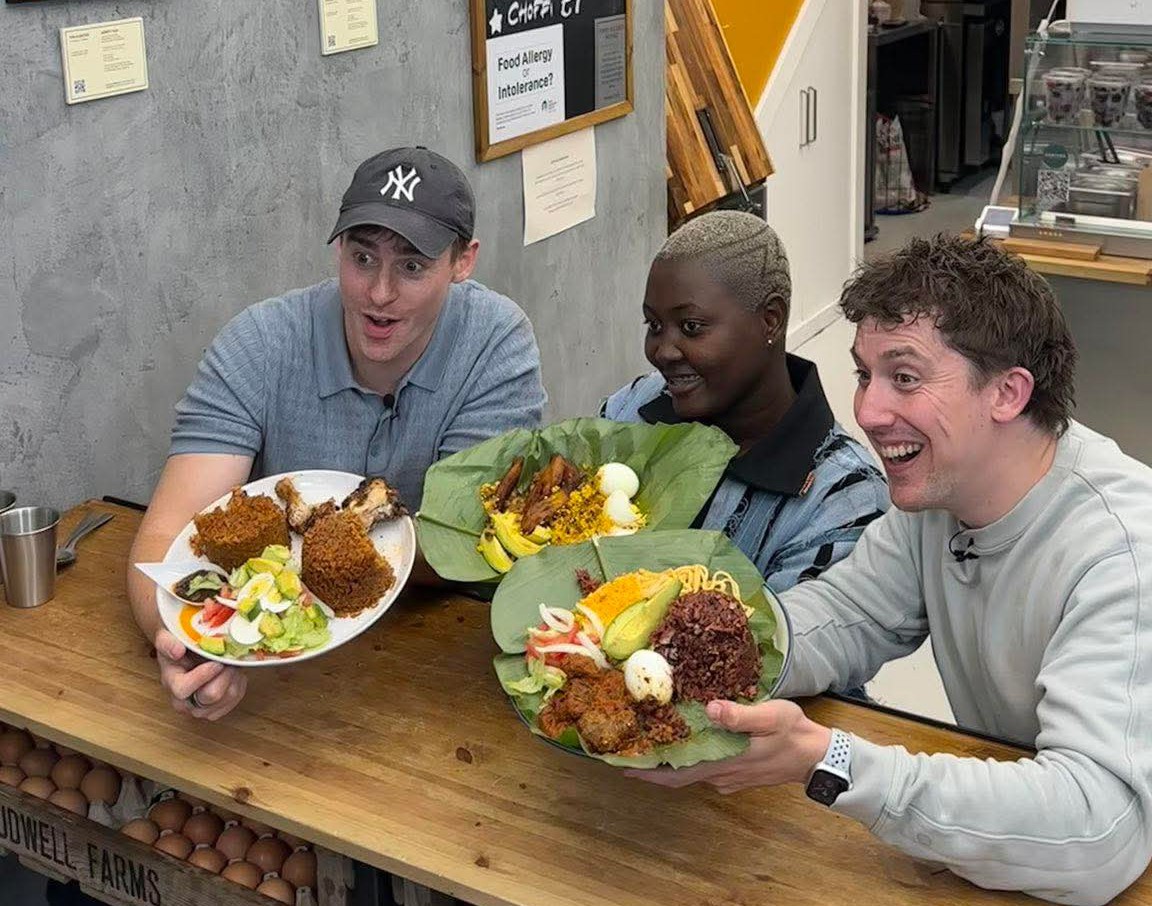
Chef Abbys is part of a new generation of creators using digital platforms to tell African stories differently.
Through her videos, she has introduced thousands of people to Ghanaian dishes, showing not just how they are made, but why they matter. Now, her work has taken her beyond the screen and into real kitchens across the UK.
Her London tour has been filled with moments that show just how far Ghanaian cuisine can travel.
One of the biggest highlights came when she was invited to host a Ghanaian food takeover at Snapchat’s UK headquarters.
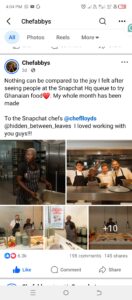
It was a full-circle moment. Snapchat was the first platform she used to create content, and now she was standing in its kitchen, leading a team to cook her recipes for more than 300 staff members.
She carefully designed a menu that would appeal to a wide range of tastes while staying true to Ghanaian flavors. Together with the chefs, she prepared and served dishes that many of the guests were trying for the first time.
The response surprised even her.
People queued up, asked questions, and went back for seconds. For many, it was their first real experience of Ghanaian food and it left a lasting impression.
The Cooking Class
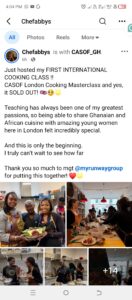
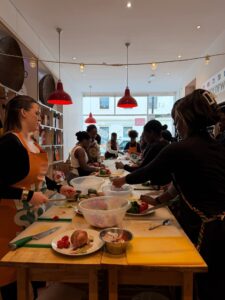
And then came the masterclass. Long before the cooking even began, by the time Chef Abbys stepped in, every seat at the CASOF London Cooking lessons had been taken. It was her first international class; and it had sold out.
She paused for a moment, taking it all in.
For someone who started by sharing short food videos online, this felt almost unreal. But once she began to speak, the nerves faded. Cooking, after all, had always been her language.
Moments like this are quietly changing how Ghanaian cuisine is seen internationally. What was once unfamiliar is becoming exciting and accessible. Through experiences like her masterclasses and food events, Chef Abbys is helping people connect with Ghanaian food in a direct and personal way.

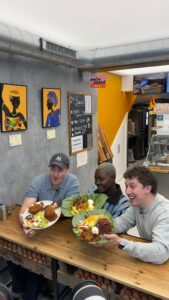
Her influence goes beyond events. During her stay in London, she also collaborated with a British food creator, cooking Ghanaian dishes together. It was a simple but powerful exchange; one that showed how easily food can cross cultural boundaries when people are willing to learn.
She has also been preparing to premiere her Ghana Heritage Month documentary on African Union Day which took place on May 25, 2025. For her, the event is about more than showcasing food. It is about encouraging Africans in the diaspora to reconnect with their roots, using cuisine as a starting point.
But while all of this is happening in the UK, the impact stretches back home to Ghana.
As more people abroad develop a taste for Ghanaian dishes, the demand for the ingredients behind them begins to grow. Rice, plantain, pepper, cassava, groundnuts; these are not just items on a menu; they are products of local farms and markets.
If this global interest continues, it could create new opportunities for Ghana’s agriculture sector. Farmers may find increased demand for their produce. Food processors could expand their operations. Young people, often discouraged from entering agriculture, might begin to see it as a business with real potential.
In this way, Chef Abbys’ work connects culture with economics. By promoting Ghanaian food internationally, she is also helping to open doors for local producers and the wider food supply chain.
For Chef Abbys, this journey is just beginning.
From creating content to teaching in international kitchens, she is steadily building something bigger than herself, a movement that places Ghanaian food where she believes it belongs: on tables around the world.
And with every dish she serves, that vision comes a little closer to reality.
