

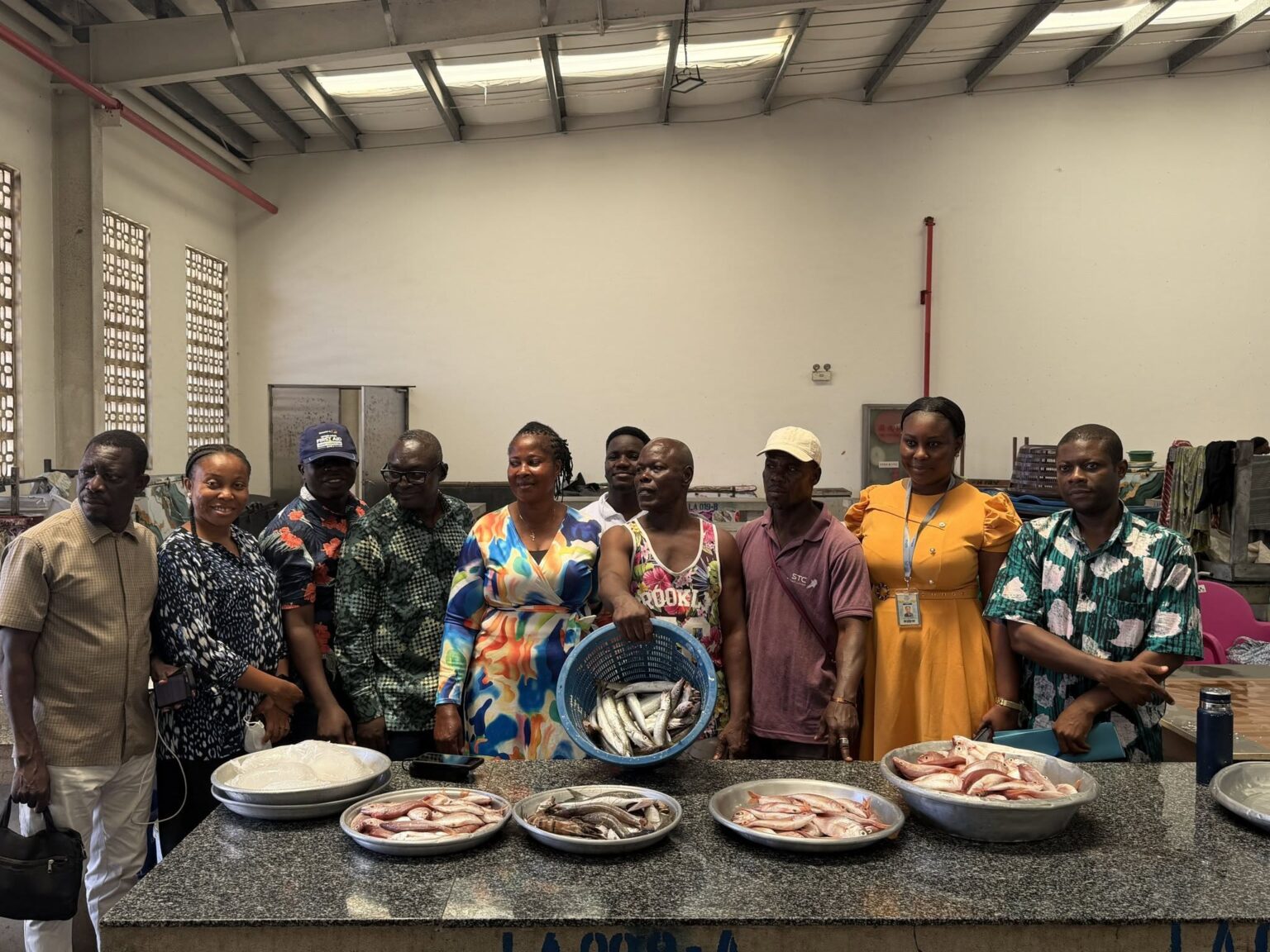
Using media advocacy for sustainable marine conservation, the Ghana Agricultural and Rural Development Journalists Association (GARDJA) has intensified sensitisation activities with fishers and stakeholders at the Jamestown Fishing Harbour in Accra.
The engagement forms part of the association’s six-month campaign dubbed “Save Our Seas” (SOS) being implemented in partnership with the Earth Journalism Network (EJN) to promote sustainable fisheries, strengthen accountability in the fishing industry and support Ghana’s efforts to achieve the global goal of 30×30 marine conservation by 2030.
The 30×30 target, formed under the Kunming-Montreal Global Biodiversity Framework, calls for the effective conservation and management of at least 30 per cent of the world’s land and ocean areas by 2030.
GARDJA is using the advocacy to build stronger environmental reporting and increase public awareness of the factors threatening Ghana’s marine ecosystems, including overfishing, illegal fishing practices, marine pollution, coastal degradation and climate change.
During the engagement at Jamestown, journalists interacted with fishing industry stakeholders to discuss existing policies and regulations, challenges facing fishing communities and measures needed to promote sustainable management of marine resources.
General Manager of the Jamestown Fishing Harbour of the Ghana Ports and Harbours Authority (GPHA), Engineer Stephen Owiah, said there are policies and regulations governing the harbour and fishing activities aiming to protect the sea and livelihoods.
The Ga State Chief Fisherman, Nii Abeo Kyerekuanda V, also shared his perspectives on the challenges confronting the fishing industry and called on the authorities for measures to address issues posing threats to the age-old trade among locals while making sure the marine ecosystem is protected.
Other participants, including fishers, while sharing their experiences and views on what needs to change, express their readiness to support efforts to improve fisheries management and marine conservation.
Journalism to strengthen marine conservation
Project Coordinator of GARDJA, Nana Yaw Kesseh, said in addition to advocacy, the association will also investigate illegal fishing practices and the danger it poses to the environment.
He explained that the SOS Campaign is designed to strengthen public engagement and hold stakeholders in the fishing industry accountable for their roles in protecting marine resources.
As part of the initiative, participating journalists are visiting coastal communities, including those in the Greater Accra and Central regions, to engage directly with artisanal fishers, fishmongers and industry management.
The engagements are intended to bring the experiences of fishing communities into public discussions about marine conservation and fisheries governance.
According to Kesseh, declining fish stocks is a threat to food security and the livelihoods of coastal communities, making credible reporting on the state of Ghana’s fisheries essential for informed policymaking.
He said the campaign would support the country’s efforts to achieve the 30×30 conservation target by 2030, in line with the Kunming-Montreal Global Biodiversity Framework.
The project coordinator further expressed appreciation to the Earth Journalism Network for providing funds towards the campaign, describing it as a “critical investment in journalism-driven environmental protection and sustainable development.”
Protecting marine resources and coastal livelihoods
Ghana’s coastal communities depend heavily on fisheries for employment, income and food. However, growing pressure on marine resources has raised concerns about the sustainability of fishing activities and the future of livelihoods along the coast.
The 30×30 conservation target provides a global framework for protecting biodiversity, but achieving it requires effective governance, enforcement of conservation measures and meaningful participation by communities that depend on natural resources.
Through the SOS Campaign, GARDJA and EJN aim to promote evidence-based reporting that examines the state of Ghana’s oceans, highlights sustainable fishing practices and scrutinises the implementation of policies intended to protect marine ecosystems.
Positioning journalism as an important tool for the global goal, the initiative also seeks to amplify the voices of fishers and other coastal stakeholders whose livelihoods are directly affected by changes in fish stocks and the condition of marine environments.
Members of GARDJA will undertake in-depth investigations into illegal fishing operations, including industrial trawler invasions into the Inshore Exclusion Zone and weaknesses in enforcement systems.
Using satellite tracking, vessel monitoring tools, and community informant networks, the campaign will make documentaries, engage in radio discussions, podcasts, photo essays, social media content, and infographics.
Selected journalists will also receive bursary support to produce high-impact investigative stories.
Beneficiaries of the campaign include journalists, artisanal fishers, canoe owners, women fish processors, and coastal youth whose livelihoods depend on healthy marine ecosystems, while policymakers, government officials, and legislators will benefit from credible, independent evidence to guide reforms.
