

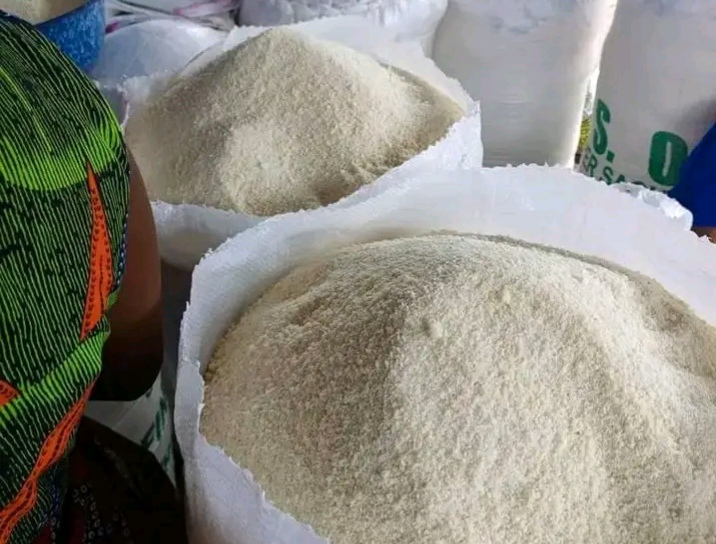
Gari is one of the commonly processed ready-to-eat foods that can be found in every part of Ghana.
The sector is largely dominated by the informal sector in cassava farming areas, where mostly women are involved in the value chain and sell in local markets.
The industry has in recent times seen some progress in the formal sector with brands such as Meannan, Kivo, H&H and Sunny Gold among others hitting the market.
Beyond the domestic progress, Ghana is also sharpening its focus on gari as a key export commodity, positioning the cassava-based staple to tap into expanding market opportunities across Africa under the African Continental Free Trade Area (AfCFTA).
The Minister for Trade, Agribusiness and Industry, Mrs Elizabeth Ofosu-Adjare, says gari holds significant potential to compete across the continent, particularly as demand grows for affordable, shelf-stable and culturally familiar food products in many African countries.
During a courtesy call by the African Union Commissioner for Economic Development, Trade, Tourism, Industry and Minerals, H.E. Francisca Tatchoup Belobe, the Minister stated that Ghana is working to strengthen market access for products like gari while preparing local producers to meet export standards.
She explained that although gari is widely consumed across West and Central Africa, Ghanaian producers must be supported to improve quality, packaging, and consistency to compete effectively in regional markets.
Government interventions are therefore focusing on training and capacity building for small and medium-scale processors, many of whom are women operating within the cassava value chain. These efforts aim to help them scale production, meet certification requirements and connect to buyers beyond Ghana’s borders.
Mrs Ofosu-Adjare stressed that exporting gari successfully will require more than increased production. She said producers need better access to market information, stronger distribution networks and partnerships that link them directly to continental buyers.
Ghana’s role as host of the AfCFTA Secretariat, she added, places a responsibility on the country to demonstrate how local staples like gari can be transformed into competitive export products under a unified African market.
With the right investment in processing, branding and logistics, gari could become one of Ghana’s flagship food exports, contributing to job creation, rural incomes and the growth of the country’s agribusiness sector.
