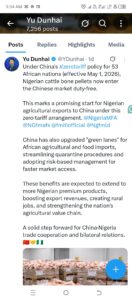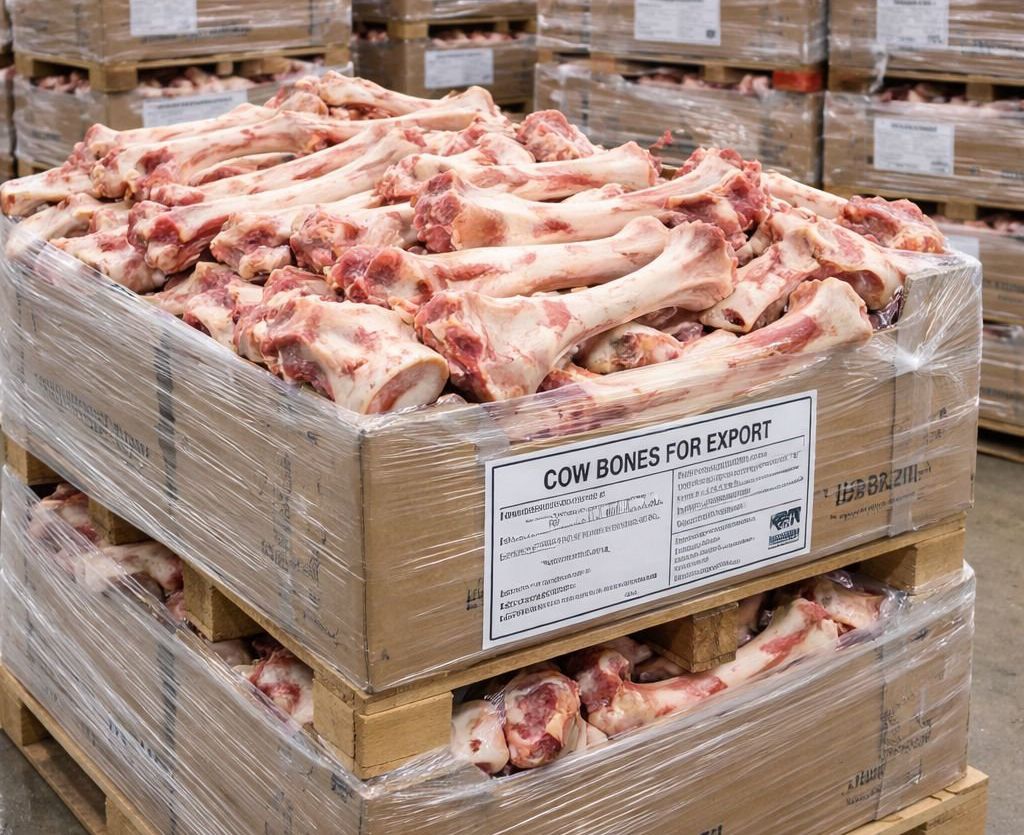
Nigeria’s agricultural export sector has received a fresh boost following the rollout of China’s zero-tariff policy for 53 African countries, which now allows Nigerian cattle bone pellets to enter the Chinese market duty-free.
This was made known by the Chinese Ambassador to Nigeria, Yu Dunhai, who described the development as an important early win under the new trade framework, which took effect on May 1, 2026.
He said the policy is part of a broader effort by China to deepen trade ties with African countries by removing import duties on selected goods, especially agricultural products. He noted that the arrangement is expected to expand access for more Nigerian premium exports in the coming months.
The 53 African countries include Ghana, Kenya, Nigeria, South Africa and Egypt.
The ambassador also highlighted improvements in China’s import system for African goods, including upgraded “green lanes” that streamline quarantine procedures and apply risk-based inspection systems. These reforms, he added, are designed to expedite clearance processes and eliminate bottlenecks at Chinese ports.
The ambassador indicated that the policy could significantly increase Nigeria’s export earnings, stimulate rural job creation, and strengthen the country’s agricultural value chain, describing it as a “solid step forward” in China–Nigeria trade relations.
Reactions to the announcement have also sparked public discussion online, particularly around the use of cow bones in international trade.
Agro-commodity trader, known on Facebook as Tsekohol Denison, commented that while many Nigerians expressed surprise at the export item, cow bones are already a high-value industrial input globally.
He explained that cow bones are processed into bone meal fertiliser used to improve soil fertility, as well as mineral-rich livestock feed for poultry, pigs, and fish production. He also noted that bones are used in gelatin production for food, pharmaceuticals, and cosmetics, as well as in the production of bone char, which is used for water purification and sugar refining.
According to him, large quantities of bone meal already trade internationally, with prices ranging significantly per ton depending on quality and processing standards, making it a potentially lucrative export commodity if properly harnessed.
He argued that Africa continues to lose value due to limited processing capacity, stressing that the real opportunity lies not only in exporting raw materials but also in investing in local value addition and processing industries.
The development has therefore reignited conversations about industrialisation, agricultural innovation, and how Nigeria can better position itself within global supply chains.