

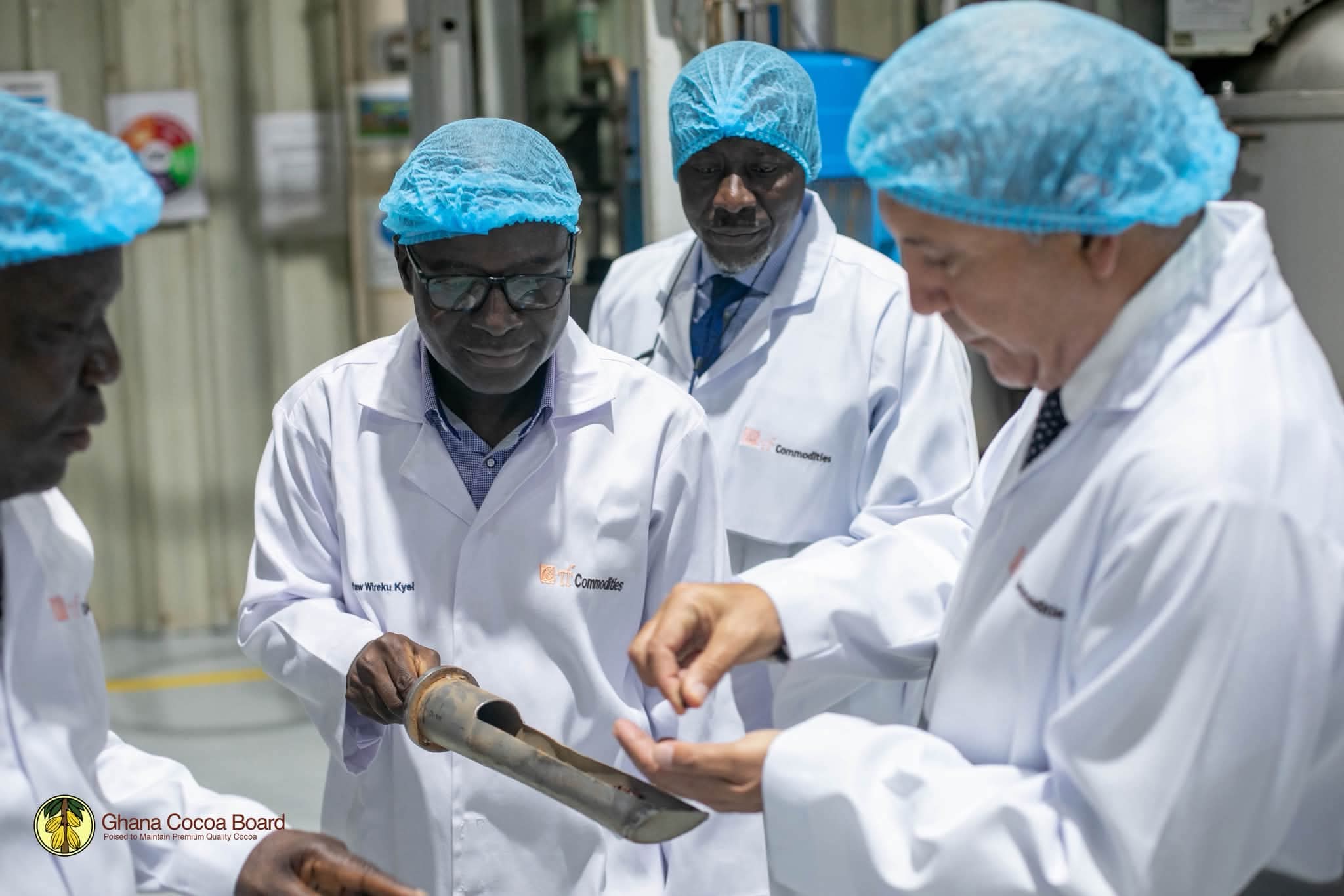
Ghana Cocoa Board (COCOBOD) has met with a delegation from Turkey to explore investment partnerships aimed at expanding domestic cocoa processing and increasing value addition in the sector.
The engagement forms part of a new policy direction that seeks to strengthen Ghana’s cocoa processing capacity, attract investment and retain a greater share of the economic value generated from the country’s cocoa beans.
The Turkish delegation were led to visit the Cocoa Processing Company (CPC), TF Commodities Ghana Ltd and Niche Cocoa Industry Ltd to assess existing processing facilities and gain a deeper understanding of Ghana’s cocoa processing industry.
The tour of these companies were intended to provide insights into the country’s current processing capacity and identify opportunities for investment, technology transfer and collaboration with local industry players.
According to COCOBOD, the partnership around cocoa processing and sustainable cocoa sourcing, with the broader objective of strengthening domestic processing will improve the economic benefits Ghana derives from its cocoa production.
The engagement signals COCOBOD’s efforts to attract strategic partners who can support the development of a stronger domestic cocoa industry, particularly as Ghana seeks to increase the amount of cocoa processed locally rather than exported in its raw form.
Government explores reforms to strengthen cocoa sector
The discussions with the Turkish delegation come amid broader efforts by the government to reform Ghana’s cocoa sector and improve its long-term competitiveness.
One of the key policy initiatives is the COCOBOD law 2026, which forms part of the government’s efforts to review the institutional and operational framework governing the cocoa industry.
The legislation intends to provide an important avenue for addressing structural challenges in the sector, depending on its final provisions, including how COCOBOD is governed, financed and positioned to support cocoa farmers and industry development.
Alongside institutional reforms, attracting investment into domestic processing could help Ghana gain more from its cocoa beans through the production of cocoa liquor, butter, powder, chocolate and other finished products.
Local processing also creates job opportunities for employment, industrial development and stronger linkages between cocoa production and manufacturing.
However, achieving these benefits will depend on sustained investment, access to appropriate processing technology, reliable supplies of cocoa beans and the ability of local processors to compete in domestic and international markets.
For Ghana, which is one of the world’s leading cocoa-producing countries, strengthening domestic processing offers an opportunity to move beyond the export of raw cocoa beans and increase the contribution of cocoa-derived products to industrial growth and export earnings.
COCOBOD’s engagement with the Turkish delegation forms part of efforts to explore international partnerships that could support this national target.
