

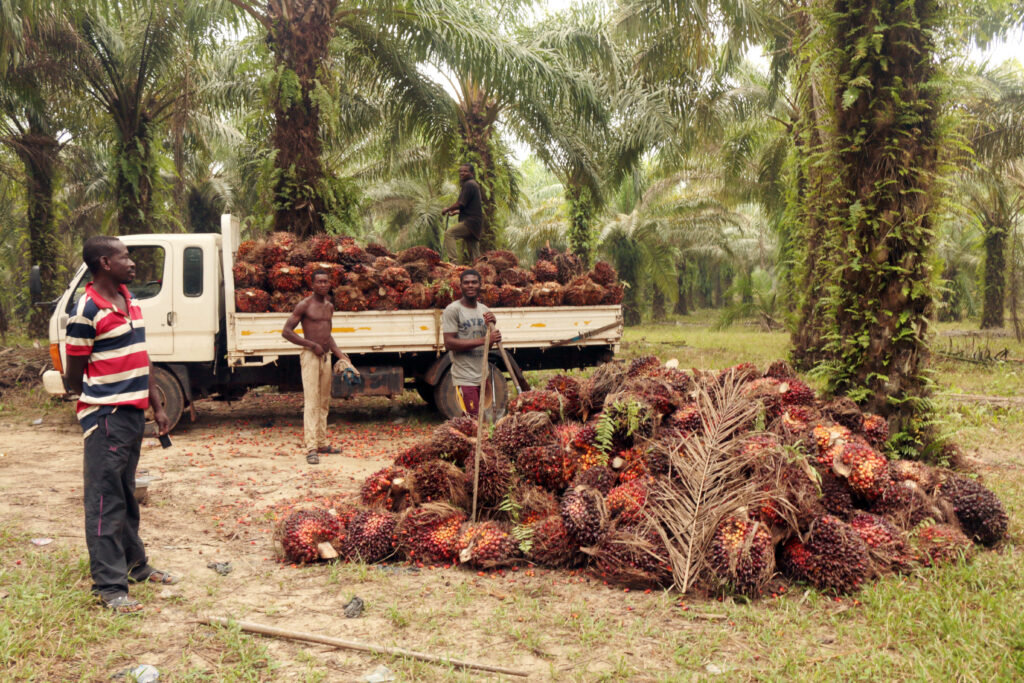
Ghana is currently facing a shortfall of an estimated 150,000 metric tonnes in crude palm oil supply, even though the industry has significant production potential.
According to the President of the Oil Palm Development Association of Ghana (OPDAG), Paul Kwabena Amaning, demand for crude palm oil currently stands at 400,000 metric tonnes, but the country produces about 250,000 metric tonnes annually.
He disclosed that the supply gap presents an opportunity for investors to expand local production, boost processing and strengthen the competitiveness of the oil palm industry.
“Despite our potential, Ghana produces approximately 250,000 metric tons of crude palm oil annually, against an estimated demand of 400,000 metric tons. This leaves a supply gap of about 150,000 metric tons, presenting a major opportunity to increase local production, improve processing efficiency, and strengthen our competitiveness,” Amaning said.
Paul Kwabena Amaning was speaking at a Stakeholders in the Oil Palm Sector One-Day Workshop. Discussions focused on strengthening production financing and digital financial services across the oil palm value chain.
He said there are currently an estimated 360,000 hectares of oil palm under cultivation in Ghana, supporting about 631,000 people, underscoring its contribution to the economy and livelihoods.
$500M Financing
He touched on the proposed $500 million oil palm development financing, saying it could help address some of the constraints limiting the sector’s growth.
The funds should prioritise smallholder farmers, aggregators and artisanal processors in particular to reflect the realities of businesses across the value chain.
“I consider the inclusion of these small operators particularly important,” he stressed.
The President of OPDAG noted that many artisanal processors contribute significantly to local palm oil production, employment and rural economic activity but continue to face limited access to affordable financing, modern equipment and formal business support to expand their operations.
Digital Financing
Paul Kwabena Amaning also identified digital financial services as an important tool for improving efficiency across the oil palm value chain.
He said farmers, aggregators, processors, traders, transporters and exporters all depend on efficient transactions and timely payments, making digital finance critical to the sector’s development.
“Digital financial services can help improve payment security, strengthen record-keeping, increase transparency, and create opportunities for businesses to access savings, credit, insurance and other financial products,” he mentioned.
However, he cautioned that digitalisation must go beyond simply moving money onto mobile platforms, saying it requires reliable network connectivity, affordable transaction charges, accessible payment agents, interoperable systems, effective consumer protection and practical education to build confidence among users.
Reliable Record System
Paul Kwabena Amaning further said reliable digital transaction records, subject to appropriate consent and safeguards, could help financial institutions better understand small businesses and assess their financing needs.
“Such records will help guarantee credit, but they can support more informed financial decisions,” he said.
He also stated that Ghana’s oil palm sector needs effective collaboration between government agencies, financial institutions, fintech companies, mobile network operators, mills, buyers and industry associations.
He said discussions around the traceability and revenue assurance system being developed in the sector could also provide an opportunity to improve industry records and support access to financial services.
“Policies and financial solutions will be more effective when voices of farmers, processors, and other industry participants are heard and reflected in their design,” Paul Kwabena Amaning said.
