

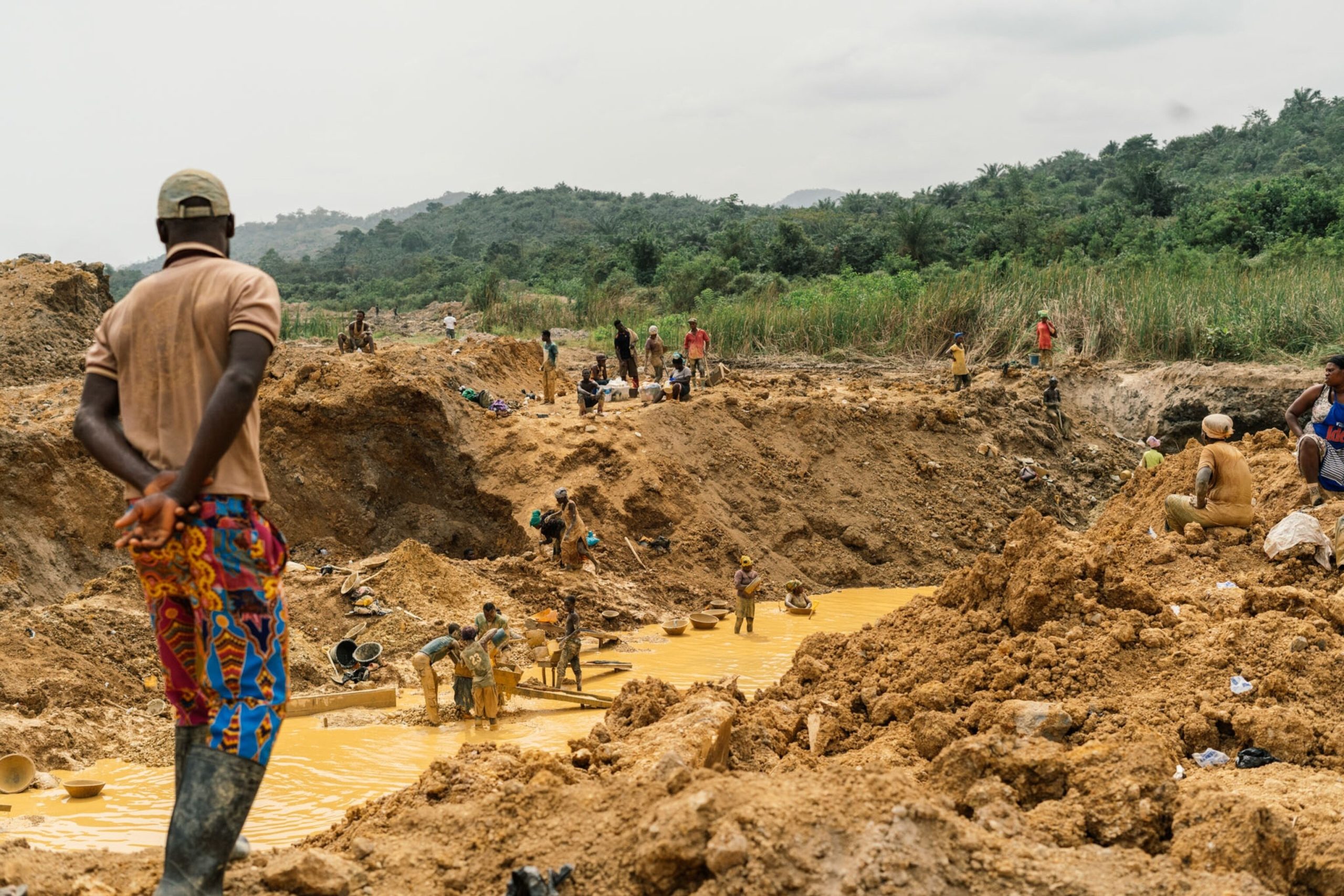
Climate change policy implementation indecisions, including for galamsey and deforestation among others, are consistently creating gaps between policy and actions; thereby threatening food systems in the country.
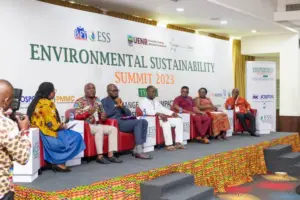
This was the position of an expert panel at the second edition of the B&FT Environmental Sustainability Summit (ESS) that was held in Accra.
Speaking on the theme ‘Climate change and its impact on sustainable agriculture and resilient agri-food systems in Ghana’, a senior law lecturer at the Ghana Institute of Management and Public Administration (GIMPA) Law School, John Darko, noted that though advanced countries have contributed to the menace of climate change and its impact on the environment and food production, the government is partly to blame for its clear lack of commitment in implementing environmental policies to mitigate the crisis.
A lot of investment, according to Mr Darko, has been made to fight menaces such as galamsey; but the political will to stop it remains missing.
“We have laws and policies by the Environmental Protection Agency, natural resource protection policies among others, but implementation is a problem. We continue to destroy our forests even after signing onto the REDD+ initiative; we are doing the opposite. We lack the will, political and financial will, to fight these cankers,” he lamented.
He expressed worry that the US$ 100 billion pledged by Western countries to support African countries mitigate the risks of climate change has been dragging.
Indeed, this pledge came after Europe and others had caused well over US$ 170 trillion worth of damage to the world through carbon emissions in the over 150 years of industrialisation by Europe and America.
“What we can do collectively is to make issues of climate change and environmental pollution a national issue in order to give them a priority, Mr Darko advocated, adding: “It is rather worrying that as it stands, no dedicated authority is handling climate change issues in Ghana”.
Similarly, Director of Climate Innovation Ghana, Dramani Bukari, opined that climate change’s impact is exuding critical impacts on farming communities; and as such, it is important authorities put their shoulders on the wheel so as to reverse such impacts.
With the World Bank projecting over US$ 350 million to tackle droughts in Africa by 2030 from US$ 95 million in 2020, Mr Bukari said Ghana’s current exposure to some level of drought, which stands at about 30 per cent, is a cause for concern.
“Technology is providing solutions to food security. AI is being used through drones to avoid post-harvest losses. This is helping to deepen cereal and grains farming, and we must as a country take cues from that,” he suggested.
The Ghana Agriculture Workers Union (GAWU) also expressed worry about how climate change is impacting the lives of farmers, including the dwindling fortunes in crop production.
“Last year April, GAWU monitored farmers to ascertain the impact of climate change on production; but it was realised that at the time farmers were expecting rain, the dam was dried-up. Climate change is bringing low yields as rains are flooding and crops are dying – including animals in seasons when rains are not expected,” Head of Trading and Education at GAWU, Emelia Ghansah, noted.
She indicated that food has become expensive as farmers’ yield continues to decline due to climate issues, as well as the hike in prices of inputs.
“Key among the destroyers is over-usage of chemicals, which is destroying the environment,” Madam Ghansah said.
Meanwhile, a senior lecturer at the University of Energy and Natural Resources-Sunyani, Dr. Mensah Caleb, said global models are typical examples and blueprints of how the future of sustainability will be.
“Changing weather patterns are creating challenges for food production. The quality of food will also be affected. Surface waters are getting warm, and fishes are not able to come to upper parts of oceans or rivers during upwelling,” he said.
These challenges, he explained, should not rest on the shoulders of the government alone, but on academic communities as well, adding: “The UENR has established processes to monitor forest carbons to inform decision-making. It is also possible to use AI to fight climate issues”.
Similarly, the Business Development Manager of Accra Compost and Recycling Plant, Michael Tuwor, said climate change has become a global phenomenon that must be managed, as its impact on agriculture and food systems is dire and must not be taken for granted.
However, he said, the solution lies in recycling degradable items to curb the menace.
The key responsibility of the Jospong Group is ensuring the minimisation of pollution and degradation to tackle climate change.
“Waste conversion to organic compost, recycling among others are key expertise of the Jospong Group. Plastics have value and we must begin to see that. The Jospong Group will soon embark on a plastic programme to buy plastic bottles from communities through the Namako initiative,” Mr. Tuwor concluded.
Source: BnFT
