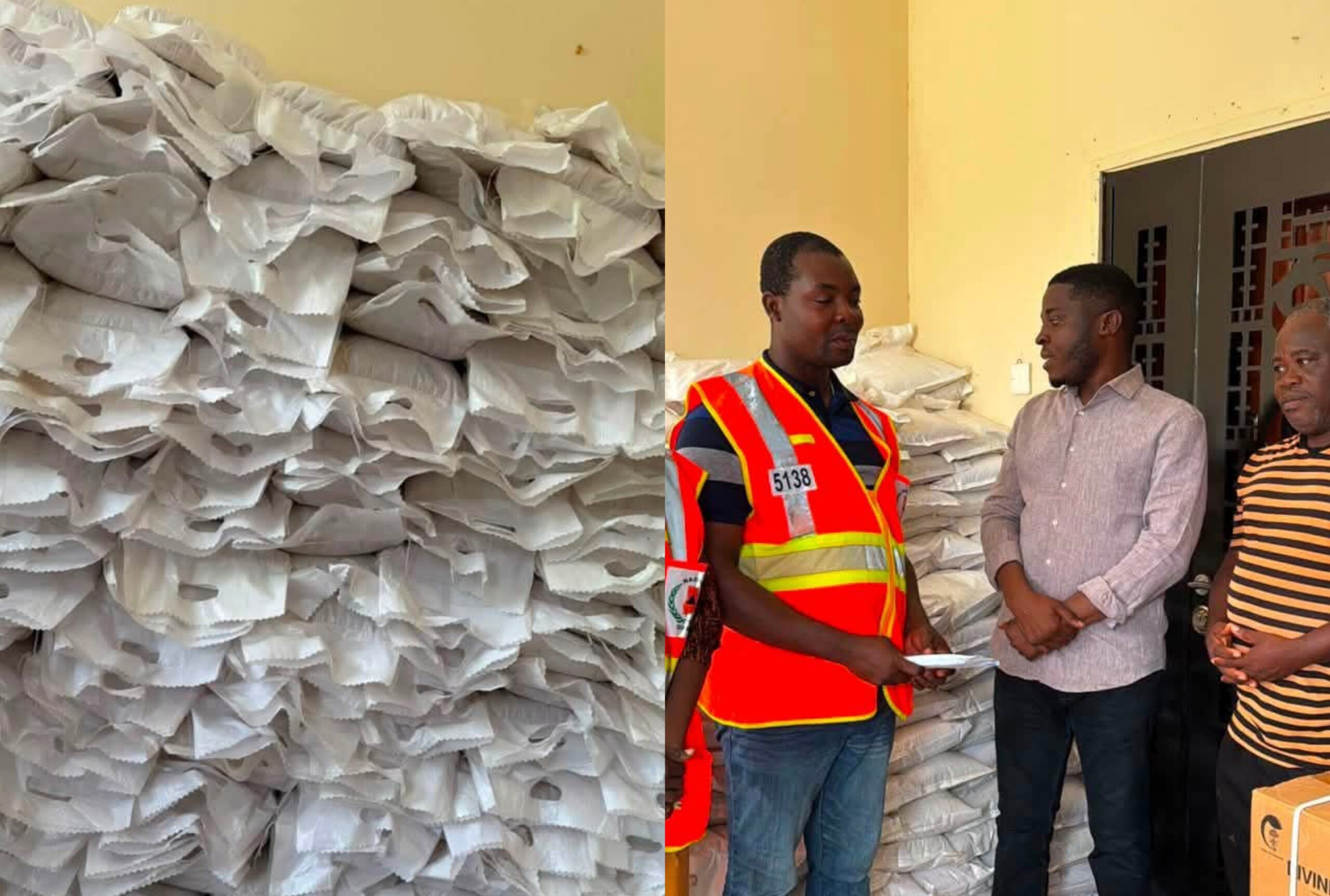
The Member of Parliament for Ketu North, Eric Edem Agbana understands the call for supporting the local rice industry as he purchased over 600 bags and donated to flood victims.
Unlike some government officials, Mr Agbana has set a commendable example of what it means to the local economy by “eating what we grow.”
The recent flood which left thousands of individuals devastated with properties lost saw some government appointees making donations to the affected people.
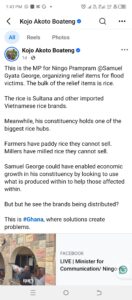
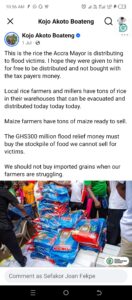
Even though the gesture is a good initiative, appointees including the MP for Ningo-Prampram and Minister for Communications, Samuel Nartey George and the Chief Executive Officer of the Accra Metropolitan Assembly, Michael Kpakpo Allotey came under serious criticisms after donating thousands of 25kg bags of imported rice and other items to the victims.
An agribusiness strategist and Farmer, Kojo Akoto Boateng, while sharing his disappointment remarked that the government’s mission for economic transformation through agribusiness is yet to resonate with some political appointees as their actions have shown insensitivity towards local producers who have been struggling to clear unsold stocks due to the influx of cheap imported rice.
Mr. Boateng however, commended 35-year-old Edem Agbana for the gesture saying it will encourage others to consume local rice and a good signal for youth in leadership prioritising the local economy.
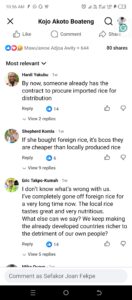
For regular consumers of local rice like Eric Takpo-Kumah, it offers more value to our economy and also a healthier choice.
“I don’t know what’s wrong with us.
I’ve completely gone off foreign rice for a very long time now. The local rice tastes great and is very nutritious.
What else can we say? We keep making the already developed countries richer to the detriment of our own people?” he wrote under Kojo’s post on Facebook.
According to the World Bank Group, “West Africa sends more than $3.5 billion abroad to buy rice” every year.
Even though rice is a crop that grows and thrives in the region, failure to invest in productivity, processing infrastructure, and the market connections that link farmers to consumers has kept West Africa’s rice sector from reaching its full potential, the World Bank Group further added.
The US Department of Agriculture (USDA) also released a Grain and Feed Annual report last year projecting Ghana’s rice imports to hit one million metric tons in 2025/26, covering more than half of national demand, even with an increase in domestic output.
The USDA forecasts locally milled rice production at 900,000 metric tons, an 18 percent increase from the previous year “due to favorable weather and improved farmer participation.”
At a time this is supposed to be a celebration, rice farmers across the country have been dealing with gluts since 2025. The Peasant Farmers Association of Ghana has called on the government several times to place a temporary ban on rice importation to help the local industry clear their stock but this not yielded any results.
In a recent interview with the Minister of Food and Agriculture, Eric Opoku, he categorically said his outfit does not have concrete data on the volume of rice in the country to adhere to such a call from the farmers.
Meanwhile, Mr Opoku during the West Africa Rice Investment Roundtable held in Accra on Tuesday, June 2 disclosed the government’s plans to introduce a new import quota policy aimed at boosting demand for locally produced rice and strengthening the country’s domestic rice value chain.
The policy, he said will link rice import permits directly to support for local production, requiring importers to demonstrate verifiable procurement and partnership with Ghanaian rice farmers and producers before being granted clearance to import.
Citizens like Kojo Akoto Boateng, a farmer and an agribusiness strategist and other Ghanaians are demanding the government stop paying lip service to the agriculture industry and back its words with visible actions to make the sector attractive for the economic transformation agenda it seeks to achieve with the sector.
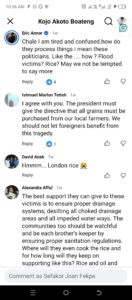
Below are screenshots of sole comments from Ghanaians who want to see a successful agribusiness sector in Ghana.