

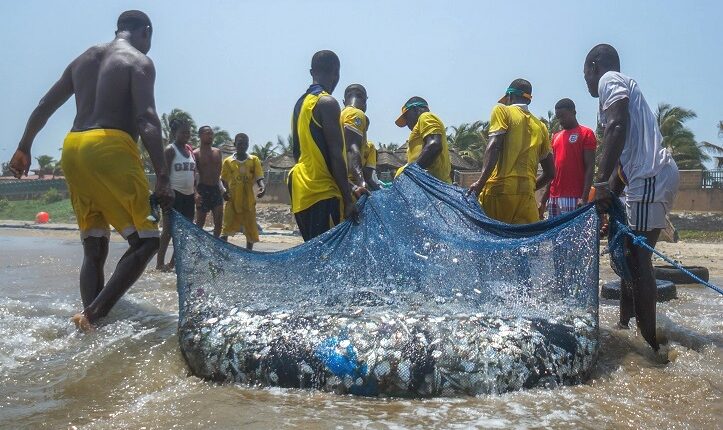
Fisher folks in Keta in the Volta Region have called on the newly sworn-in Minister of Fisheries and Aquaculture Development (MoFAD), Emelia Arthur to engage with stakeholders from fishing associations and communities regarding the 2025 closed fishing season.
They believe that such consultations will facilitate the establishment of a more suitable time frame for the period during which fishing is prohibited in coastal areas, allowing fish stocks to replenish effectively.
Mr Lumor Seshie, a fisherman from Keta, stated in a media interview that the minister and relevant stakeholders should conduct a series of discussions with various fishing communities to determine the optimal month for the next closed fishing season, thereby avoiding low catches and the consequent loss of resources and income.
“The closed season is a vital measure to ensure the sustainability of the fisheries sector; it allows fish stocks a chance to recover and helps prevent overfishing and protect the marine ecosystem. However, we consistently face challenges with the season being held in July,” he remarked.
He pointed out that the timing of the closed fishing season in July each year has significant implications for their business, affecting their livelihoods and coinciding with a period of high catches and demand. Based on prior experiences, he suggested that the closed fishing season should be scheduled for either April or May, when fish stocks are more plentiful, thus boosting the fishing industry for those reliant on it for their income.
“We always adhere to the rules and regulations of the closed season because we understand its importance. However, the main issue we face is the timing. We are urging the new minister to consult with us, as we believe May or April would be the most appropriate period for the closed fishing season,” he added.
Moreover, he noted that studies and experiences have shown that during the July closed fishing season, many aquatic species migrate to neighbouring countries, such as Togo and Benin, and should be rescheduled to a more advantageous period for the benefit of the fisherfolk.
Madam Juliet Amegbo, a fishmonger, also emphasised the necessity for enhanced consultation and collaboration between the Fisheries Ministry and fisherfolk to identify the best solutions for the sustainability of the fisheries sector and the protection of their livelihoods.
She remarked, “The buying and selling during the closed fishing season is always impacted by the high prices of catches. We are struggling as businesswomen, and this is a crucial issue that the new minister should reconsider.”
Other fisher folks also agree that a collaboration among stakeholders would lead to a balanced solution necessary to safeguard the marine ecosystem, which in turn would protect their livelihoods.
In recent years, Ghana’s fisheries sector has faced significant challenges, including overfishing and the degradation of marine habitats. The closed fishing season is a crucial measure to address these challenges and ensure the long-term sustainability of the sector.
The closed fishing season is scheduled from July 1 to July 31 for canoes and inshore vessels, while industrial trawlers observe a two-month closure from July 1 to August 31 annually.
Reporting by Stephen Freeman, Accra.
