

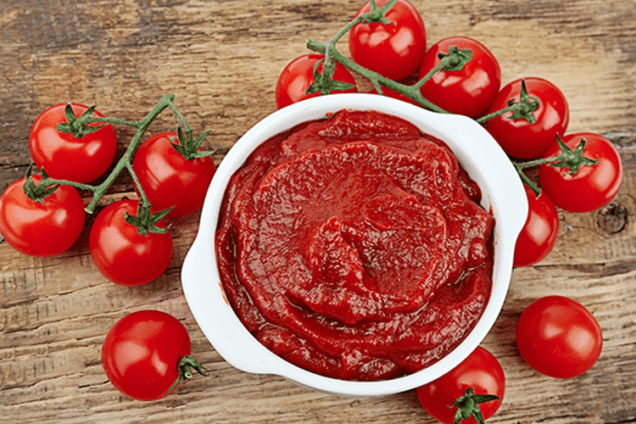
Food Research Scientists at the Department of Food Science and Technology of Kwame Nkrumah University of Science and Technology (KNUST) have identified a harmful banned substance in some tomato pastes sold in Ghana.
The substance, Erythrosine, also known as Red Dye No. 3, is commonly used as a colorant in foods like toffees, candies, and drinks, often labeled as “Number 3.” However, the Ghana Food and Drugs Authority (FDA) prohibits its use in tomato paste production due to its potential health risks. Additionally, starch is also prohibited in tomato paste formulations in Ghana.
A study conducted by KNUST researchers found traces of both starch and Erythrosine in some tomato paste samples. This raises concerns about the safety of tomato concentrates, which are widely used in Ghanaian households, fast-food outlets, and restaurants as an alternative to fresh tomatoes, especially during tomato season deficits.
The study, published in the International Journal of Food Science, assessed eight different tomato paste brands that met standard labeling requirements. All samples exhibited a red to dark red color, a paste-like texture, and the characteristic tomato taste, aligning with standard physical requirements. However, the natural tomato content in some brands fell below the recommended 24% threshold.
Alarmingly, Erythrosine was detected in two samples, despite not being disclosed on the labels. Furthermore, starch content ranged from 1g/100g to 24g/100g in the samples.
The U.S. Food and Drug Administration (USFDA) has already banned Erythrosine from food products due to health risks and has given manufacturers until 2024 to stop its use entirely. The study’s leader, Dr. Abena Boakye, calls on the Ghana FDA to not only remove Erythrosine from tomato products but also extend regulations to confectioneries, candies, drinks, and other food items containing this harmful dye.
The findings emphasize the need for further research and intervention by policymakers to ensure food safety and regulate harmful additives in the market. Stakeholders are urged to use this information to guide efforts in providing safe tomato concentrates and other food products for consumers.
Reporting by Stephen Freeman, Accra.
