

The International Finance Corporation (IFC) says a $100 million investment in Ghana’s Volta Ecological Zone has poultry production high on its agenda, aligning with the country’s plans to cut imports and boost domestic food production.
Speaking during the 81st United Nations General Assembly (UNGA) in New York, IFC Managing Director Makhtar Diop described poultry as a major opportunity for Ghana to achieve self-sufficiency and create jobs.
“Ghana is still on the poultry side, importing a lot of poultry. There is no reason why Ghana cannot, on this side, be self-sufficient,” he said.
The investment in the Volta Ecological Zone is expected to support large-scale agricultural production and value chain development, particularly in sectors where Ghana heavily depends on the external market to meet its domestic demands.
Beyond the $100 million commitment, IFC is investing another $50 million in railway infrastructure to improve connectivity between southern Ghana, the Volta basin, and Sahelian markets.
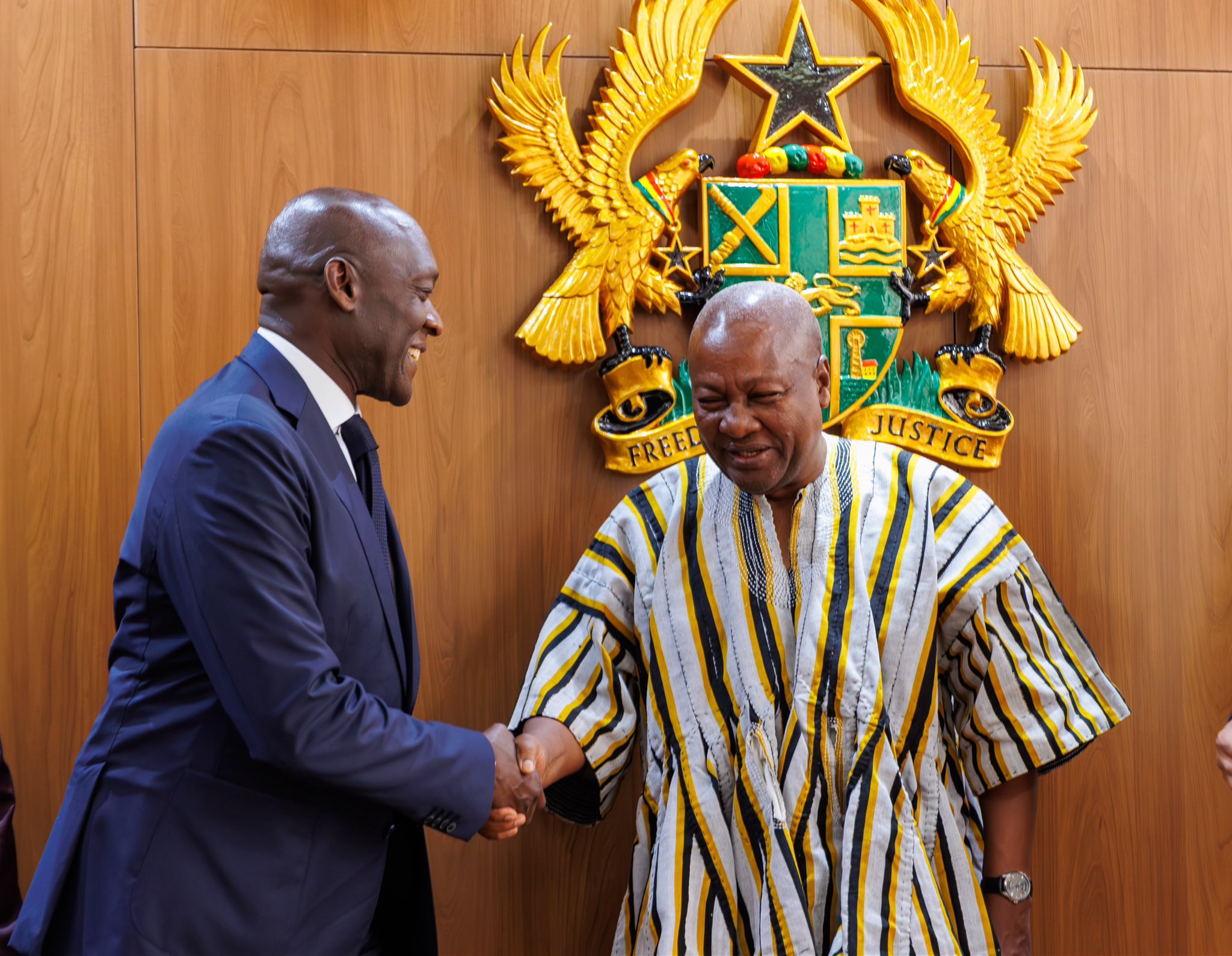
“I went to see President Mahama. He said we have both railways which go into the Volta River, but there is missing seven kilometers to be able to take it to the shore of the river, and we need to take those goods to take them through the river to the north of Ghana so that we are connecting Burkina.
“He told me there are some private investors there who are ready to do that. I went to meet one of them; they were one of our clients, and at the beginning we came, and we were discussing a project, we were just signing 100 million dollars, and we are about to sign another 50 million dollar project,” he said.
The rail project is expected to facilitate the movement of goods through the Volta Lake corridor to northern Ghana and onward to neighbouring Sahelian countries, improving trade flows and reducing transport costs for agricultural produce.
The announcement follows engagements between the IFC and Ghana’s economic management team, including Finance Minister Dr Cassiel Ato Forson, where discussions centred on attracting more private capital into key sectors of the economy.
“At the top of it are energy, infrastructure, agriculture, and the ability to create jobs in this country,” he said.
“The minister gave me a list of sectors in which he would like IFC to continue supporting them. At the top of it is energy, infrastructure, agriculture and the ability to create jobs in this country,” he said.
Diop also emphasised the IFC’s strategy of supporting local production to reduce reliance on imports, particularly in agriculture and related industries.
“We have seen that in the last few years, Ghana has turned the tide. They’ve been able to make a solid adjustment, but also to put in place measures that will structurally, hopefully, help Ghana not to go back into a situation where the debt is a problem, and inflation is affecting the economy,” he said.
He added that the IFC is working to support both foreign and domestic investors, with a focus on building resilient local industries.
“We are leaving the meeting with new ideas of things that we can do better to attract the private sector in Ghana from outside but also to support the domestic private sector,” he said.
The IFC’s growing investment pipeline is currently estimated at $500 million with a potential $1.2 billion in additional projects, as Ghana positions itself as a more attractive destination for private capital, particularly in agriculture, energy, and infrastructure.
With poultry production highlighted as a priority, the Volta Ecological Zone investment signals a shift toward scaling domestic food systems that can meet local needs, generate jobs, and reduce the country’s dependence on imports.
He said the initiative forms part of efforts to strengthen domestic and regional private-sector capacity while reducing the vulnerability of African economies to external shocks.
Mr Diop noted that the IFC’s engagement with government had produced new ideas on how to attract investors from outside Ghana while also supporting existing Ghanaian businesses.
“We are leaving the meeting with new ideas of things that we can do better to attract private sector in Ghana from outside but also to support the domestic private sector,” he said.
