

A major structural shift from rain-fed farming to irrigation-based production is being introduced by the Ministry of Food and Agriculture (MoFA), with government commitment to rehabilitate all existing irrigation infrastructure in the Volta Region and deploy new mobile irrigation systems to smallholder farmers under the Ghana Tomato Self-Sufficiency Initiative (GHATSI).
The announcement was made by the sector Minister, Eric Opoku at Anloga on September 15, in an address that outlined a broad reform package covering irrigation, seed systems, water management and input subsidies.
“A full transition, from rainfed agriculture to irrigation agriculture,” the Minister declared, positioning irrigation expansion as central to Ghana’s food security and productivity agenda.
Fully Rehabilitating Aging Irrigation Systems
Mr Opoku disclosed that an inventory of irrigation infrastructure nationwide shows significant deterioration, with many schemes operating far below capacity.
“Some of them were constructed during Nkrumah’s time, and some during Acheampong’s time a long time ago. Most of them, as we speak, are operating under capacity. Some of them are performing as low as 5% of their capacities,” he said.
The Minister said MoFA has secured financial backing from the Presidency to reverse the decline and restore full functionality.
“And I want to assure the chiefs and the people of Volta Region that all the 22 existing irrigation infrastructure will be rehabilitated by the close of 2027.”
Mobile Irrigation System
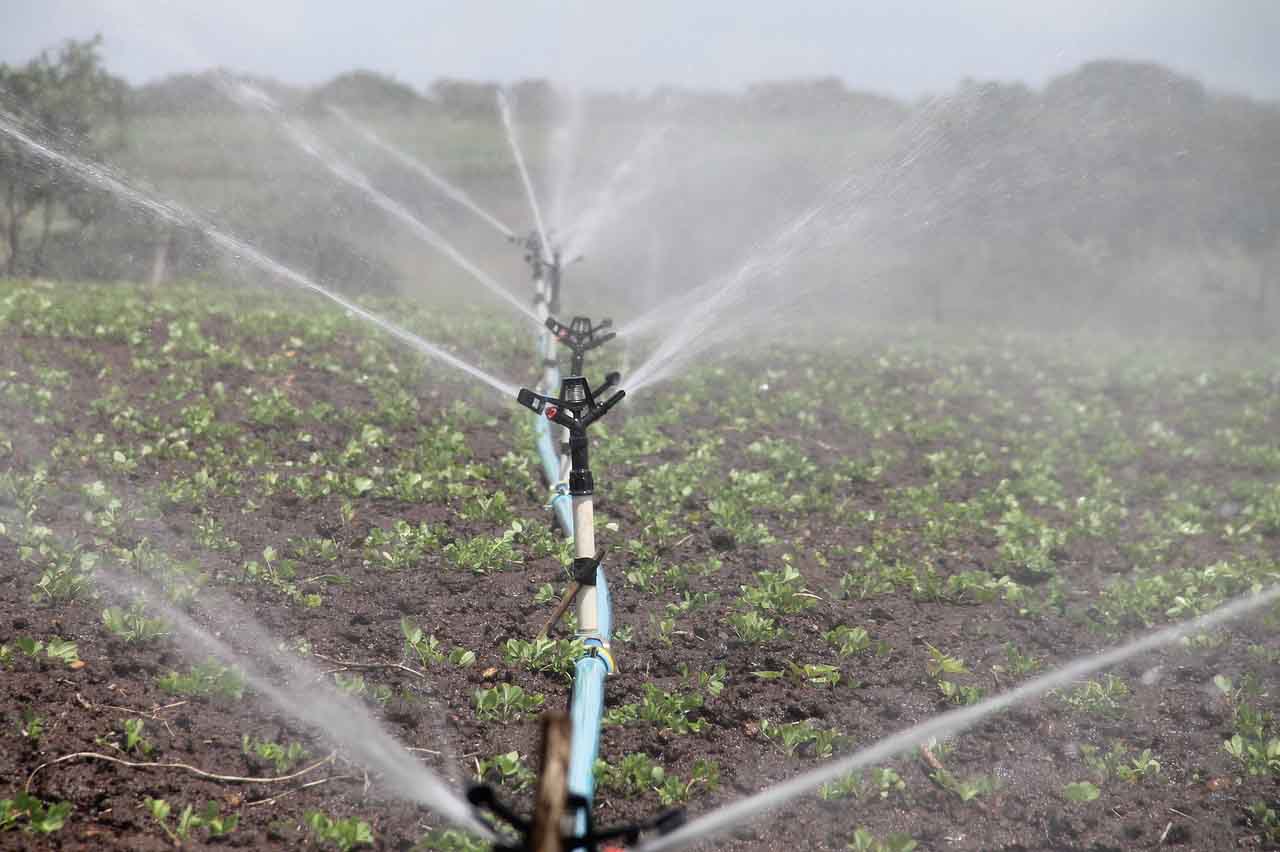
In addition to the rehabilitation, government is rolling out a new mechanised irrigation model designed for rapid deployment on farms.
“We have introduced mobile irrigation infrastructure. It has a water pump with a capacity of 10 horsepower diesel engine, aluminum pipes covering about 127, sprinklers. It covers five acres at a go,” Eric Opoku said.
He further stated that the system is being heavily subsidised to increase farmer access.
“Government of Ghana is bearing 60% of the cost, and the farmers will pay just 40%. The 40% translates into 23,800 Ghana cedis.”
For farmers unable to pay upfront, the Ministry says there is a flexible repayment option for them to explore.
“If you don’t have the 23,800 to pay at once, we can offer you a hire purchase agreement under which you can pay for a period of two years.”
The Ministry added that farm verification will be mandatory before allocation.
“If you are interested, you put in an application, we send our team to look at your farm. We want to make sure you are a farmer, and when that is established, approval will be given.”
Water systems dredging
The irrigation expansion is also linked to urgent water management interventions, particularly dredging of rivers, lagoons and streams to improve flow and storage.
“We have to dredge the lagoon, our streams and our rivers to ensure that we get enough water for irrigation purposes.”
The Minister announced the donation of two brand new excavators to the Volta Regional Coordinating Council “so that whenever there is the need to dredge, you take advantage of this agreement and then ensure that the water flows.”
CSIR Seed Deal Target’s 25–30 Tonne Yields
On crop productivity, government says it has secured a major agreement with the Council for Scientific and Industrial Research (CSIR) to supply improved seed varieties known as Kwabena Kwabena and CRI Copia.
“We have concluded an agreement with CSIR for them to provide us with the type of seed that can get us between 25 and 30 tons. They gave us the assurance that by the end of November the seed will be available.”
Once released, the Ministry will distribute the seeds nationwide before allowing private market access.
Fertiliser support expanded
On fertilizers, the Minister acknowledged financial constraints but said government’s emergency support had been necessary following climate shocks.
“We saw the debilitating effects of two major disasters that this country experienced. One was the Akosombo spillage… and the second was the drought spell in the northern enclave.”
These disruptions forced temporary free input support.
“So government then decided to introduce the free fertilizer policy as an emergency cushion to cushion our farmers.”
However, a policy shift may be imminent as conditions improve.
“Barring all unexpected challenges, we are likely to revert to the subsidy program to ensure that every farmer is able to access fertilizers.”
Meanwhile, the Minister also revealed that organic fertiliser support is being directed to vegetable farmers.
“The Ministry has procured sufficient organic fertiliser, and we have earmarked 200 cartons to support farmers in the Volta Region.”
