

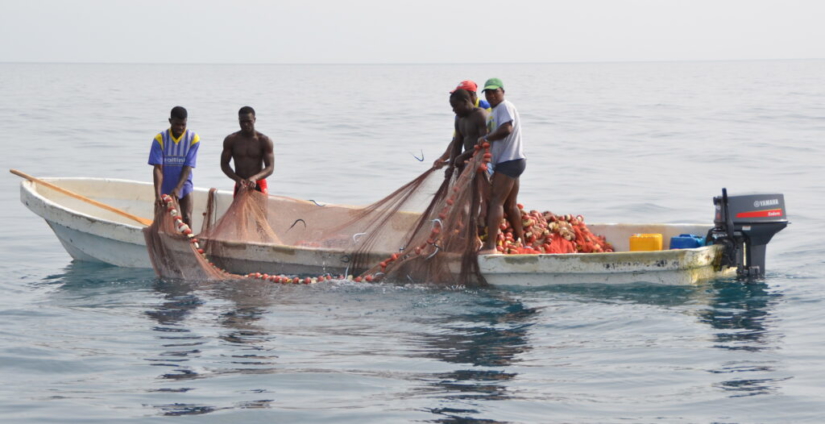
The Minister-Designate for Fisheries and Aquaculture, Emelia Arthur, has expressed worry over the diminishing state of Ghana’s marine and inland fisheries resources, emphasising the need for urgent action and a different approach to supporting aquaculture as a sustainable alternative, focusing on the blue economy.
Speaking during her vetting by Parliament’s Appointments Committee, Emelia Arthur underscored the need to explore and exploit the blue economy to address depleting fish stocks in the country whilst looking at other avenues the blue economy brings, which include deep-sea mining.
“We want to look at fisheries and aquaculture in broad terms and so now there is the concept of a blue economy. Blue economy refers to sustainably exploiting ocean resources for economic growth, livelihoods and jobs. Blue economy has components which include fisheries, bioprospecting and mining under the sea,” she emphasised
“So what we intend to do now is set up a blue economy commission that will be working to look at how we situate fishing beyond the narrow sense that we see now. And so we will be establishing the blue economy commission which will be the third agency of the ministry to support the fisheries commission and premix fuel body that the ministry already has,” she said.
She further revealed that Ghana currently has about six large-scale aquaculture farms, several medium-scale operations, and approximately 2,300 small-scale farms.
To bolster these efforts, Madam Arthur outlined plans to attract direct funding to support aquaculture operators and improve their capacity to meet growing demand.
“Aquaculture is extremely important since fisheries provide 60% of proteins for Ghanaians but our marine and inland resources are depleting. So, we need to enhance aquaculture.”
“Also, one of the things we have to do to support aquaculture is the feed,” she stated.
