

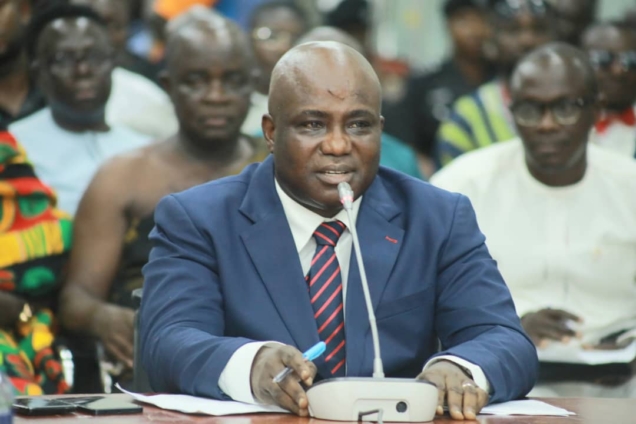
Parliament has given ministerial nominee, Eric Opoku the green light to become the Minister in charge of Food and Agriculture.
As one of the sectors that hold the key Ghana’s economic growth, the Appointments Committee conducted a rigorous vetting process, evaluating Mr. Opoku’s qualifications, experience, and proposed strategies for the ministry. After thorough assessment, the committee unanimously recommended their confirmation.
During a plenary session chaired by Second Deputy Speaker Andrew Asiamah, Parliament engaged in extensive deliberations on the nominee’s credentials and plans to address pressing national issues concerning food and farmers. Following the discussions, a vote was held, resulting in the approval of his nomination.
With this parliamentary endorsement, Eric Opoku is now set to assume his ministerial role, contributing to the government’s development agenda.
Notable among Mr. Opoku’s agenda is his proposal to institute an insurance scheme for farmers to enhance access to credit facilities to help expand their businesses.
“In 1965, Dr Kwame Nkrumah established what we now call the Agricultural Development Bank to provide credit facilities for the development and modernisation of agriculture. Unfortunately, because our agriculture is rain-fed, the banks are unwilling to discharge this special mandate. That is why our farmers are suffering from lack of credit. The NDC intends to introduce a new programme called Ghana Agricultural Insurance Scheme (GAIS),” he revealed in an answer to a question posed by the immediate past sector minister, Bryan Acheampong.
He explained that “Under this programme, we want to subsidise agricultural insurance so that farmers can have insurance on their farms. Once you have the insurance, the banks are ready to advance loans to you knowing very well that no matter the amount they give to you, once it falls within the limit of the insurance, it can be paid.”
Besides, he also pledged to liaise with the ministry of education to establish school farms in Senior High Schools to ensure sustainable food supply and avoid food shortages.
“We will also recruit labourers for secondary schools to help them establish and maintain their farms. If nothing else, we can reduce the cost of school feeding and also enhance both the quality and quantity of the food provided to our students,” Mr Eric Opoku added.
Reporting by Stephen Freeman, Accra
