

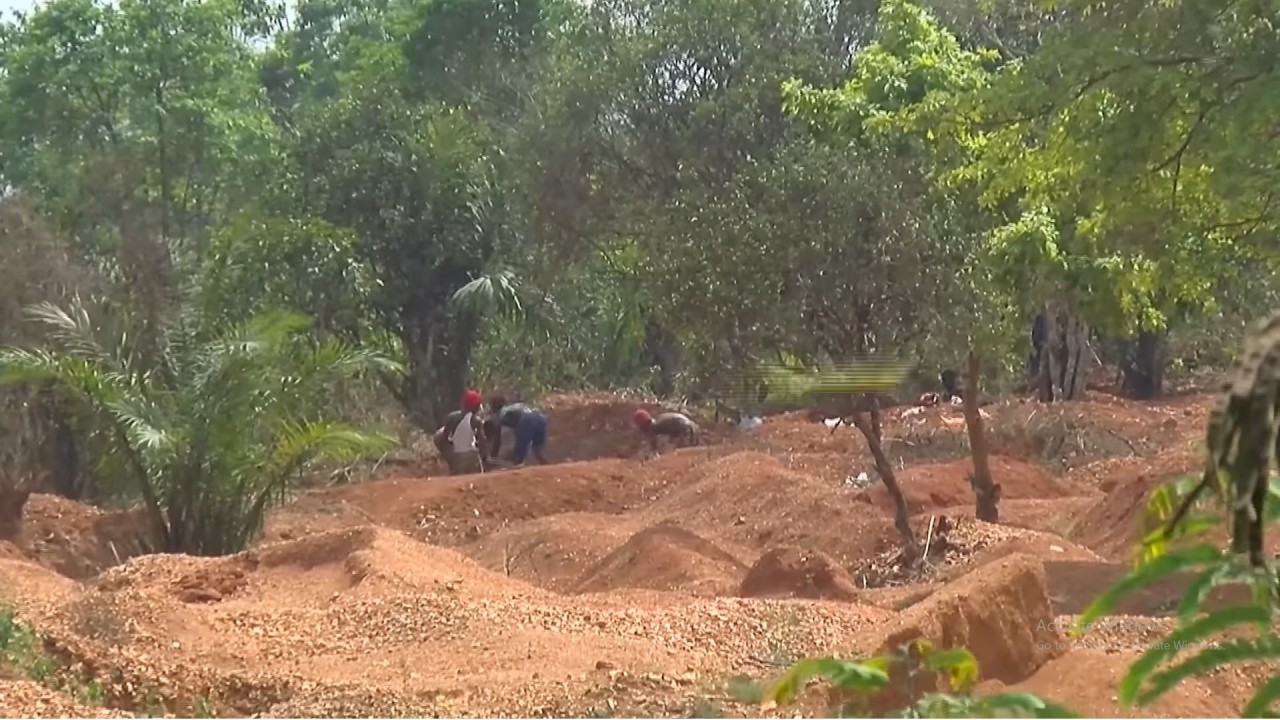
In a bid to curb the devastating impact of illegal mining on cash crops; especially, cocoa, cashew, coconut and rubber crops, the Tree Crop Development Authority (TCDA) says it is ready to fight the menace, popularly called ‘galamsey’, through the establishment of a task force with the help of regional coordinating councils, and the security agencies.
Illegal mining in recent times has destroyed vast farmlands, displacing farmers and threatening food security. The practice has led to severe environmental degradation, including deforestation and water pollution, which further harm agricultural productivity.
Chemicals used in mining, such as mercury and cyanide, contaminate soil and water sources, making farmland unusable for crops. Many farmers have lost their livelihoods as their fertile lands are rendered barren due to mining activities.
The destruction of farmlands also forces communities to rely on imported food, increasing poverty and inequality.
This cycle of environmental and economic harm highlights the urgent need for stricter regulations and sustainable practices to protect Ghana’s agricultural future.
However, speaking to Enyonam Manye Adjetey on The Ghanaian Farmer Show on Radio Gold in Accra on Sunday, 16 March 2025, on the back of how illegal mining is threatening to disrupt cashew farming in the Bono region, the Deputy CEO of Tree Crop Development Authority. Dr. Kofi Kofituo said galamsey is a canker that needs to be tackled.
“It is a canker that needs urgent tackling. We’re already suffering from the issue of land grabbing and encroaching; we cannot allow galamsey to affect every aspect of our lives, which brings our country income and relief,” he said.
Dr. Kofituo also stated that he has had “discussions with the Bono regional minister, who gave a strong commitment to fight illegal mining to the last drop of his blood, which is affecting cashew farms in his region.”
As an Authority, they are looking for ways of increasing tree crop production in the country, with much emphasis on cocoa and cashew rubber, in hopes of opening international markets to farmers and, hence, the need for quality produce devoid of contamination of chemicals from illegal mining.
Also adding his voice to the conversation, Nana Owuodzi Abban Kurentsir VIII, a passionate Agribusiness and Fintech Entrepreneur and Twafohen of Kuntu via Saltpond, appealed to the government of the day to invest in tree crops to boost the country’s growth and GDP.
He also commended the government for deliberately establishing an Authority to take care of tree crops, as well as the commitment of 1.5 billion cedis to support the agricultural sector, however, he called for benchmarks to be set to ensure full utilisation of the seed money allocated.
Speaking on the issue of chicken imports, Nana Kurentsir VIII is of the view that increasing tariffs on poultry imports will encourage local farmers to produce more chicken for local consumption whilst deterring those who import poultry products into the country to cut down on their imports. He also believes the “nkoko nketenkete “ initiative will boost the poultry sector, even though, diversification of the field with ducks, guinea fowls and other birds will increase production.
The CEO and founder of Miss Agriculture Ghana, Esther Kyerewaa Twumasi also urged the government to consider partnerships with the private sector to be able to fully support the agricultural sector.
“We should also look at collaborations between the private sectors; they can also offer opportunities in the form of agri-processing, marketing and packaging of our food products; I believe this will create a lot of jobs for the theming youth in Ghana,” she said.
Madam Kyerewaa Twumasi again advocated for the allocation of 95% of the “nkoko nketenkete” project by the government to women. She believes women can make good use of the little they are given and multiply them by many folds. Madam Kyerewaa said that with the right training and skills development training for the women, the government will not only be employing women but also ensuring gender parity, which this government has been propagating.
Reporting by Stephen Freeman, Accra.
