

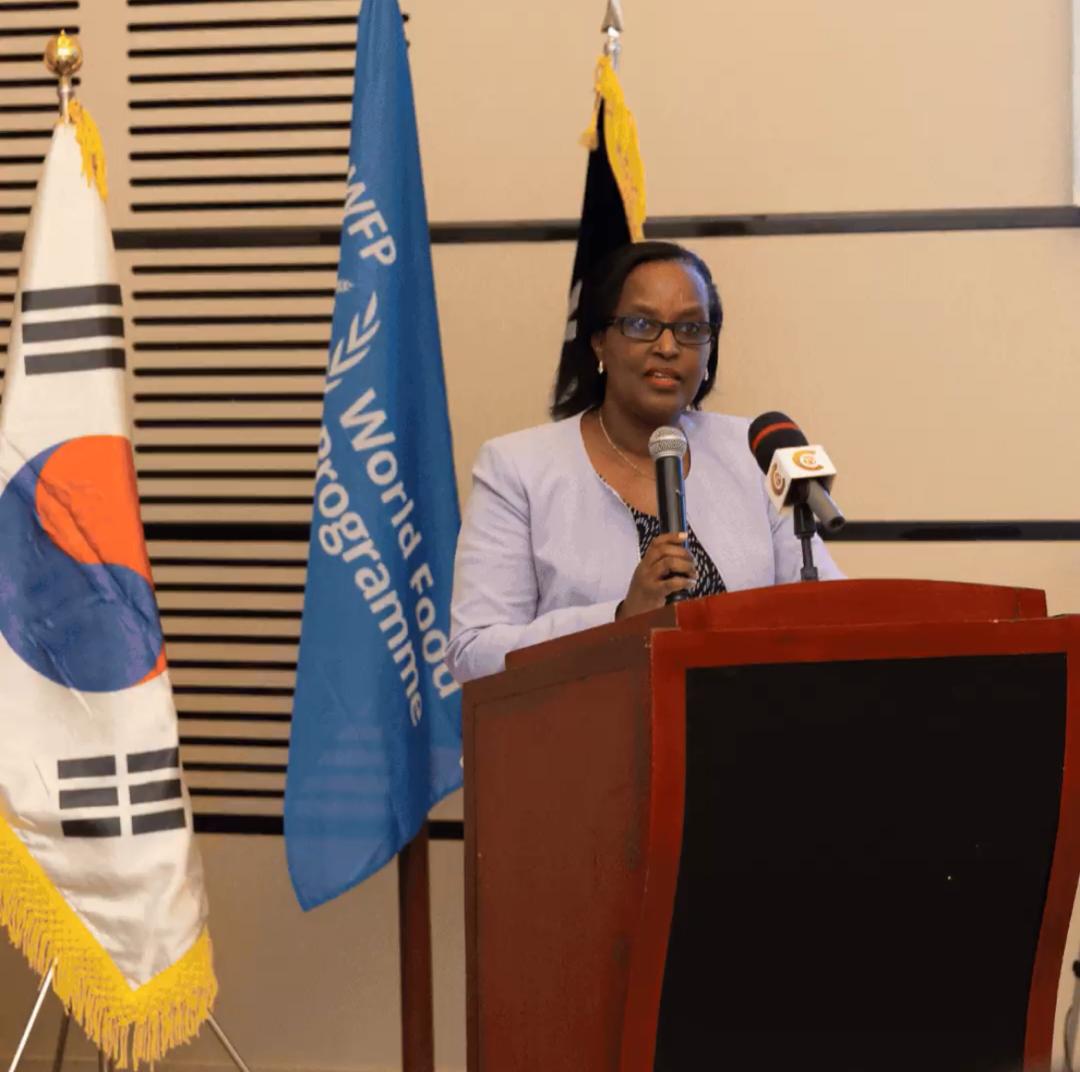
The World Food Programme – Ghana, with support from the Korea International Cooperation Agency (KOICA), has launched a new project aimed at boosting the food security, nutrition, and livelihoods of the Ghanaian people.
The project, which aligns with the Government of Ghana’s vision for digital transformation and economic resilience seeks to empower 15,500 young Ghanaians, with a deliberate focus on women and persons with disabilities, by enhancing their access to digital technology and smart farming solutions.
Speaking during the launch of the event at the Labadi Beach Hotel in Accra on Monday, 17 February 2025, under theme “Youth Economic Empowerment through Digitalization for Resilience in Food and Nutrition Security and Improved Livelihoods project”, the country director and representative for the World Food Programme, Miss Aurore Rusiga, said the project aims to equip the Ghanaian youth with necessary skills and resources for sustainable farming.
“Through this initiative, we aim to equip Ghana’s youth with the digital skills and tools they need to enhance agricultural productivity, strengthen food systems, improve livelihoods, and secure sustainable employment opportunities”, Miss Rusiga highlighted.
Providing more details of the project through her speech, Miss Rusiga also pointed out how the project will “promote climate adaptation practices and digital agriculture to increase food security and resilience, strengthen youth-led Agri-Tech businesses and improve their access to financial literacy and digital skills”.
She further indicated that the project would help leverage technology for social and behaviour change communication (SBCC), including a digital loyalty platform that rewards users for adopting and maintaining healthy dietary and lifestyle practices.
The project will be implemented in 56 districts of six regions including the Upper West, Upper East, Northern, Savannah and the Greater Accra regions.
The WFP also commended the government for its infrastructure investments and digitalisation efforts, which it intends to build upon to expand reach and impact, particularly in rural and underserved areas.
Some key partnerships of the project include the Ministries of Food and Agriculture, Communications and Digitalization, Gender, and Social Protection, Private sector actors, civil society and local communities, as well as UN entities and development partners to ensure alignment with the broader UN Sustainable Development Cooperation Framework (UNSDCF).
Reporting by Stephen Freeman, Accra.
