

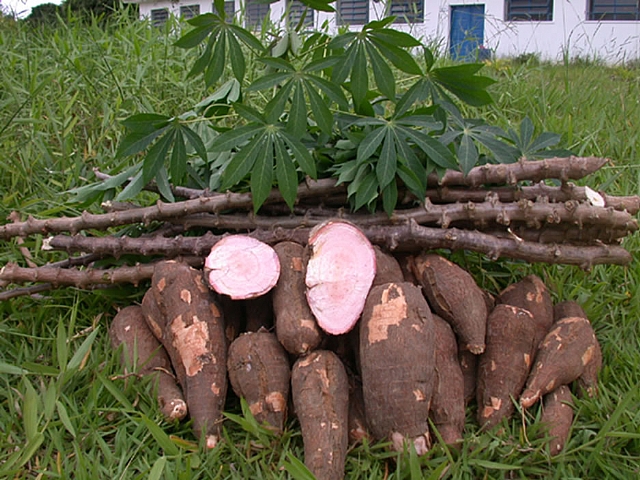
Malaysia has leveraged on nuclear technology to develop cassava varieties with the potential to mature in about six months, reducing the maturity period needed for existing ones to nearly half, 11 to 12 months.
According to the Malaysian Nuclear Agency research officer, Norazlina Noordin work on the new varieties started through a research that began in 2021, adding that it recorded higher yields than conventional planting materials.
She said after further evaluation and development the varieties could be commercialised within the next two years.
The research aims to shorten cassava’s maturity period without compromising yields, potentially allowing farmers to plant the crop more frequently and improve returns.
The project was carried out with the Department of Agriculture and supported by the International Atomic Energy Agency, including a research grant of about RM100,000 (GH₵277,987.61) over five years.
The technology exposes cassava stem cuttings to gamma radiation before planting and screening them for desirable traits such as early maturity and high yields.
Norazlina said the process does not leave radioactive residue in the planting materials because the radiation passes through them, similar to an X-ray.
However, developing stable new varieties requires extensive screening. Researchers must assess at least 1,000 plants and track their characteristics across generations to ensure the desired traits do not revert.
Meanwhile, Malaysia is studying the same technology for other crops including bananas, sweet potatoes and taro, with research focusing on higher yields and resistance to diseases, pests and changing weather conditions.
