

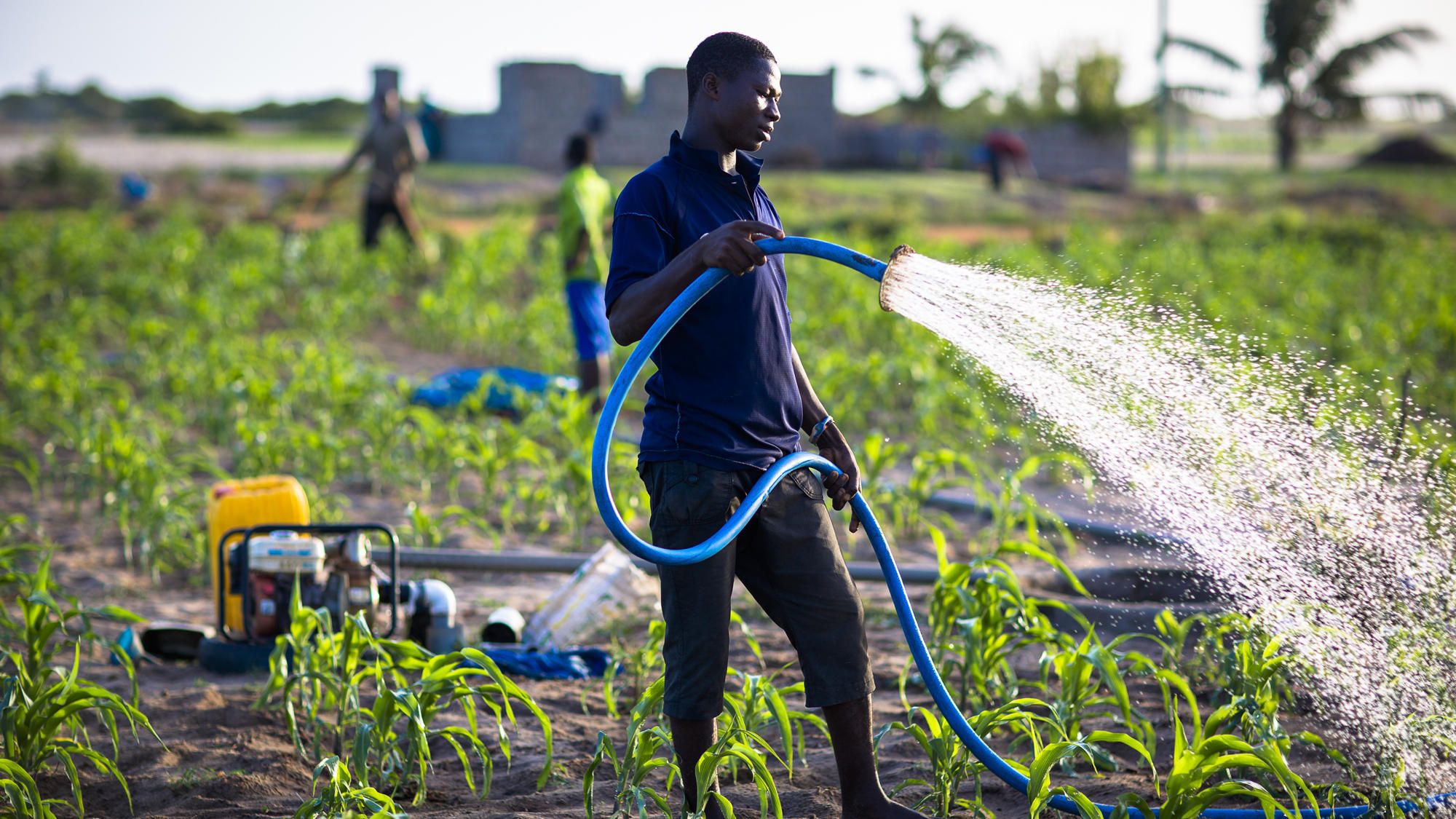
The General Agricultural Workers’ Union (GAWU) is calling for the establishment of a Ghana Agriculture Service to spearhead reforms and oversee the implementation of national policies designed to transform the agricultural sector.
According to the Union, this initiative will significantly enhance agricultural production and improve food security across the nation.
During a recent media interaction, Dr. Pascal Kaba, Deputy General Secretary of GAWU, stated, “The time for the Ghana Agriculture Service is now, as it will empower decision-making and facilitate monitoring at local levels.”
Dr. Kaba highlighted that the absence of such a service has impeded the efficient delivery of essential services to farmers and other stakeholders within the agricultural value chain. He emphasised that establishing this service would proactively tackle challenges related to production, processing, storage, and marketing, thereby boosting productivity and increasing the sector’s contribution to Gross Domestic Product (GDP).
The Food and Agriculture Organisation (FAO) reports that agriculture fulfils over 90 per cent of the country’s food requirements, accounts for 40 per cent of export earnings, and employs approximately 52 per cent of the workforce. The World Bank further notes that the sector is a vital source of livelihood for Ghana’s poorest households, with two-thirds of non-oil manufacturing dependent on agriculture for raw materials.
Despite its importance, agriculture’s contribution to GDP has declined in recent years. Data from the Ghana Statistical Service (GSS) indicates that agriculture contributed only 0.6 per cent to GDP in the third quarter of 2024, compared to 3.4 per cent from industry and services.
Dr. Kaba stressed that the establishment of the Ghana Agriculture Service could ensure proper resource allocation, timely delivery, and effective management within the sector, while also promoting collaboration between public and private sector stakeholders.
He expressed concern about the lack of autonomy among public sector workers in agriculture, asserting that the creation of the Service would provide the necessary independence to improve sector performance.
“We cannot continue to assert that agriculture is the backbone of the economy while lacking a dedicated service for it, similar to the Ghana Health Service and the Ghana Education Service. Establishing this service will help prevent local government authorities from undermining agricultural workers, allowing them to achieve the results needed for the sector,” he remarked.
The newly appointed Minister for Agriculture, Mr. Eric Opoku, has introduced government initiatives aimed at revitalising the agricultural sector, including the ‘Feed Ghana’ and ‘Feed the Industry’ programmes. These initiatives are designed to address challenges within the agricultural value chain, enhance crop yields, ensure domestic food security, and promote industrial growth.
Reporting by Stephen Freeman, Accra
