

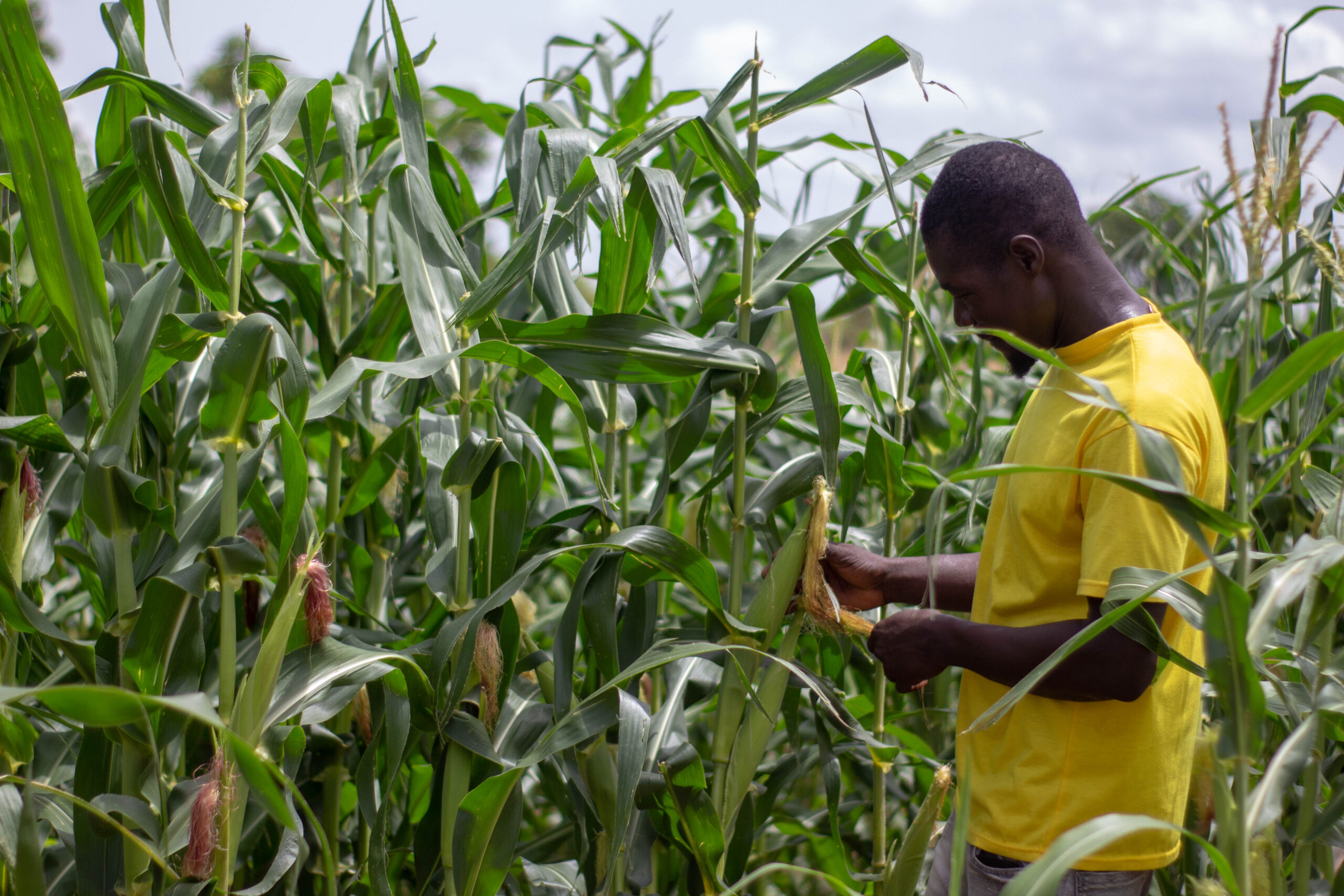
The World Bank has said that in many countries today, the agriculture sector is not producing food efficiently or distributing it evenly.
The World Bank noted that the lack of infrastructure, counterproductive policies, and financial risk continue to constrain the industry’s growth.
At the same time, it said, conflict, economic shocks, and extreme weather are disrupting production and markets.
The Bretton Woods Institution indicated that farming and agribusiness do more than just feed people. They power economic growth and reduce poverty, it said.
The food sector supports millions of jobs on the farm and has the potential to create many more across the supply chain, from production and processing to transport, trade and retail, it said in a report.
The World Bank said that the food sector matters because in every economy, good nutrition underpins health, learning, and productivity.
“Over 300 million people around the world go hungry every day, while 2.8 billion can’t afford a healthy meal.
“The demand for food is expected to increase by 30% between now and 2050. This is an opportunity to create better-paying jobs while feeding people,” it said.
Quoting from the International Monetary Fund’s (IMF) April 2026 World Economic Outlook, the World Bank noted that the outlook further points out that Sub-Saharan African economies are especially exposed via heavy food and fertilizer import dependence, and that weather concerns in major agriculture producing regions — including Brazil and West Africa — continue to feed into global food-price expectations.
The April 2026 World Food Security Outlook projections are anchored in the IMF’s April 2026 Outlook, which reflects the initial effects of the conflict. The IMF characterizes growth risks as tilted to the downside and inflation risks to the upside, with energy prices remaining a key source of uncertainty. The default reference scenario assumes a relatively short-lived conflict and gradual normalization of energy markets. The downside case assumes a more prolonged disruption, including further attacks on critical energy infrastructure and a longer closure of the Strait of Hormuz.
The April 2026 outlook estimates that 927 million people were severely food insecure in 2023. The preliminary estimate for 2025 is 993 million.
Story by Kofi Nartey
