

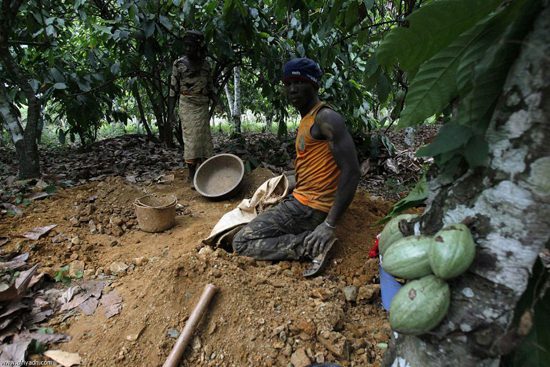
Agricultural stakeholders are raising the alarm in the Ashanti Region as increasing numbers of farmers leave their fields to engage in illegal mining (galamsey). This is a trend that poses a serious danger to long-term food security.
According to the Ministry of Food and Agriculture, districts such as Amansie Central District, Amansie West District and Amansie South District which are long known for farming, have increasing number of farmers now consider galamsey more financially attractive than traditional agriculture.
Many believe the income from mining offers quicker returns than the uncertain, time-consuming yields from crops. This is especially when farming inputs, labour, and market conditions are unpredictable.
Agricultural officials say that galamsey is not just reducing the number of active farmers , but is also destroying the farmlands. Illegal mining activities often result in the loss of fertile soil and arable land, compromising both the quality and quantity of future food production.
The wider implications of this trend is; as more farms are lost or abandoned, local food production may decline. This could lead to food shortages, rising food prices, and increased reliance on food imports. This effect will overall decrease the efficacy of the Feed Ghana Progrmme.
Amansie South District Director of Agriculture, Millicent Aluah Ackah stated;
“We are being challenged because of galamsey. Many farms have been destroyed due to illegal mining activities, and this is affecting where we currently have significant farming operations.”
She revealed logistical challenges and inadequate staffing at the District Agriculture Office. Ms Ackah stated them as key obstacles impeding the efforts to support farmers and protect farmlands.
Without stronger institutional support, many farmers feel they have little choice but to pursue galamsey, especially when agriculture no longer seems economically viable.
She appealed for greater support, ahead of the upcoming Farmers’ Day celebrations. She also suggested the provision of incentives and prizes that could encourage farmers to remain in agriculture.
The agriculture sector needs renewed commitment to prevent further drift and the corresponding threat to food security.
Rehabilitating mined lands by restoring soil fertility, replanting vegetation, and ensuring safe water supplies may help recover lost farmland over time.
Meanwhile, awareness campaigns and inclusive rural development plans could offer alternative livelihoods and reduce the financial lure of illegal mining.
It is important for Ghana to work harder and smarter in the Agricultural sector if ever Ghana wants to totally break free of food dependency and make full benefit of the Feed Ghana Programme Agenda.
Story by: Caris Adjei London
