

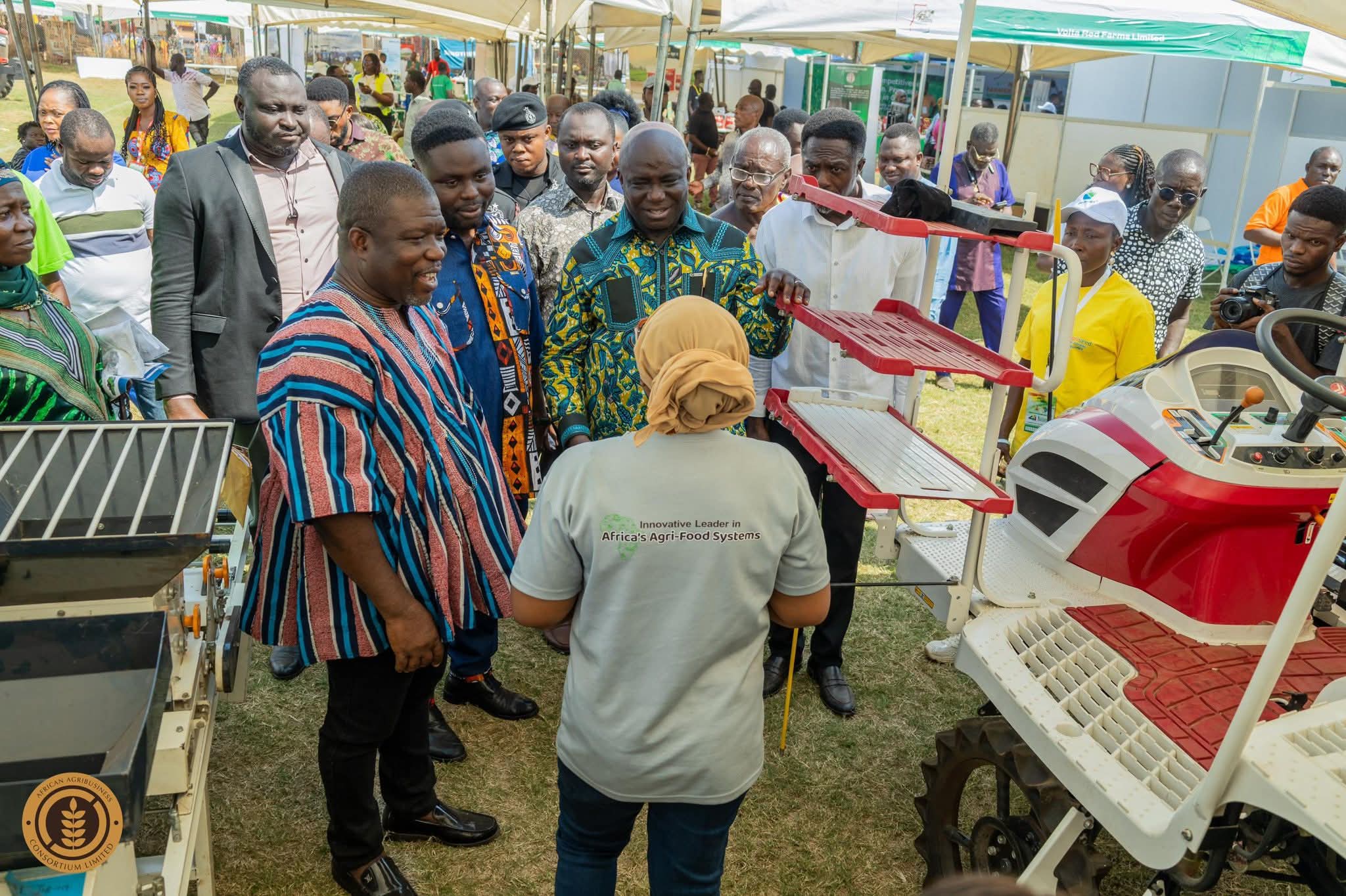
Ghana’s agricultural sector is entering a new phase of modernisation as the government places research, data, and technology at the centre of national food production strategies.
At the 2025 National Farmers’ Day celebration in Ho, the Minister for Food and Agriculture Eric Opoku, reaffirmed that the future of farming in Ghana will be built on science, not guesswork.
For decades, many farming decisions across the country have relied on experience passed down through generations. While valuable, these traditional methods are becoming less reliable in the face of changing weather patterns, rising input costs, and shifting market demands.
The government says its new direction represents a strategic shift toward evidence-based agriculture where policies and farmer support programmes are shaped by data.
According to the ministry, this approach will ensure that interventions are not only well-intentioned but also scientifically proven to work under Ghanaian conditions.
Mr. Eric Opuku stated; “Since we assumed office, all our policies have been science-backed. We have placed research and technology at the centre of our agricultural transformation agenda because the challenges confronting farmers today demand precision, innovation, and evidence-driven solutions.”
Central to the government’s strategy is the integration of agricultural technology (AgriTech) into mainstream farming. This may include; improved seeds developed through local research, drones for crop monitoring and fertiliser application, GIS-powered land-use planning, Weather-forecasting apps for farmers and Digital platforms that connect farmers to extension services.
These technologies are already being piloted across different regions, with MoFA collaborating with universities, CSIR, and private AgriTech firms to scale them.
The Ministry believes scientific analysis is key to solving long-standing challenges such as poor soil health and acidity, inefficient fertiliser distribution, pest outbreaks, post-harvest losses and low yields in staple crops.
Instead of one-size-fits-all policies, the new model uses agronomic evidence to tailor solutions based on each region’s ecological zone.
Mr Eric Opoku also praised Ghanaian farmers for their perseverance and hard work. He emphasised that science-led agriculture is essential to securing food self-sufficiency. He also stated that farmers deserved the best tools and knowledge.
“Our farmers deserve the best tools and the best knowledge. That is why we are committed to policies that are not only well-intentioned but scientifically validated to guarantee impact, ” he stated.
The Minister, assuring stakeholders, revealed that the government will deepen its collaboration with scientists, extension officers, and private-sector innovators to modernise the sector.
Climate change remains one of the biggest threats to Ghana’s food systems. The ministry says a scientific approach offers the strongest defence.
Its benefits include early warning systems for floods and drought, development of drought-tolerant and disease-resistant crops,
strategic planning for irrigation infrastructure, and the adoption of conservation agriculture and improved water management
By using predictive climate models, the government believes farmers can adapt faster and reduce losses caused by unpredictable weather.
For farmers, this means a future where decisions are supported by real data. Input supply also becomes efficient, and innovation becomes part of everyday practice.
Story by: Caris Adjei London
