

Ghana’s heavy reliance on other countries to meet its poultry needs has attracted promises upon promises from different governments. The latest, Nkoko Nkitinkiti Programme appears to be the loudest, receiving positive feedback from Ghanaians. However, implementation has been a major concern.
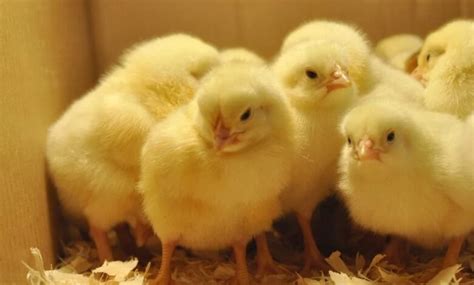
A Think Tank, IMANI Africa has raised some red-flags after an announcement by the Minister of Agriculture, Dr. Eric Opoku to distribute 3 million day-old chicks across constituencies in Ghana and commercial farms. According to him, GHC200 million is ready to kick-start the project, expected to reduce the country’s heavy reliance on imported poultry, which costs over $300 million annually.
As part of the distribution plan, every constituency will receive 10,000 birds free of charge, 80,000 birds will be sent to 50 commercial-scale farmers while medium-scale farmers are also expected to receive between 1,000 and 3,000 birds each.
Commercial and medium-scale farmers are expected to repay the cost of the birds, but the allocations to constituencies will remain free to beneficiaries.
The Agric Minister’s earlier announcement stated that the first week of October for initiative to begin.
An analysis by IMANI Africa, shared by its President, Franklin Cudjoe on Facebook has expressed concern over the silence of the government about state-of-the-art processing infrastructure in the programme to ensure value for money.
“While the programme promises to boost domestic production, there is a critical dimension that cannot be overlooked: large-scale poultry production must go hand in hand with processing and cold-chain infrastructure. Without processing capacity, the increased output risks going to waste, prices could fluctuate wildly, and the broader goal of building a sustainable poultry sector would be undermined,” IMANI remarked.
The President of the Greater Accra Poultry Farmers Association, Kwame Anim Somuah, raised similar concerns. “…What we are asking for is an update to farmer associations so we can plan accordingly. For instance, if I raise my birds now, in less than two months, they’ll be ready. But the question is, when they are fully matured, where do I take them?” The analysis further added.
IMANI Africa admonished that the government must create establishments for processing, cold storage, and distribution networks alongside bird production.
“This integration is not just about avoiding waste. It is about building an entire domestic poultry ecosystem. Proper processing ensures consistent quality, allows urban markets to access convenient products, stabilises prices, and creates jobs along the value chain from farming to processing, packaging, and logistics. At the same time, it strengthens backward linkages, supporting maize and soybean production for feed, and stimulating industrial growth.”
