

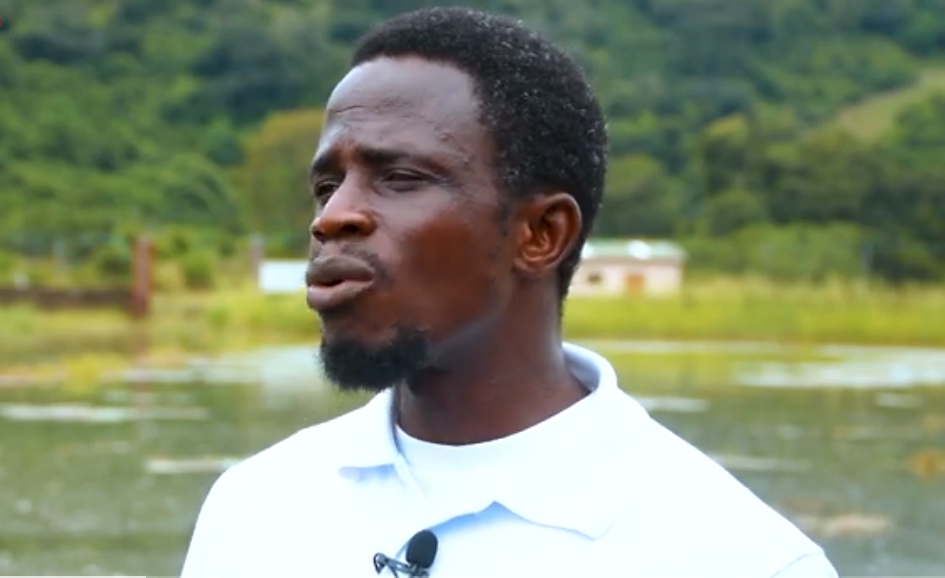
The Aquaculture Research and Development Centre (ARDEC), an institution under the Council for Scientific and Industrial Research (CSIR) Water Research Institute has had its share of the destruction being caused by a spillage from the Akosombo Dam in the Eastern Region as majority of its fish ponds are flooded and cages washed away.
According to a Senior Research Scientist, Aquaculture and Environment at ARDEG, Dr. Etornyo Agbeko, the situation will result in a shortage of fish in Ghana and other West African countries such as Nigeria, Togo/Cameroon, and Benin as the centre is a main supplier of broodstocks to the aquaculture industry in the subregion.
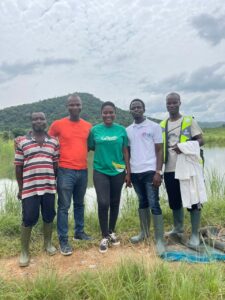
Dr. Agbeko made these revelations to journalists during a visit led by officers of the Chamber of Aquaculture Ghana to some affected fish farms in Akosombo.
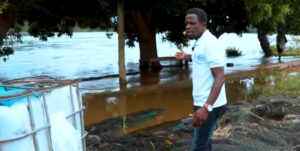
“We used to have about 54 cages here and 20 of them were filled with tilapia but now everything is gone. In the process of salvaging, we were able to salvage about 17 of them but of the 20 that contained fish, all the fish were gone, we were only able to salvage the drums and the frame. The water used to be about 50 metres away.”
He disclosed that they have been able to salvage 250 catfish broodstocks out of 700, another 200 tilapia broodstock were also salvaged out of 14,000 adding that the 14,000 produce around 1,000,000 fingerlings.
“We had 14,000 broodstock at the bio-secured area. This was work that had been done about 20 to 30 years where we have the Akosombo stream of the tilapia being developed and we had lost most of these fish. In terms of value, this 14,000 broodstock would amount to GHC228,000.00 that had been lost when we quantify it based on the various sizes that we have prior to the flood.”
The Volta River Authority (VRA) begun the controlled spillage at the Akosombo and Kpong dams, both in the Eastern Region, from September 15, 2023 as a result of excess water in both reservoirs due to appreciable levels of rainfall.
The spillage has affected almost all the communities along the lower Volta Basin, resulting in widespread power cuts in the affected communities.
“The spillage is still ongoing and we have more water coming in, the water level is increasing in terms of volume and the velocity is also increasing. This is the extent of damage that has been caused by the spillage from the Akosombo Dam on the Aquaculture Research and Development Centre. The pumping station has been abandoned because it got flooded and we had to remove some of the remnants of the pump to the office area so that we don’t lose what is left,” he disclosed.
As the spillage continues, Dr. Etornyo Agbeko stated that it will be difficult to tell the total number of fishes that had been lost to the flood so far.
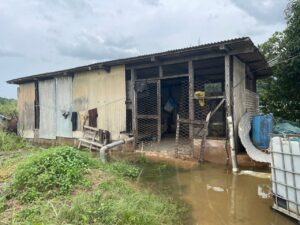
“In total, we had about 20,000 fish. We can’t quantify those that have been lost because the water level is still rising. However, a few of them will remain. We were also able to salvage some to high ground,” he added.
Poor Communication From The VRA
Dr. Etornyo Agbeko was disappointed in the Volta River Authority (VRA) for the poor communication of its activities regarding the spillage.
“We don’t seem to have a reliable source of communications. I believe that institutions and fish farmers that would be affected should be communicated to. A few circulars were there but CSIR, water research, and ARDEC were completely left out because perchance I cited one of the documents and we were not captured as one of the first to be hit by the spillage, meanwhile, we provide broodstock for the industry.”
Before the flooding, the ARDEC had secured most of its cages because VRA gave some information, and based on that they prepared against being affected, Dr. Agbeko however said when they increased the volume of spillage, “we didn’t know that the volume that would come would be as high as this so before Monday, we had almost all our cages secured. However, when they spilled without informing us, they seem to have forgotten that a whole national institution and organization that serves the aquaculture community is here and therefore measures and communications should have been given to others for us to also prepare adequately to forestall any further damage but this was not done.”
To help the state institution bounce back after the spillage, Dr. Etornyo Agbeko said “we think that VRA and other organizations that may be responsible for the flooding should come to the aid of the Aquaculture Research and Development Center at Akosombo.”
Dr. Agbeko also expressed disappointment over the aquaculture players and ARDEC being left out of an inter-ministerial committee that has been established to manage the situation.
“From the communications that we saw on some social media platforms we realised that the Council for Scientific and Industrial Research had been left out of the committee that had been set up. We think as a research institution we have experts who can issue mitigating factors and ameliorate the effects that could happen as far as impacts on human lives and other organisms like fish are concerned. However, we were left out. The Ministry of Fisheries and Aquaculture Development was also left out of the committee that was created. So we think that the needful needs to be done such that the CSIR, particularly the Water Research Institute can play a major role as far as that committee is concerned,” he emphasised.
Food Insecurity Threats
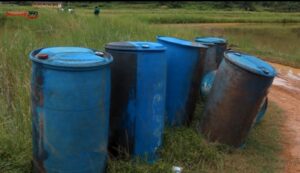
As a result of the devastation caused by the spillage, Dr. Etornyo Agbeko revealed that neighbouring countries will be starved from getting fingerlings and as well as local farmers being starved from getting fingerlings because ARDEG produces all the broodstock at their centre and were even developing generation 11 and generation 12 fish of which the majority of them have been lost to the flood adding that fingerling production within the next year will be much affected.
“Nigeria, Togo, Cameroon, Benin depend on this Centre for broodstocks and so you can imagine the extent of damage. The extent of damage is not only about Ghana, it will affect the entire West African sub-region, and food security issues are at stake because now we don’t know how many cages are still intact on the river, we don’t know how many fish are still there for us to get tilapia which is a delicacy for Christmas.”
“Most of our fish were between 700 grams, 900 grams, and 1.2kg had all been lost so even our revenue in terms of Internally Generated Funds (IGF) is also gone. I believe that other farmers will also be feeling the same thing because across the river, most farms had lost their cages and most ponds have also been inundated with water and therefore we are not certain on the quantum of fish and this is a food security issue,” Dr. Agbeko disclosed.
Possible Fish Disease Outbreak
There is also another fear that during and after the spillage, there would be a possible disease outbreak.
“There might be a lot of diseases that may be caused because fish also carries its diseases, some of them zoonotic diseases; diseases that can be transferred to human beings and so with the level of pollution and the spillage coming in, it came with a lot of debris, apart from debris there was strong stench because we are the first to be hit, there were some level of air pollution that could also be taken on and so the impact cuts across the entire value chain; water, land and air.”
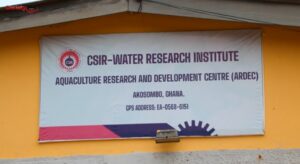
The Senior Research Scientist, Aquaculture and Environment is therefore calling on the Inter-Ministerial Committee to treat the situation with the needed urgency.
“It’s an emergency situation so the committee should also look at the health status of the fish we consume from now on. There should be a lot of water monitoring, and water quality assessment from upstream to downstream. Water samples should be taken so that you can know the endotoxin. This cannot be known until the Water Research Institute is deployed to do this exercise.”
