

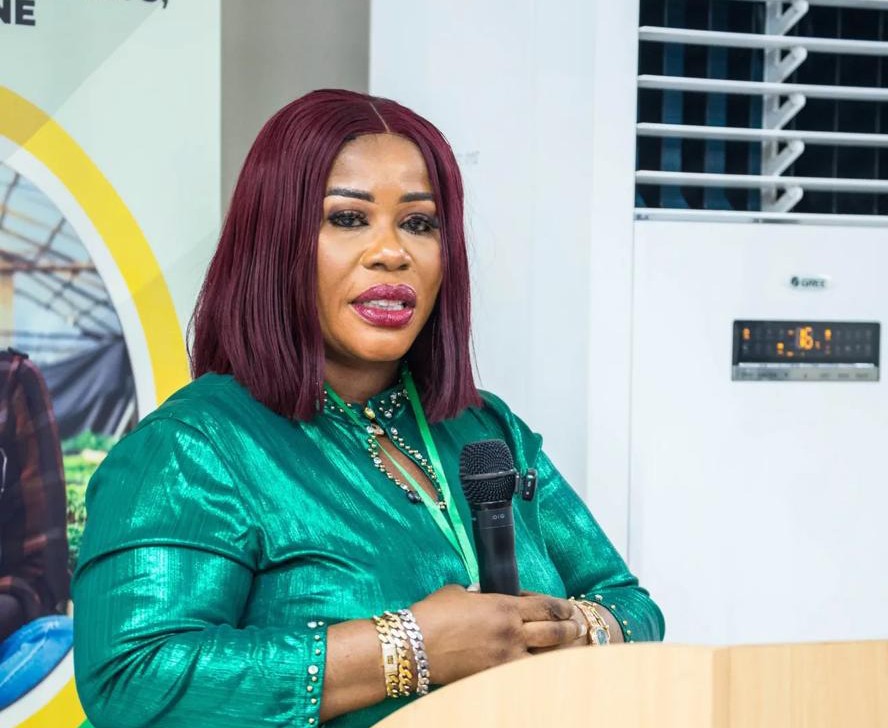
For decades, Ghana’s agricultural sector has experienced policy failures, largely blamed on the gap in research and practice to boost the sector. But the Chief Executive Officer of the African Agribusiness Consortium argues that the country has moved beyond data-driven agribusiness industry. Instead what is holding the sector back is the lack of strategic long-term policies, investments and continuity.
While delivering an address as the keynote speaker at the 8th Annual Conference of Ghana Association of Agriculture Economists (GAAE-2025), Dr. Adelaide Araba Siaw Agyepong argued that players in the agricultural space are rich with strong ideas, however, “our structures do not sustain action long enough to produce meaningful change. Implementation is often left to chance, financing is short-term, and political cycles interrupt continuity.”
Sharing her experience from countries profiting from agribusiness, she added how strong policies and political wills from these countries led to the development of their agricultural sectors.
“Before we (African Agribusiness Consortium) began, we travelled extensively to Argentina, Brazil, Thailand, Russia, Vietnam and across Asia to study how these nations had succeeded in building resilient agricultural economies. We saw advanced technologies, best practices, large agricultural machinery, various sustainable farming systems, and even fully automated farms. What we discovered was that none of these successes came solely from the process itself.”
“They succeeded because they developed strong, well-funded systems that linked research, industry, and policy in a continuous cycle. Their scientists were properly funded, their projects well-coordinated, and their policies remained stable across political changes. In other words, they created the conditions that allowed research to become practical,” Dr. Adelaide revealed.
As the leader of one of the biggest commercial agribusiness ventures that invested millions of dollars into the production and processing of different products, Dr. Siaw Agyepong has called for a robust policy that involves players and well structured institutions and finance to realise the full potential of agriculture and youth entrepreneurship.
“Until we address this imbalance, the research–practice gap will remain a symptom of deeper systemic failures. If Africa is to move from research to reality, then our approach must change.
First, financing must align with our ambitions. Agricultural research and implementation cannot depend on irregular donor support or short-term project funding. We need long-term, blended financing mechanisms that support innovation from experimentation through to adoption.”
She added that Ghana’s agricultural sector is poised for growth, calling for government and stakeholders to prioritize strengthening institutional coordination to drive a robust approach to agriculture and agribusiness, ensuring a unified framework for sustainable development and investment.
“Ministries, research institutes, universities, and private actors must operate under a coherent framework that aligns objectives, timelines, and reporting systems. We must invest in capacity, not only technical capacity, but managerial and entrepreneurial capacity that can translate knowledge into viable business models,” she emphasized.
Importantly, Dr. Adelaide Araba Siaw Agyepong called for the protection of “policy continuity. Agricultural transformation cannot happen within a single political term. It requires stable institutions that survive transitions and maintain a shared national vision.”
The African Agribusiness Consortium, a sponsor of this year’s GAAE conference, is making significant strides in Ghana’s agricultural sector, backed by substantial private sector investment.
Despite being relatively new, the company has established cutting-edge facilities and acquired advanced machinery, enabling the production and processing of various products, including rice and fish, following extensive research trips to countries with expertise in these areas.
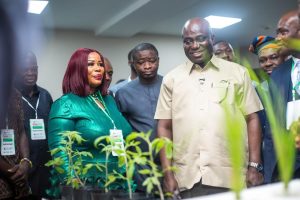
Under the theme “transforming agri-food systems in developing economies through sustainable agribusiness development,” the 3-day event was held in the Kwame Nkrumah University of Science and Technology in Kumasi. In attendance were the Minister of Food and Agriculture, Eric Opoku and other players in the sector.
