

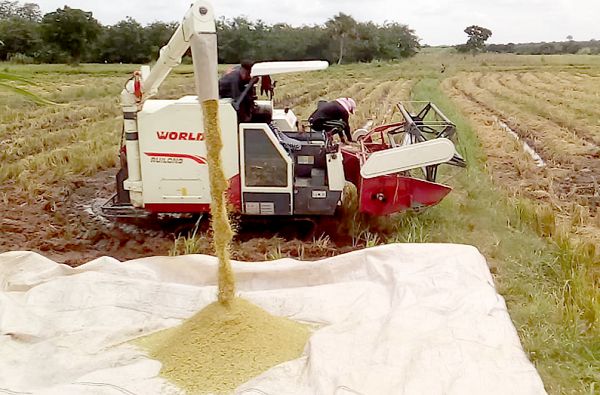
Members of Parliament (MPs) in Northern Region announced an initiative aimed at increasing large‐scale rice production as part of the broader move to create jobs for the youth.
It was revealed that Six Municipal and District Chief Executives and selected traditional leaders will be sponsored to Kenya to study the country’s commercial rice production model. Also, a similar trip will be arranged for members of the caucus to Vietnam. This is for them to learn advanced rice-processing techniques to enhance production capacity and improve processing standards in the northern zone to attract investment into Ghana’s rice value chain.
The initiative was revealed by The Majority Leader, Mahama Ayariga, during an engagement with members of the Diplomatic Corps on Tuesday, November 4.
While the formal announcement emphasises production volume and scale, the move also presents significant implications for the rice value chain .
The planned scale-up of rice production in the northern zone will present opportunities for improved linkage with input supply chains.
To raise yields and ensure commercial viability, larger plantings will require reliable access to good quality seed varieties and fertilisers.
Mechanisation services, land preparation, irrigation or drainage support, Extension services, agronomic support, Market linkages, and import substitution potential are major requirements to ensure commercial viability.
While the initiative presents potential, some critical value-chain issues must be addressed . These issues include Input cost escalation, Infrastructure gaps, Processing capacity, market risk, and sustainability.
The northern MPs’ initiative to boost large‐scale rice production signals an important shift in moving the rice sector toward commercial value-chain orientation.
Success is however dependent not just on production, but on how well input suppliers, mechanisation services, processing infrastructure and markets are linked and aligned.
If effectively integrated, the initiative has the potential to strengthen local value chains, create thousands of jobs, and support Ghana’s goal of becoming self-sufficient in rice production.
Story By: Caris Adjei London
