Close Menu

    Subscribe to Updates

    Get the latest creative news from FooBar about art, design and business.

    What's Hot

    The Solution Is There! Experts Slam Government Inaction Over Ginger Shortage

    May 18, 2026

    Farmers Sidelined As Govt Contractors Supply Imported Rice To Schools Instead Of Local Rice

    March 9, 2026

    Chocolate Company To Manufacture Lab-Grown Cocoa: What Does It Mean For Ghana’s Cocoa Farmers?

    March 9, 2026
    Facebook X (Twitter) Instagram
    Facebook X (Twitter) Instagram
    The Ghanaian Farmer
    Subscribe
    • Homepage
    • Agribusiness
    • AgriTech News
    • Livestock
    • Crops
    • Farmer’s Spotlight
    The Ghanaian Farmer
    Home » Ghana Should Learn From Burkina Faso’s Prison Labour Farm Program – Crop Scientist
    News

    Ghana Should Learn From Burkina Faso’s Prison Labour Farm Program – Crop Scientist

    SefakorBy SefakorFebruary 25, 2025No Comments3 Mins Read
    Facebook Twitter Pinterest LinkedIn Tumblr WhatsApp VKontakte Email
    Share
    Facebook Twitter LinkedIn Pinterest Email

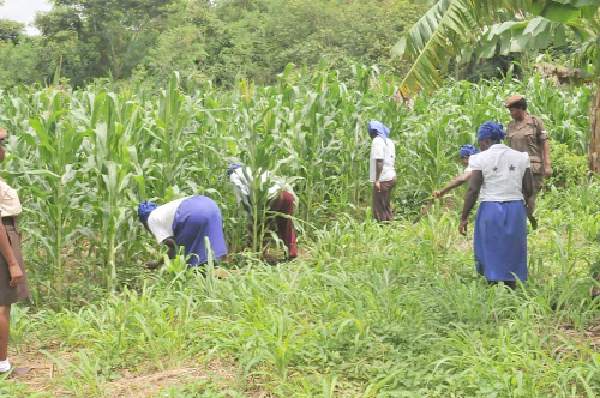
    Senior Lecturer at the Department of Crop Science, University of Cape Coast, Dr Ackah, has proposed the use of non-violent prisoners for farming to combat food inflation, inspired by Burkina Faso.

    According to him, structured targets, supervision, and skills training for the prisoners will help boost production and lower food prices.

    “Imagine a scenario where prisoners who previously stole cassava are now learning how to cultivate it. By the time they complete their sentences, they would have the skills to become self-sufficient farmers rather than returning to crime,” he said.

    With food inflation continuing to rise in the country, Dr Ackah believes that deploying non-violent prisoners to work on state farms could help increase food production and reduce prices.

    He pointed out that food inflation remains a persistent challenge because the agricultural output is failing to meet demand, and labour shortages are making it even harder to scale up production.

    Drawing inspiration from Burkina Faso, where prisoners are now working on farms to reduce their sentences, he argued that Ghana could adopt a similar approach to tackle both food insecurity and prison overcrowding. “The major challenge we have now is food inflation, and it keeps increasing because we are not producing enough,” he said.

    He also criticized the current system, where some prisoners are engaged in hard labour but without any structured benefit to the state. “Right now, prisoners work, but the money they generate doesn’t go to the state. If we properly structure this, their efforts can be directed towards increasing food production.”

    By channelling prison labour into growing staple crops such as maize, rice, and vegetables, Dr Ackah believes Ghana could ease the pressure on food prices while giving inmates a chance to learn valuable agricultural skills.

    For this initiative to work effectively, he suggested that prisoners should be given specific production targets rather than just working on farms without clear objectives. “If ten prisoners are assigned to cultivate onions, for example, they should have a target yield. If they meet it, their sentences can be reduced,” he proposed.

    This, he said, would serve as both an incentive for the prisoners and a way to ensure that their labour directly contributes to boosting the food supply. He also recommended that the government work closely with agricultural experts and prison authorities to develop a sustainable framework.

    While acknowledging that such a policy would have challenges, Dr. Ackah emphasized that proper supervision is necessary to prevent security risks. He noted that with the right oversight, including on-site security personnel and tracking mechanisms, the risks could be managed.

    Ultimately, Dr. Ackah believes that Ghana needs to take bold steps to address its food inflation crisis. He argued that while boosting local production requires multiple interventions, utilizing prison labour in agriculture is a practical and cost-effective solution.

    He urged policymakers to consider a pilot program to test the feasibility of the initiative before rolling it out nationwide.

    Share this:

    • Share on Facebook (Opens in new window) Facebook
    • Share on X (Opens in new window) X

    Like this:

    Like Loading...
    Share. Facebook Twitter Pinterest LinkedIn Tumblr WhatsApp Email
    Previous ArticleAshaiman Residents Call On Government To Set Up Agro-Processing Factory As Part Of 24-Hour Economy Plan
    Next Article Turning Hobby Into Innovation: Remarkable Journey of Priscilla Eyram, A Successful Mushrooms Farmer
    Sefakor
    • Website

    Related Posts

    The Solution Is There! Experts Slam Government Inaction Over Ginger Shortage

    May 18, 2026

    Chocolate Company To Manufacture Lab-Grown Cocoa: What Does It Mean For Ghana’s Cocoa Farmers?

    March 9, 2026

    Plantain Chips Producers Demonstrate Against Claims Of Using Plastics For Frying

    March 2, 2026

    Take Advantage Of Growing Opportunities In Agriculture – John Dumelo Tells Youth

    February 15, 2026

    Leave a ReplyCancel reply

    Demo
    Our Picks

    Remember! Bad Habits That Make a Big Impact on Your Lifestyle

    January 13, 2021

    The Right Morning Routine Can Keep You Energized & Happy

    January 13, 2021

    How to Make Perfume Last Longer Than Before

    January 13, 2021

    Stay off Social Media and Still Keep an Online Social Life

    January 13, 2021
    • Facebook
    • Twitter
    • Instagram
    • YouTube
    • LinkedIn
    Don't Miss
    Agribusiness

    The Solution Is There! Experts Slam Government Inaction Over Ginger Shortage

    By SefakorMay 18, 20260

    The conversation started in reaction to news of imported ginger from China; frustrated, practical, and…

    Share this:

    • Share on Facebook (Opens in new window) Facebook
    • Share on X (Opens in new window) X

    Like this:

    Like Loading...

    Farmers Sidelined As Govt Contractors Supply Imported Rice To Schools Instead Of Local Rice

    March 9, 2026

    Chocolate Company To Manufacture Lab-Grown Cocoa: What Does It Mean For Ghana’s Cocoa Farmers?

    March 9, 2026

    Plantain Chips Producers Demonstrate Against Claims Of Using Plastics For Frying

    March 2, 2026

    Subscribe to Updates

    Get the latest creative news from SmartMag about art & design.

    About Us
    About Us

    The Ghanaian Farmer is Ghana’s leading agricultural news and advocacy platform, dedicated to informing, educating, and inspiring farmers and agribusiness stakeholders. We spotlight innovations, share success stories, and promote sustainable practices to strengthen Ghana and Africa’s food systems

    We're open to do busines with you and amplify your agriculture business.

    Email Us: info@theghanaianfarmer.com
    Contact: +233 554830431

    Our Picks

    Remember! Bad Habits That Make a Big Impact on Your Lifestyle

    January 13, 2021

    The Right Morning Routine Can Keep You Energized & Happy

    January 13, 2021

    How to Make Perfume Last Longer Than Before

    January 13, 2021
    New Comments
    • John on Climate Change And The Need For Forest Protection In Ghana
    • Sefakor on Cashew Development In Ghana; What Has Changed? Nana Yaw Reuben writes
    • https://yourkinkinpink.com on Commercialisation Of Farming Drives Market And Investment- Rice Farmer
    • tokyovipjapanesecompanions.com on Commercialisation Of Farming Drives Market And Investment- Rice Farmer
    Facebook X (Twitter) Instagram YouTube LinkedIn
    © 2026 The Ghanaian Farmer. Designed by AJ Willz Media.

    Type above and press Enter to search. Press Esc to cancel.

    %d