

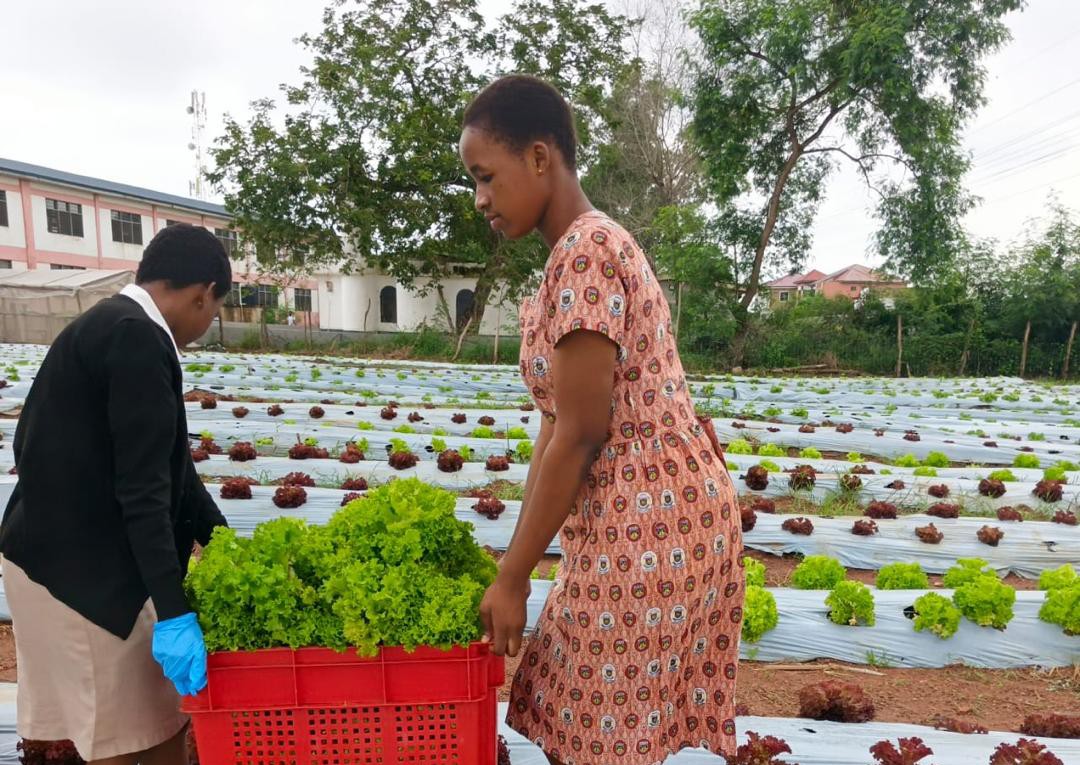
Students at West Africa Senior High School (WASS) in Accra are not just learning agriculture, they are living it. Under the sun, rows of fresh lettuce and cucumbers thrive, nourished by drip irrigation systems installed by the students themselves. What was once theory in the classroom has now become a hands-on journey into agribusiness, thanks to a support from Horticulture Business Platform (HBP), transforming how young people see farming.
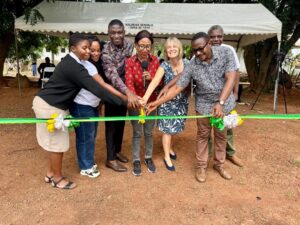
The learning Site, launched on Thursday, June 25, was a partnership between HBP the Ghana Netherlands Business and Culture Council (GNBCC), and technical partner Holland GreenTech.
The newly launched Commercial Farm and Learning Site is more than a cultivation space. It is a powerful response to one of Ghana’s pressing challenges; how agriculture can become attractive to the next generation. For decades, farming has been seen by young people as laborious and the reserve for the uneducated and the aged. Today, that narrative is shifting.
At WASS, the students are introduced to a different reality. They are exposed to how technology, innovation, and business thinking are reshaping agriculture into a profitable and modern enterprise.
Through practical exposure to irrigation, fertigation, and climate-smart farming techniques, they are beginning to see agriculture not as a fallback option, but as a viable and rewarding career path.
The HBP project creates a bridge between opportunity and ambition. The students are not only gaining technical skills but also building competencies in business planning, marketing, and financial management. These tools are critical to break even in today’s agribusiness landscape. This combination of knowledge and practice is growing a new generation of entrepreneurs ready to tap into Ghana’s growing horticulture sector.
What makes the initiative particularly impactful is its early intervention. By sparking students’ interest in agriculture at the secondary school level, it challenges long-held perceptions and replaces them with curiosity, excitement, and ambition to do more.
For many, this is the first time they are seeing agriculture through a modern lens; one that includes innovation, sustainability, and profitability. It is also a step toward addressing broader national goals: improving food security, promoting healthy diets, and creating employment opportunities.
As the HBP project flourishes, so does a new mindset among Ghana’s students and youth making agriculture look smarter, and far more promising.
Forrabe Ayer is the assistant headmaster of WASS. He described the project as a dream come true noting that agriculture was often overlooked by young people despite its enormous potential during his time as a student. He shared the school’s full commitment to supporting the initiative and ensuring its long-term sustainability.
Catherine Krobo Edusei, the HBP Board Chairperson described the farm as a powerful demonstration of what collaboration can achieve saying she’s particularly enthused about healthy eating.
“The more colorful vegetables you have in your diet, the better,” she remarked.
Delivering her remarks, Hilde Famaey, General Manager of GNBCC, commended the strong partnership that brought the project to life. She explained that through its Private Sector Development Programme, supported by the Embassy of the Kingdom of the Netherlands, GNBCC is committed to strengthening Ghana’s horticulture sector and creating sustainable economic opportunities.
HBP and its partners said the farm is opened to educational institutions, researchers, private companies, development organizations, and other interested stakeholders for learning visits, demonstration trials, collaborative projects, and knowledge exchange.
The HBP Secretariat can be contacted through info@hbpghana.org or phone number +233 (0) 552 953 873 for discussions and partnerships opportunities.
