

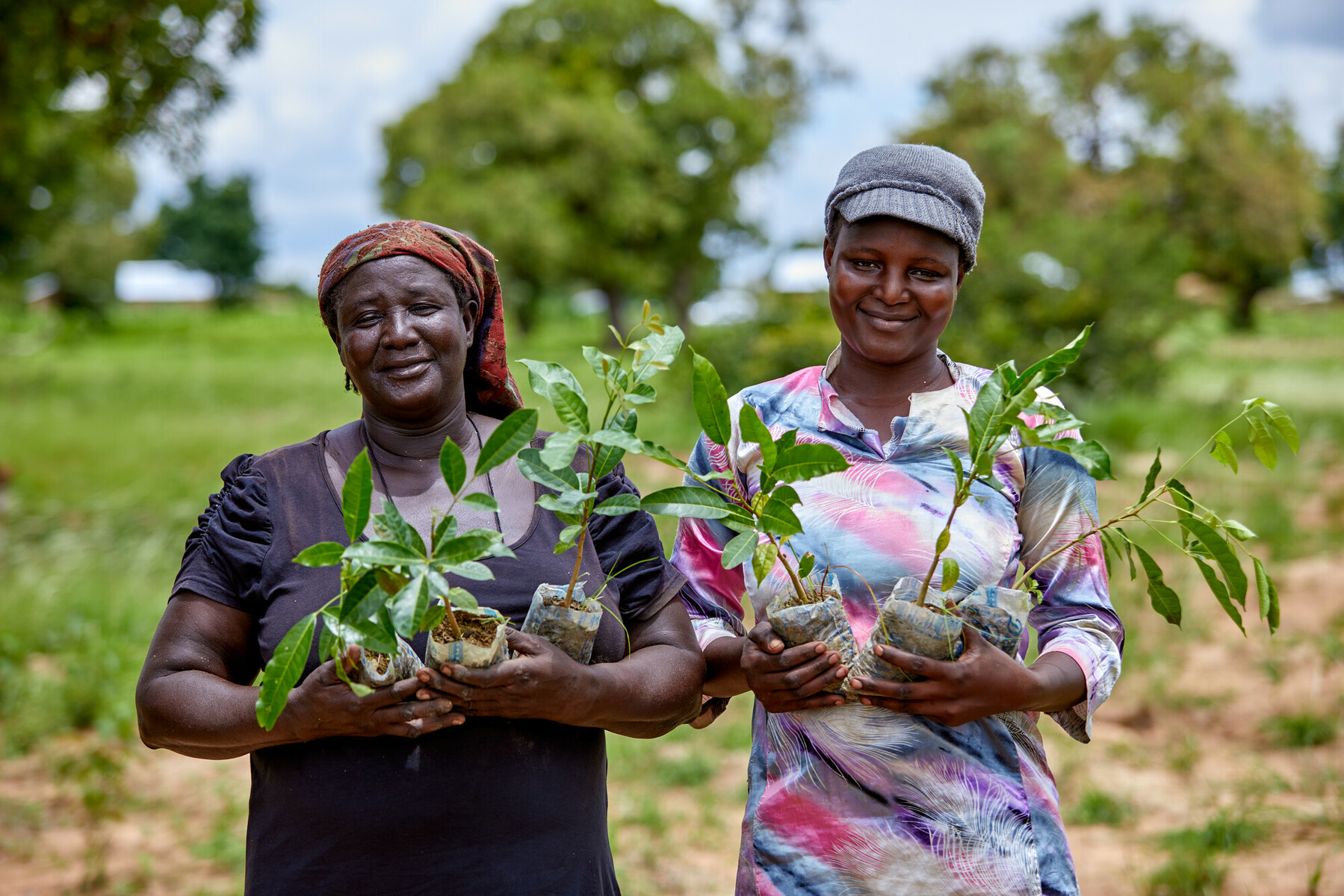
The Ho Technical University (HTU) plans to launch model baobab farms in the Volta and Upper West Regions, aiming to combat desertification and mitigate climate change effects. The ambitious goal is to plant 2,000 baobab trees—1,000 in each region—this year, supported by Atmosmare, Finland.
Professor Kenneth Fafa Egbadzor, Head of the Department of Agricultural Sciences and Technology and the HTU Baobab Research Team Lead revealed that a delegation recently visited Tanchara near Babile in the Upper West region to engage with local stakeholders. During this meeting, the project’s concept and HTU’s research achievements were presented to the chief and elders, who accepted the initiative and pledged their support.
However, challenges were highlighted, including disturbances from domestic animals and prolonged droughts. Prof Egbadzor stated that farmers would need to devise ways to protect their plants from animals and that planting would occur at the onset of the rains, with supplementary watering provided as necessary. Following discussions, the target for baobab trees was increased to 2,000, with nursery bags delivered to the Agricultural Station for seedling cultivation.
Seedlings will be allocated to individual farmers based on their capacity, and some will be planted as avenue trees in the community. Naa Naalukon-yi Waale II, Chief of Tanchara, expressed gratitude for HTU’s selection of their community and assured readiness for the project.
An innovative strategy will be developed to address the issue of roaming animals, which pose a threat to the seedlings’ growth. The team also visited Tanchara Agricultural Station, which features sustainable agriculture fields and a plant nursery.
In 2021, the department achieved breakthroughs in the domestic re-engineering of baobab seedlings, reducing their time to reach the flowering stage from the natural 14-27 years to as little as 27 months, despite challenges. This innovative approach could redefine the future of baobab cultivation in the region.
Reporting by Stephen Freeman, Accra.
