

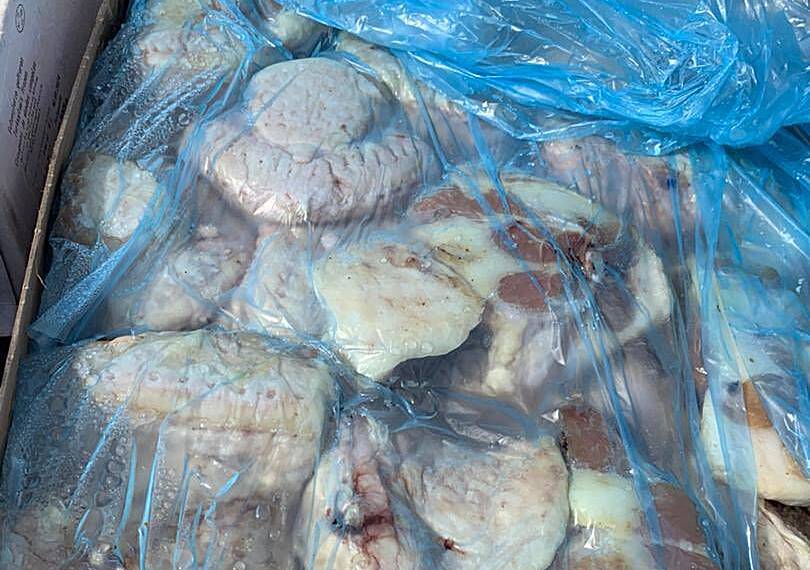
Following backlash from Ghanaians over a reminder from the Food and Drugs Authority (FDA) on the ban on turkey tail commonly known as tsofi, and why it is being sold on our streets, the regulatory body explained that it continues to appear on the market even though it was banned in
In response to criticism from Ghanaians over its renewed warning on turkey tail, locally known as tsofi, the Food and Drugs Authority (FDA) has clarified why the product is still being sold on the streets despite being prohibited since 1999.
The regulatory body stated that the banned product has proven difficult to completely remove from Ghana’s food supply chain, as importers often conceal it within consignments of other frozen products.
Turkey tail was prohibited in Ghana in 1999 due to its high fat content and the associated health risks linked to excessive consumption.
Health officials have consistently warned that the product has unhealthy levels of fat which could lead to heart disease, obesity, and hypertension among other medical complications.
Despite the prohibition, turkey tail is widely sold on streets with popular hot spots in Nsawam, Sogakope, Kpong and Winneba and in cold stores across the country raising renewed concerns among regulators and consumers.
The issue has once again been met with criticisms following intensified warnings by the FDA over the continued circulation of the banned product in the frozen food sector.
The Deputy Chief Executive in charge of the Food Division at the FDA, Roderick Kwabena Daddey-Adjei, in an interview with Citi FM admitted the challenges authorities face in detecting and intercepting turkey tail imports at the country’s entry points.
Mr Daddey-Adjei disclosed that smugglers and some importers frequently conceal the banned product among other frozen food items, making it difficult for inspectors to immediately identify it during routine examinations.
“It might be that people will use some unapproved routes. Some will even be able to use the port. But as I said, it is frozen and then it is mixed up with other items in the consignment,” he stated.
“When we are doing inspections, it is not like a 100 per cent check. You sample, then pick, and then look at it. But lately, even for those who are bringing in frozen meat, there has been a concern for some contraband.
“Authorities will be doing what we call ‘side verification inspections’ with those who bring in frozen products,” he added.
