

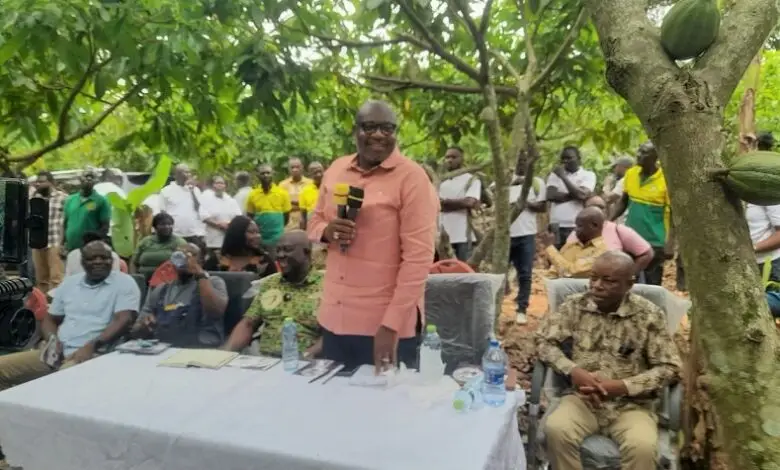
The Ghana Cocoa Board (COCOBOD) returned to profitability in 2025 on the back of several initiatives, including expanded production programmes, input support schemes and climate resilience interventions that boosted output and sales across the cocoa value chain.
After recording a loss of GH¢5.73 billion in 2024, the Board posted a net profit of GH¢5.11 billion in 2025, supported by a sharp rise in cocoa purchases and stronger export and domestic sales.
According to the 2025 State Ownership Report by the State Interests and Governance Authority (SIGA), the turnaround was driven by significant increases in cocoa purchases, export sales and domestic cocoa sales.
Aside from that, investment in production-enhancing initiatives, particularly the Cocoa Hi-Tech fertiliser programme and intensified pest and disease control interventions, rose significantly during the year, reflecting efforts to improve yields and farm productivity.
These interventions contributed to a 33% increase in cocoa purchases, which rose to 597,377 tonnes in 2025 from 448,969 tonnes in 2024. The higher volumes fed directly into export and local market supply, driving revenue growth.
Revenue from cocoa bean exports nearly tripled to GH¢35.70 billion, while domestic cocoa sales surged to GH¢12.92 billion. Overall operating revenue climbed by over 200% to GH¢48.62 billion.
COCOBOD also sustained its focus on long-term sustainability through climate-related programmes, including the Ghana Tree Crop Diversification Project, the Ghana Landscape Restoration and Small-Scale Mining Project, and the Ghana Cocoa Forest REDD+ Programme. These initiatives aim to protect cocoa farms from climate risks while improving productivity over time.
In addition to farm-level interventions, the Board intensified stakeholder engagement and market development efforts. Activities such as National Chocolate Week and producer price sensitisation campaigns were used to promote local consumption and strengthen confidence among farmers and industry players.
The combined effect of these initiatives was a significant improvement in COCOBOD’s financial performance. The Board moved from an operating loss of GH¢4.07 billion in 2024 to an operating profit of GH¢6.17 billion in 2025, while profit margins turned positive.
Operational efficiency also improved, with the cost-recovery ratio rising above 100%, indicating that revenues were sufficient to cover costs and generate a surplus despite increased expenditure on production programmes.
Beyond production, COCOBOD undertook financial restructuring measures, including the settlement of debts owed to suppliers and contractors. This contributed to a reduction in interest-bearing liabilities by GH¢2.93 billion and improved its ability to meet finance costs.
The Board’s balance sheet also strengthened, with total equity shifting from negative GH¢3.65 billion in 2024 to a positive GH¢1.48 billion in 2025.
Despite the gains, challenges remain. Liquidity pressures persist, with current assets still falling short of covering short-term liabilities, while rising receivables indicate delays in revenue collection.
Even so, the 2025 performance highlights the impact of coordinated production, sustainability and financial management initiatives in restoring COCOBOD’s profitability and stabilising Ghana’s cocoa sector.
