

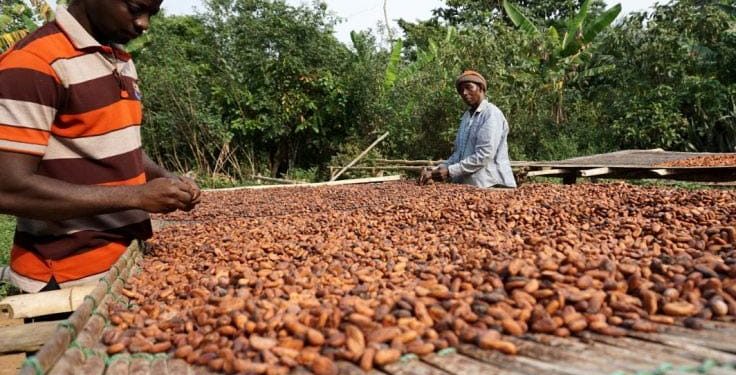
Serving as a major contributor to Ghana’s economic growth and sustainability, the cocoa sector needs to be protected with right policy decisions and interventions just as the gold industry,a Senior Lecturer at the Department of Horticulture of the Kwame Nkrumah University of Science and Technology (KNUST), Dr Eli A. Gaveh, has said.
He argues that the entire economy risks collapse if the cocoa sector goes down. Happenings including climate change, illegal mining and overaged trees are some of the factors affecting the sector in addition to aging cocoa farmers.
“We need to preserve the cocoa sector like gold and any other treasure. If we take out cocoa from the Ghanaian economy, we are going to crash the economy with its attendant consequences on the citizenry,” he said
Dr Gaveh expressed concern that the average age of the Ghanaian farmer was currently about 60 years and stated that the nation could not rely on ageing farmers to run and transform the agriculture sector.
He further urged the youth to view agriculture as not a burden but rather as an opportunity for them to meaningfully contribute to the growth of the Ghanaian economy.
Dr Gaveh made the remarks while addressing the Ghana Cocoa Innovations Hackathon 2026 event at the College of Agriculture and Natural Resources auditorium, KNUST, last Wednesday, July 22, 2026.
“As a nation, we need dedicated and committed youth who will be able to transform the nation and build a stronger economy through agriculture for the benefit of all,” he said.
He said the agricultural sector in its current state could not run effectively if the youth were not actively involved, saying “as academia, we see the youth as key players in the whole equation of agriculture”.
It was organised under the auspices of KNUST together with the Netherlands Enterprise Agency and the Van Hall Larenstein University of Applied Sciences, Netherlands, in collaboration with the Netherlands Embassy.
The event was on the theme: “Bridging the gap between industry and academia through youth-led innovation and entrepreneurship”.
As part of the event, 10 groups of students comprising six members in each group competed among themselves through presentations of innovative ideas and technologies that could transform the cocoa sector.
At the end of the contest, the group that came up with the idea to rehabilitate old cocoa farms and the establishment of a cocoa centre of excellence won the coveted prize. Each member of the group received a laptop.
Story by Kofi Nartey
