

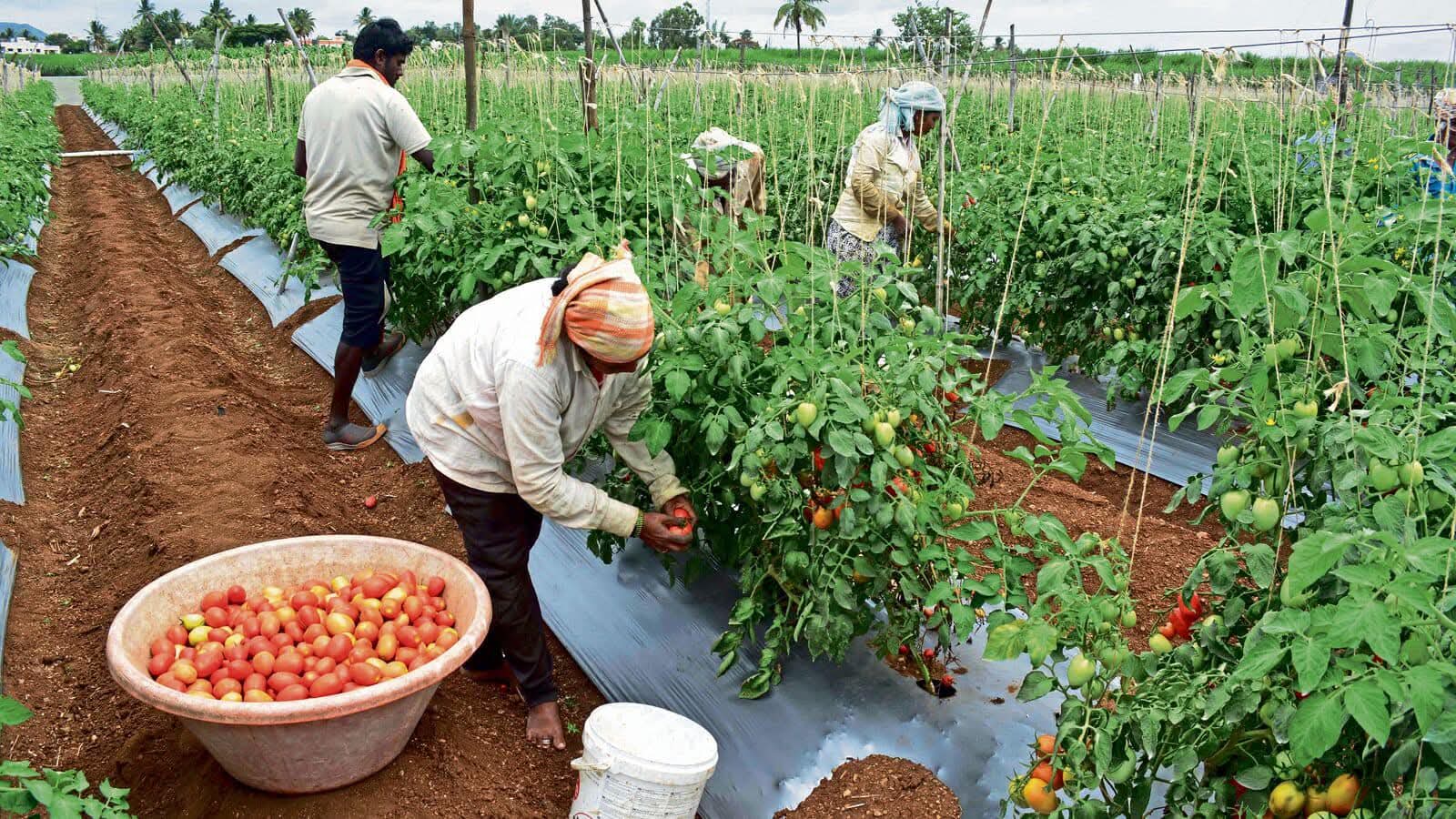
Tomato farmers in the Upper East Region are testing improved varieties developed by WorldVeg to address challenges linked to rising temperatures, erratic rainfall, pests, diseases, and limited access to quality seed.
Demonstration plots in Bonia, Gambibgo, and Goriko compared six WorldVeg varieties with local tomato varieties under field conditions. The trials included three hybrid lines, CLN4333, CLN4335, and CLN4344, and three open-pollinated BENTO varieties, BENTO-12, BENTO-18, and BENTO-19.
The hybrid varieties recorded yields of 78.5 tons per hectare, 75.8 tons per hectare, and 73.6 tons per hectare, respectively. The BENTO varieties produced between 62.8 and 67.3 tons per hectare, while the local variety yielded less than 20 tons per hectare.
The hybrids were developed for productivity, early maturity, fruit firmness, shelf life, and tolerance to heat, bacterial wilt, and tomato yellow leaf curl disease.
The BENTO varieties, released in Benin in 2025, offer bacterial wilt resistance and allow farmers to save seed for subsequent planting.
Farmers evaluated plant vigour, maturity, fruit size, disease tolerance, firmness, shelf life, and market appeal throughout the production cycle. Some farmers observed softer fruit and uneven ripening in the BENTO varieties under certain conditions, highlighting the role of crop management and environmental conditions in variety performance.
WorldVeg and Ghana’s Ministry of Food and Agriculture also conducted field days in 15 additional communities across the Upper East Region, reaching more than 1,200 farmers. Activities covered variety selection, agronomic practices, and integrated pest management, including neem extract as a plant-based pesticide.
The demonstrations included nursery establishment, transplanting, irrigation scheduling, weeding, and crop management. Farmers also compared harvested fruit and discussed how variety choice can be matched with production conditions and market requirements.
Source: Horti Daily
