

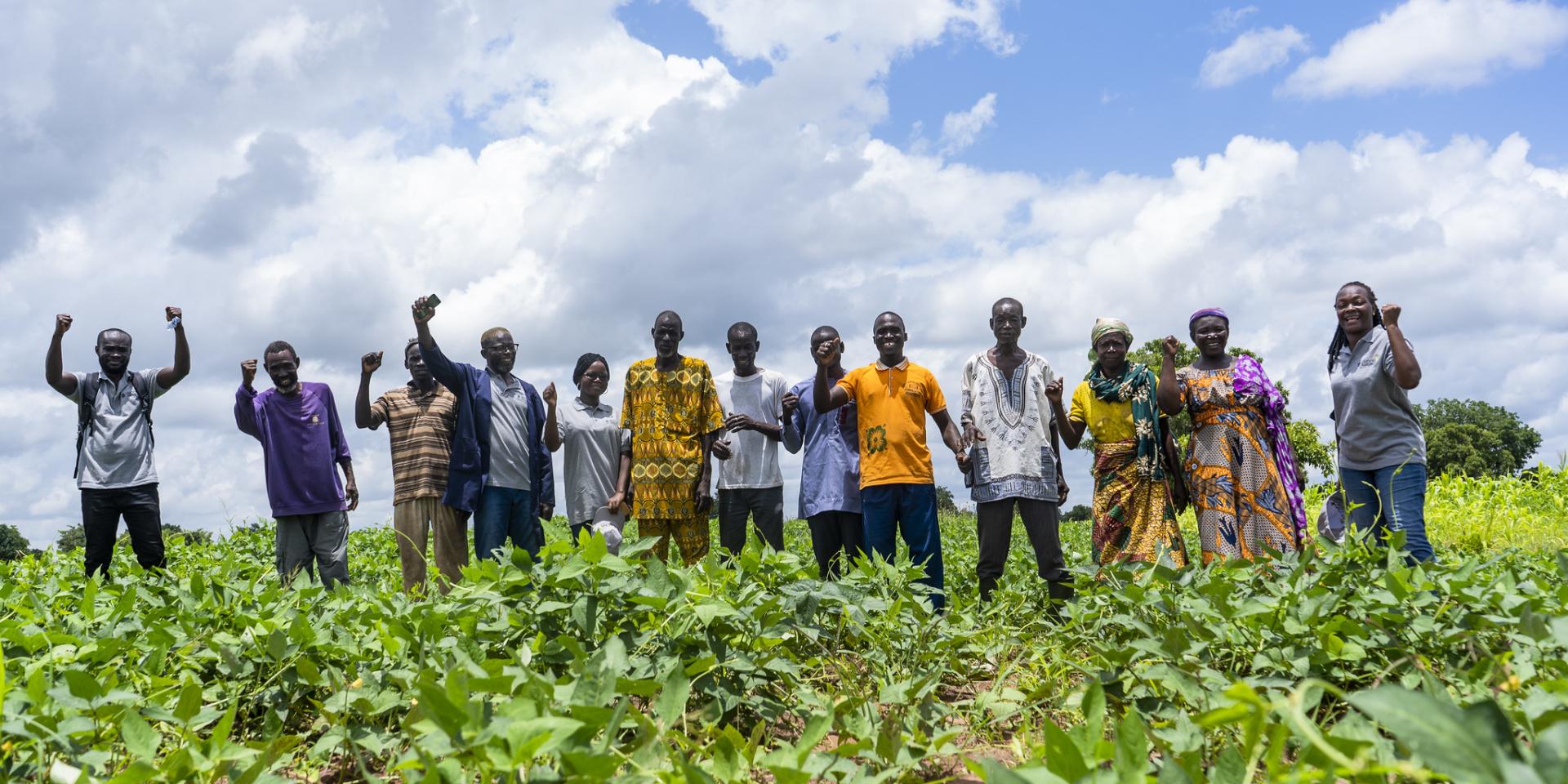
For a long time, agriculture has been limited to farming and it has been the reason unemployment has become an albatross, says the Minister of Food and Agriculture, Eric Opoku.
It is against this background that the government in collaboration with the World Bank Group and other development partners launched a project to transform agriculture into agribusiness and create employment opportunities for the youth.
“We have the enormous potential to develop the entire chain to generate jobs for the youth, Mr. Opoku told the press during the launch of the AgriConnect Compact in Accra.
Designed to strengthen food security , the project aims to reduce dependence on food imports, and unlock investment across five priority agricultural value chains; rice, maize, poultry, oil palm and cocoa.
According to a statement from the Ministry of Food and Agriculture, the AgriConnect Compact developed a unified roadmap for coordinated action between the public and private sectors, focusing on increasing productivity, expanding value addition, improving market and financial access, and enhancing resilience within Ghana’s agri-food system.
It also supports “other strategic sectors including cashew, coconut, rubber, fisheries and the forest economy,” the statement added.
In the next four years, the Compact aims to improve food and nutrition security for nearly 2.99 million people. It also aims to generate over 2.6 million jobs by 2035. The programme is projected to require approximately $3.5 billion in financing from 2026 to 2030, to be provided by the Government of Ghana, development partners, and private sector stakeholders.
Meanwhile, the World Bank Group commended Ghana’s AgriConnect Compact as a bold step toward building a more productive, resilient, and jobs-rich food system.
“By linking policy reform with investment and delivery, Ghana is creating the conditions to strengthen food security, support farmers and agribusinesses, and unlock private capital at scale,” World Bank Group Vice President for Planet, Guangzhe Chen added.
For his part, the Deputy Minister of Finance, Thomas Nyarko Ampem who announced the release of GHS1.677 billion representing 85 percent of the 2026 budget to the Ministry of Food and Agriculture during the launch of the programme said the AgriConnect Compact is “Ghana’s moment to feed itself, employ its youth, build competitive industries and create wealth from its own soil.”
The initiative is structured to enhance domestic production, improve resilience, and strengthen the competitiveness of the rural economy. Key focus areas include irrigation, improved seed systems, mechanization, farmer support services, agro-processing, and logistics to ensure greater local production, processing, and distribution of food.
The Compact also emphasizes stronger coordination and collaboration among government, development institutions, agribusinesses, and farmer organizations.
About AgriConnect
AgriConnect is a global initiative by the World Bank Group aimed at transforming farming systems for 300 million smallholder farmers by 2030. Key partners include the African Development Bank (AfDB), the Inter-American Development Bank (IDB), the International Fund for Agricultural Development (IFAD), Google, and Bayer.
The Ghana AgriConnect Compact is a long-term national initiative aligned with the country’s broader ambitions for agricultural transformation, private sector growth, and economic resilience.
