

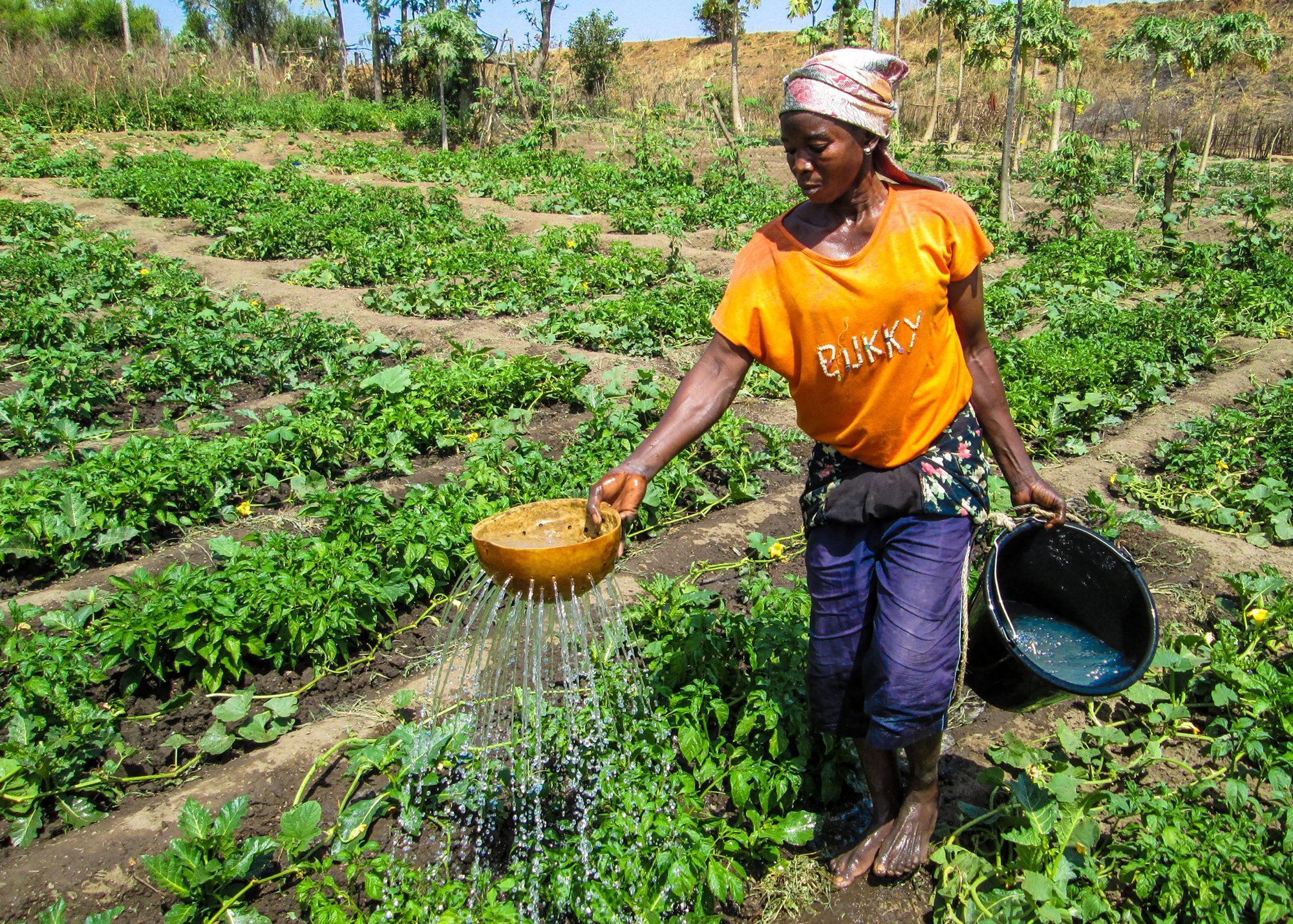
The Minister of Food and Agriculture, Mr Bryan Acheampong, has cautioned that Ghana’s food production may suffer a decline in the 2023 farming season and beyond due to the effect of climate change.
According to him, a significant reduction in rainfall, increased temperatures and floods are affecting a sector that heavily relies on rain-fed farming, adding that this may result in a one to 2.5 per cent reduction in the agriculture’s contribution to Ghana’s GDP. If food production drops by seven per cent, it could lead to poverty, malnutrition, and food insecurity.
Mr. Acheampong made this known in a speech read on his behalf by Alhaji Mohammed Hardi Tufeeiru, a Deputy Minister of Agriculture during a sub-Saharan knowledge exchange conference under the theme, “Investing in Farmer-Led Irrigation Development in Sub-Saharan Africa,” in Accra.
The two-day event, sponsored by the International Water Management Institute (IWMI), the USAID-funded Innovation Lab for Small-Scale Irrigation (ILSSI), the CGIAR Initiative on West and Central African Food Systems Transformation, the World Bank, and Water and Energy for Food, will consider best approaches for addressing the challenges and gaps in the agriculture sector through new knowledge and investment actions in a five-year-period.
The Agric Minister while acknowledging the initiatives the government has implemented so far, he also emphasized there is a need for more interventions to address the emerging issues, particularly the impact of the climate crisis. He added that irrigation is paramount to helping the sector cope with the impact of the climate crisis.
“This is where we need the continuous support from businesses, development partners, research and academia and other stakeholders to build climate-resilient food system transformation,” he added.
Meanwhile, Dr Olufunke Cofie, the Country Representative – Ghana, Regional Representative – West Africa, IWMI, has disclosed that research and practice have proven that dry season irrigation is the most effective option that could more than double the yields of farmers.
She, however, said land under irrigation cultivation in the continent was below 10 per cent and called for the need to take steps to increase it.
“When farmers are adequately empowered with better market access and all other resources their modest investment will result in substantial gains for themselves and other actors on the value chain,” Dr Cofie said.
She called for increased investment in farm-led irrigation projects adding that this will go a long way to promote climate resilience among smallholder farmers and support healthy diets.
Meanwhile, the Sustainable Development Sector Leader at the World Bank’s Ghana office, Mr Lorenzo Carrera, underscored that the agricultural sector is highly vulnerable to climate unpredictability and change because it depends heavily on rainfall.
According to him, erratic rainfall patterns harshly affect productivity as only two per cent of the country’s irrigation potential is currently utilized.
Mr Carrera believes capitalising on irrigation infrastructure and reliable access to water for agriculture can significantly increase the country’s climate resilience, and raise production opportunities and livelihoods for smallholder farmers.
On her part, Ms Amber Lily Kenny, the Feed the Future Coordinator, research has shown enormous potential for irrigated vegetable production in the country as more and more farmers have developed an interest in it.
She indicated that around 700,000 smallholder farmers in Ghana are ready to adopt small-scale irrigation over the next decade to enhance their resilience to the climate crisis.
