

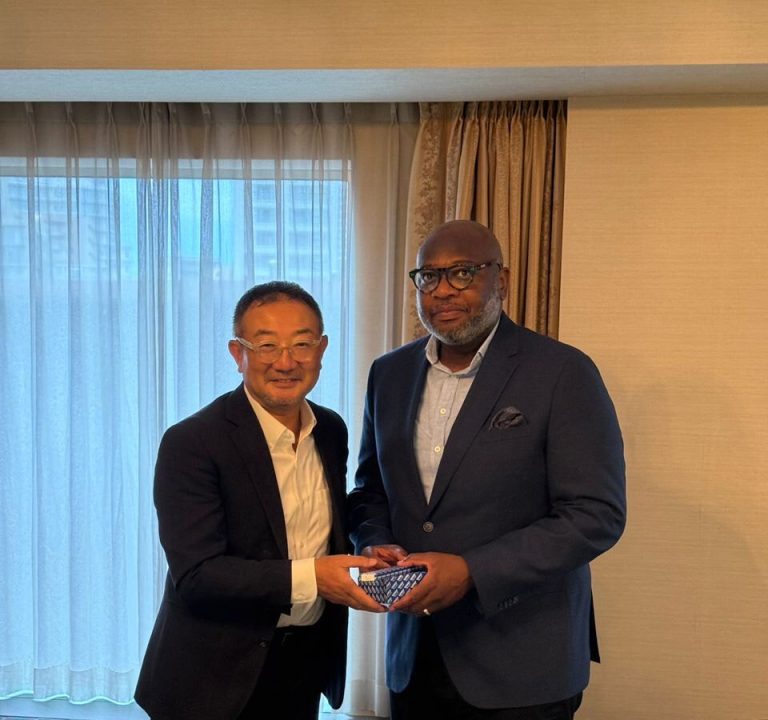
Dr. Ransford Abbey, Chief Executive of the Ghana Cocoa Board (COCOBOD), has entered into high-level talks with major Japanese chocolate producers during the ongoing expo in Japan. These discussions are part of Ghana’s push to deepen its export relationships and address long-standing issues in the cocoa sector.
Dr. Abbey reiterated Ghana’s firm commitment to supplying cocoa beans steadily to Japan, which currently sources nearly 70% of its cocoa imports from Ghana. He also presented the key challenges COCOBOD is working to resolve, including the ongoing threat of the Cocoa Swollen Shoot Virus Disease (CSSVD) and the detrimental effects of illegal mining on cocoa farms(Galamsey).
Dr. Abbey extended an invitation to Japanese partners to support Ghana’s cocoa farm rehabilitation programmes. These programmes are designed to increase yield, improve bean quality, and ensure that Ghana continues to provide premium cocoa sustainably.
Japanese executives received the proposals positively and recognized the importance of Ghana’s output to their supply chains. They expressed willingness to support COCOBOD’s initiatives.
Dr. Abbey was accompanied by several key COCOBOD officials, including Mr. Ato Boateng (Deputy CEO in charge of Finance and Administration), Mr. Jerome K. Sam (Head of Public Affairs), and Mr. Sulemana Wahab from the Chief Executive’s Office.
European Union and Japan has began testing Ghanaian cocoa shipments for heavy metals like nickel. This has raised the stakes for meeting export‑quality and safety standards. In response, COCOBOD plans to invest in more advanced laboratory infrastructure at the Quality Control Center in Tema to meet these new testing requirements.

During Tokyo International Conference on African Development (TICAD) 2025, Ghana’s President Mahama called for Japanese investment and a public‑private partnership to modernize Ghana’s Cocoa Processing Company, aiming to increase local processing and deepen value addition rather than just exporting raw beans.
Story By: Caris Adjei London
