

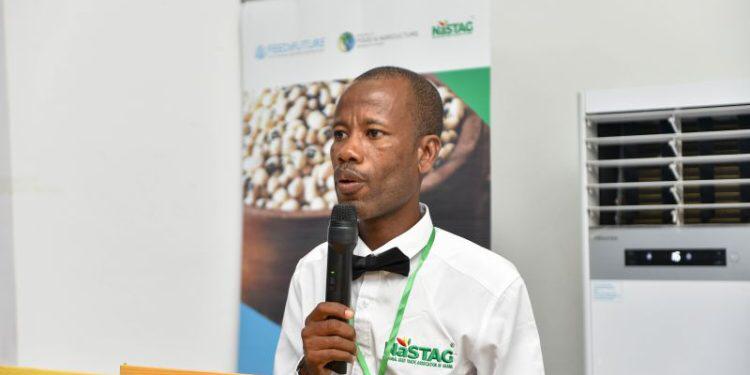
Legacy Crop Improvement Centre (LCIC) has won the 2025 Global Award for Climate Resilience Champion in Hyderabad, India. This award recognizes LCIC’s commitment in developing climate-resilient seed systems that strengthen national food security.
This recognition was awarded to Dr. Amos Rutherford Azinu, the founder and chief executive of Legacy Crop Improvement Centre( LCIC) by the Secretary General of the African Seed Trade Association (AFSTA), Dr. Diallo Yacouba.
Dr. Amos Azinu in a statement said that the recognition confirms LCIC’s profound commitment to helping solve climate problems and challenges.
“ This recognition highlights LCIC’s outstanding commitment to developing climate resilient agriculture solutions and reinforces our position as a leader in sustainable crop improvement across Africa”. He stated.
The aim of the Global Business Climate Resilience Awards is to recognize innovative solutions that strengthen resilience in communities, ecosystems, and economies through business action. It also aims to promote collaboration between organizations, governments, and businesses in driving sustainable resilience practices.
Ghana, like many sub-Saharan African countries, is increasingly vulnerable to climate-related disruptions such as prolonged droughts and invasive pests. These challenges threaten the livelihoods of millions of smallholder farmers who rely on rain-fed agriculture.
In response, LCIC has focused on developing climate-smart seed varieties including drought-tolerant maize, early-maturing cowpea, and pest-resistant sorghum. These improved seeds are designed to thrive in harsh and variable weather conditions, helping farmers maintain yields and reduce crop failure.
LCIC operates on a 200 acres farm, fully equipped with irrigation facility for seed production.It also has a 50 tons seed gene bank with cold storage facility which enables the company to store seeds in large quantities for a relatively longer time to avoid seed deterioration.
The recognition in India positions Ghana as a regional leader in agricultural innovation for climate adaptation. It also highlights the importance of investing in local research and seed systems as a sustainable solution to climate-related food insecurity.
Despite the success, some challenges remain in ensuring that all farmers especially in underserved areas can access improved seeds and technical support. Experts stress the need for continued public investment in seed infrastructure, farmer education, and extension services.
In a season of unexpected climate changes, institutions like LCIC are expected to play an increasingly significant role in protecting food systems and farmer livelihoods.
Story By: Caris Adjei London
