

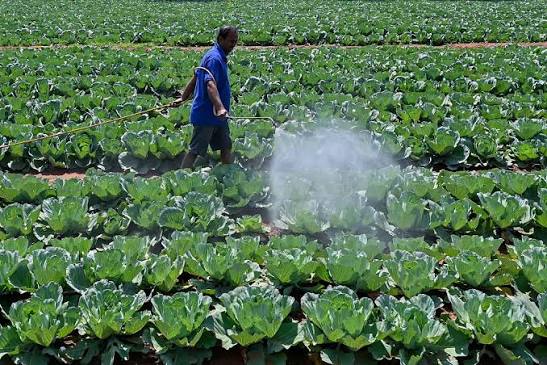
Being two of the most commonly used vegetables in urban areas due to their nutritional values, Ghanaians were alarmed to discover that the ones sourced from two markets were unsafe. Beyond individual homes, local restaurants and fast food joints rely on okro and cabbage for soups and stir fries respectively.
However, a new study conducted by the Ghana Standards Authority (GSA) on these vegetables found high levels of pesticide residue non-compliance in cabbages sold at the Agbogbloshie and Madina markets in Accra.
According to the GSA the study was conducted in May this year. It was discovered that all cabbage samples collected from the two markets did not meet safety standards for eight detected pesticides.
It states that cabbage samples sourced from Adetor, Kumasi, and Tepa exceeded the established Maximum Residue Levels (MRLs), posing significant food safety risks.
The GSA however said the study has relatively better results for okra/okro, after testing about 67 per cent of samples which corresponded with pesticide residue standards. It said the okra samples, sourced mainly from Dodowa, Kumasi, and Atomic (DVLA), were largely compliant.
The pesticides identified as being widely used include Acetamiprid, Triticonazole, Carbendazim, Emamectin, and Dimethoate.
“The results indicate that most okra samples met acceptable food safety standards, with four out of six samples complying with residue regulations. However, two samples from Agbogbloshie Market exceeded permissible limits for Dimethoate and Triticonazole,” the report noted.
While cabbage recorded higher levels of the pesticide residues, the GSA added that okra generally presents a lower risk of pesticide contamination. But there are concerns regarding pesticide management practices among some producers.
The report said all six cabbage samples exceeded at least one MRL, meaning none met established safety standards.
“The repeated occurrence of multiple pesticide exceedances suggests a higher reliance on pesticide applications in cabbage production compared to okra,” it said.
The GSA report linked the problem to possible over-application of pesticides, improper mixing, failure to observe pre-harvest intervals, and inadequate farmer knowledge the safe use of pesticides.
The study was sponsored by the Centre for Indigenous Knowledge and Organisational Development (CIKOD), a non-governmental organisation, to support its work in promoting agroecology and sustainable food systems in Ghana.
The findings were presented at a stakeholders’ dialogue in Accra on Friday, June 26, to establish actionable policy recommendations that can boost agroecological farming systems and strengthening collaboration among stakeholders to enhance food safety and environmental sustainability.
The Director of Programmes at CIKOD, Mr Wilberforce Laate said the research targeted commonly consumed vegetables due to their importance in the Ghanaian diet.
He said that the pesticide residue assessment was also part of efforts to come up with evidence on contamination levels and raise public awareness on food safety risks associated with conventional farming practices.
Mr Laate said the GSA analysed 12 vegetable samples; made up of both okra and cabbage; screening for a wide range of pesticide compounds, including insecticides, fungicides, herbicides, acaricides, and plant growth regulators.
The laboratory analysis assessed both the presence and concentration of pesticide residues and evaluated compliance with established MRLs.
He said the findings shows the widespread pesticide management challenges and underscored the need for increased farmer education, stronger monitoring systems, and greater investment in agroecological practices.
Mr Laate said admonished the public to invest in backyard gardens to grow essential vegetables as part of efforts to improve food safety.
Mr Chaka Ozondu, a Food Systems Analyst, highlighted the health risks associated with prolonged consumption of pesticide-contaminated foods, including neurological disorders, endocrine disruption, reproductive health issues, and certain cancers.
He explained that pesticides could spread through soil, water, and air during application, posing additional environmental and health risks.
Mr Ozondu noted that while some of the pesticides identified are banned in foreign markets, they remain accessible in Ghana, increasing the risk of misuse.
He said excessive pesticide residues could cause skin and eye irritation, nausea, and liver damage.
He urged consumers to thoroughly wash fruits and vegetables with clean water before consumption and encouraged farmers to adopt the use of biopesticides.
Mr Bismark Nortey, Executive Director of the Peasant Farmers Association of Ghana, stressed the importance of collaboration to achieve food safety.
He highlighted the role of the Ghana Agroecology Movement, a coalition promoting nature-based farming practices rooted in indigenous knowledge systems.
“There is evidence that agroecology can be practised on a large scale. There are systems, tools, inputs, and personnel to support its implementation,” he said.
The event brought together stakeholders from the Ministry of Food and Agriculture, Food and Drugs Authority, GSA, civil society organisations in the environment sector, and farmer groups.
