

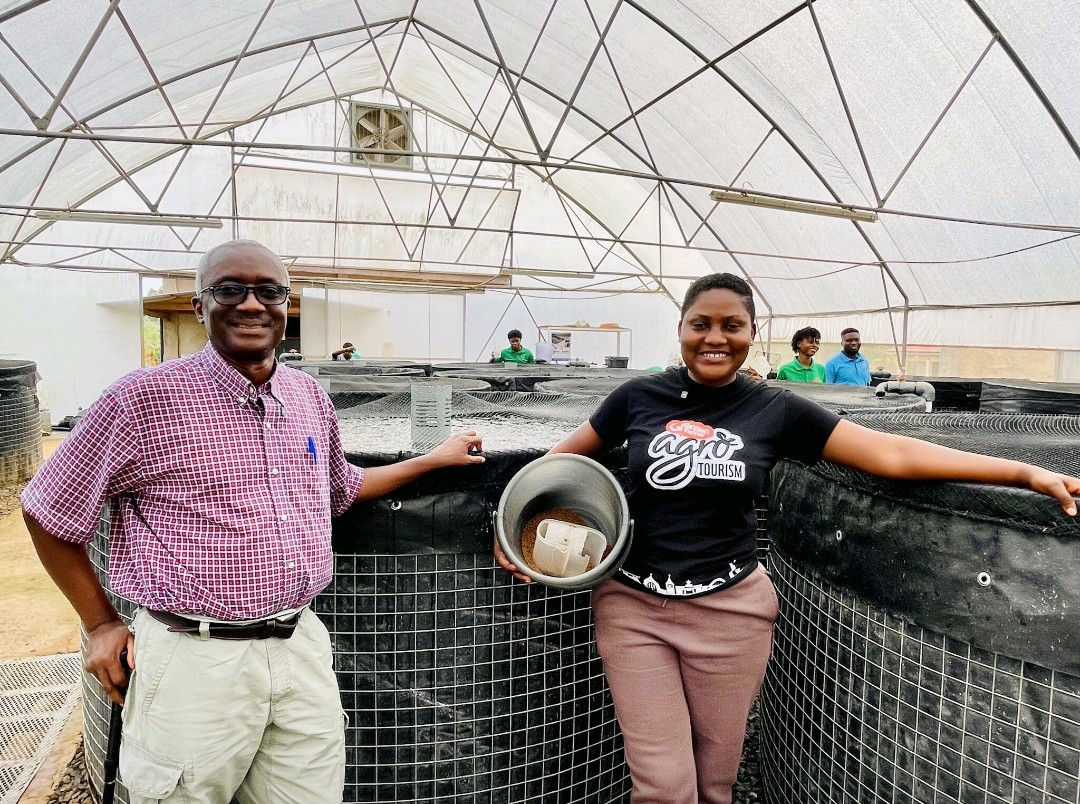
In the heart of Ghana, on a sprawling four-acre land at Adenya junction, Kokoomu in the Eastern Region, lies Mordecai Farms, a beacon of innovation and sustainability in aquaculture and agriculture.
Founded by a retired Portfolio Manager/Fund Manager, Seth Boakye-Dankwah, the farm is named after Mordecai, a biblical figure known for his wisdom and leadership. Mr Boakye Dankwa’s vision was to create a farming enterprise that not only generates wealth but also promotes environmental sustainability and empowers the youth of Ghana and beyond.
Mordecai Farms is proof of modern farming techniques. The farm uses a recirculating aquaculture system (RAS), a method widely used in Israel, which is both capital-intensive and highly efficient. This system ensures that water is treated and reused, minimising environmental pollution and reducing the risk of contamination of the fish being nurtured.
This commitment to sustainability extends to the farm’s use of solar power and its integration of aquaculture with agriculture through greenhouses, where wastewater from the fish tanks is supplemented and used to water vegetables in three greenhouses nearby. The greenhouses cultivate tomatoes, bell peppers and other varieties.
The aquaculture operations are divided into several units, which include an incubation unit for spawning and hatching, a fry unit where the young fish are carefully nurtured, and holding tanks where the fish grow to maturity.
Modecai Farms specialises in catfish, a decision made by Mr Boakye Dankwa after considering the popularity of tilapia but opting for a species that could be more sustainably farmed.
Each tank can hold up to 2,500 fish, and the farm has implemented measures to reduce mortality rates, including oxygen generators to ensure the fish have enough oxygen, clean water, food and the required temperature for their survival.
In an interview with The Ghanaian Farmer TV, Mr Boakye Dankwa also explained some of the challenges he faced in the initial stages of the farm.
“We lost over 25,000 fingerlings in our first attempt to test the stability of the system after construction by Green Life Agri of South Africa. They trained some of my workers on how to man the facility,” he said.
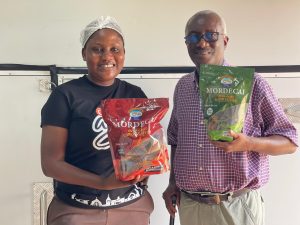
Modecai farm has grown into a thriving enterprise that now supplies its smoked and packed fish to major markets like Max Mart in Accra, as well as Opoku Trading in Kumasi.
Mordecai Farms is not just about production; it is also about people. With 11 employees and a focus on creating a positive work environment, the farm emphasises hygiene, health, and safety, and the Ghanaian Farmer crew were no exception.
Taking The Ghanaian Farmer TV team on a tour of the fish processing facility, the Processing Manager, Linda Yeboah, gave details on how the catfishes are hygienically handled before they are even taken into the smokeless oven.
“We are processing food for consumption, and it is very important to make sure that, we are in the appropriate PPEs. The safety of our workers is ensured, as well as the consumers. We harvest the fish, gut them, and wash them thoroughly with salt water a number of times to take away the fishy smell before we process them for the smoking process. Our products can be on the shelf for six months to one year if the seal is broken and refrigerated,” she added.
Modecai Famrs also has an ice maker, producing enough ice to keep the fish fresh for consumers who prefer fresh fish to smoked ones.
The farm manager, Emmanuel Amankwanor Tetteh also gave details on how the recycled water from the catfish is used for the watering of vegetables being grown in three greenhouses nearby.
“ This farm is committed to environmental sustainability and conservation, and so we don’t discard the wastewater from the catfish farm; instead, we add some fertiliser nutrients to the water and use it to irrigate these three greenhouses through fertigation. And we intend to establish three more additional greenhouses to produce more variety of crops for consumption; our own small way of contributing to food security and employment”, Mr Tetteh said.
Mr. Boakye Dankwa’s vision extends beyond the farm itself. He believes in the transformative power of farming and hopes to inspire young people in Ghana and beyond to embrace agriculture as a viable and profitable career.
However, he is also aware of the challenges facing the industry, including fragmented markets and the need for greater government support.
The founder of Modecai Farms is, therefore, advocating for policies that would create a more conducive environment for investors and for increased funding for agriculture to ensure that farmers produce more to meet the growing demand for food and the reduction of unemployment rates in the country.
Reporting by Stephen Freeman, Akuapim North, Eastern Region.
