

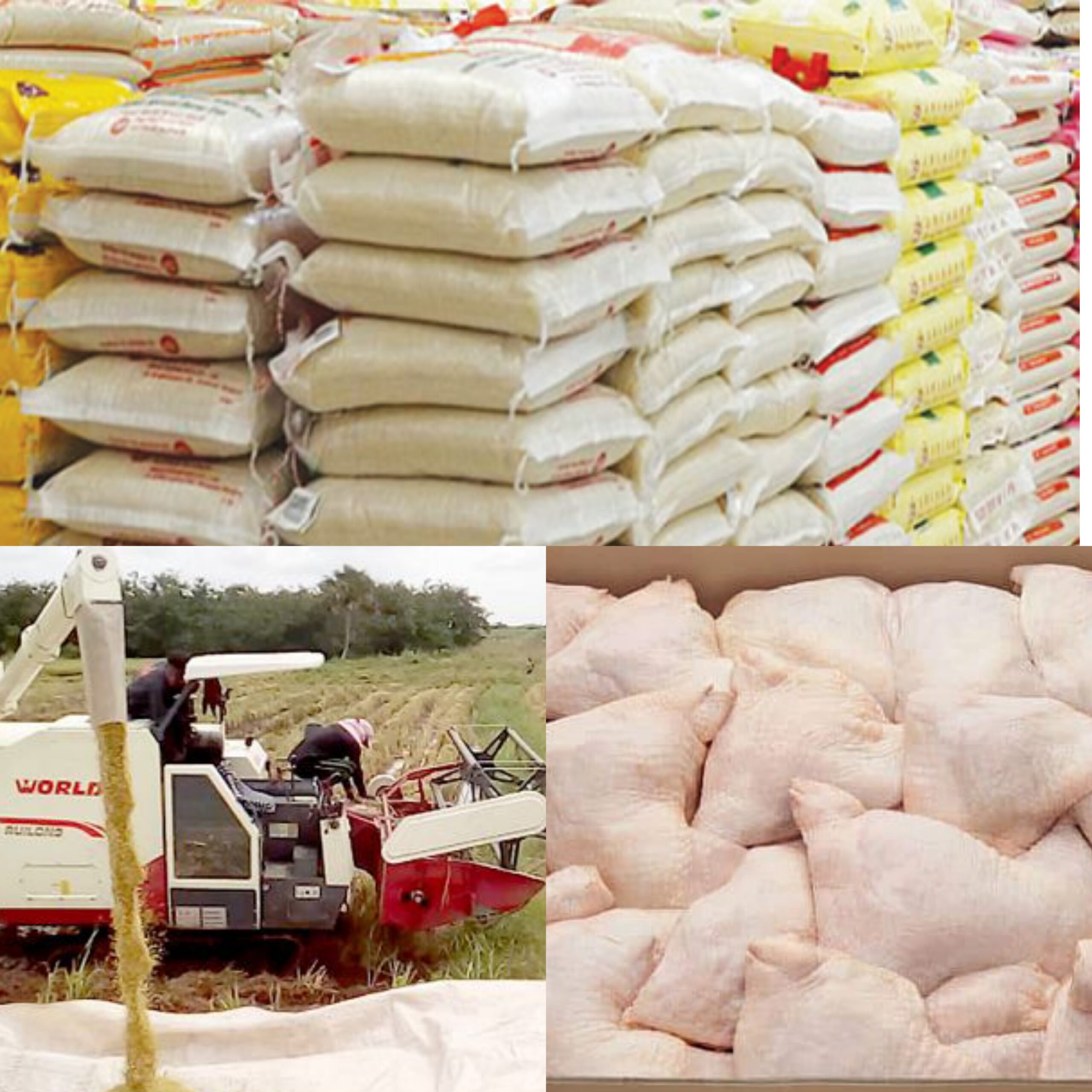
Ghana’s push for self-sufficiency in highly imported foods like rice and poultry continues to be undermined by a growing gap between policy intent and implementation, the Chief Executive Officer of Agri-Impact Limited, Daniel Fahene Acquaye has warned.
“The policy, the political will, and the political practice,” he said, describing it as a persistent contradiction in the sector.
According to him, Ghana has “strong policies that will encourage smallholder farmers to produce rice, support processors, and incentivise investment across the poultry value chain.”
“There is also the political will that we will reduce imports,” Mr Acquaye added. “But when you give licences for people to import far more than is needed, that’s political practice, and it is counter to the policy and the political will.”
The leader of the Agricultural Consulting Firm stated that in both rice and poultry, this disconnect is having real market consequences, leaving farmers and investors in distress.
“We keep experiencing this kind of unfortunate political practice that negatively affects the agribusiness industry,” the CEO of Agri-Impact Limited said.
On rice, the impact of the disconnect between political will and implementation is visible across the value chain, from farmers to millers.
Many rice farmers across growing areas in the Volta, Greater Accra and northern belts have been dealing with gluts for the past two years, with some struggling to get storage for the paddy rice.
A visit to some warehouses and milling centres in Asutuare and Dawa in the Greater Accra Region observed thousands of tonnes of unsold rice, while others are unharvested in the fields.
“If we decide to consume locally produced rice, where quality is good, and price is competitive, we will create markets for processors, who will then buy more from farmers,” Mr Acquaye explained.
He stated that stronger domestic demand could accelerate Ghana’s rice self-sufficiency drive, particularly as investments in irrigation, seed systems and milling capacity begin to scale.
But imports continue to dominate consumer taste.
“The consumer is part of the solution,” he added. “If we choose local, we strengthen the entire chain.”
While recalling a study by Agric-Impact on the poultry value chain in Ghana, Mr Acquaye said the industry presents an even sharper contradiction.
“Poultry products are highly imported into the country,” he said, despite growing local capacity at competitive or even lower prices.
“We’ve done analysis… in some situations locally produced chicken is at par with imported, and sometimes even cheaper,” he said. “But consumers still have it in their minds to consume imported products.”
He expresses worry that this perception gap, combined with high import volumes, is curtailing the growth of domestic poultry producers, even when they are price-competitive.
The Agric-Impact CEO believes aligning import licences with domestic production capacity while driving a deliberate shift in consumer behaviour is critical to unlocking growth in both sectors.
Until this happens, the gap between policy, political will and political practice will continue to limit Ghana’s ambition for drastic reduction in rice importation and poultry sector expansion.
The Annual International Merchandise Trade Statistics Report by the Ghana Statistical Service, released in July 2026, revealed that processed cereal grains were the country’s largest food import, valued at GH¢2.94 billion and accounting for 8.1 per cent of total food imports.
Frozen chicken took the second place at GH¢2.84 billion.
Rice featured twice among the country’s top food imports, with semi-milled or wholly milled rice valued at GH¢2.39 billion, while broken rice accounted for another GH¢1.19 billion.
