

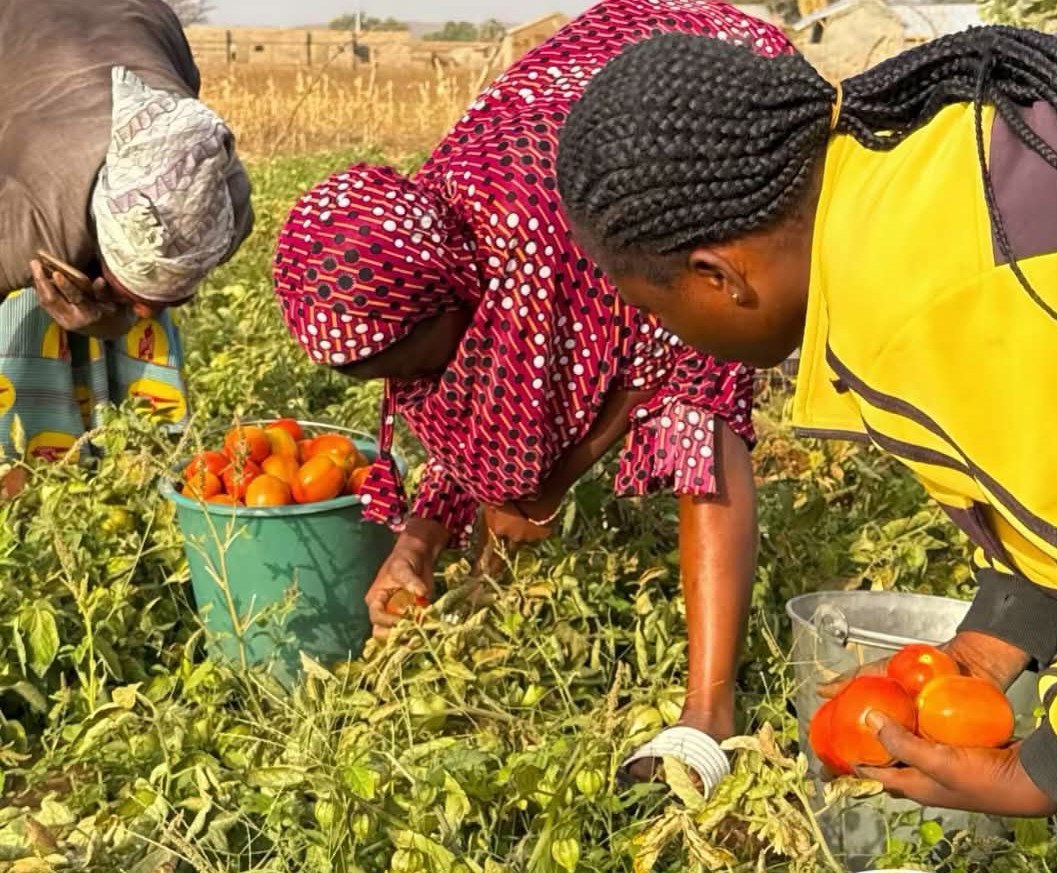
As Ghana pushes to increase tomato production to gain self-sufficiency, the Chamber of Agribusiness Ghana is raising concerns about how that can be achieved, warning that the already-existing supply gap could reach 400,000 metric tonnes when post-harvest losses are factored in.
The Chamber says producing an additional 100,000 tonnes under the Ghana Tomato Self-Sufficiency Initiative (GHATSI) launched in Anloga in the Volta Region on September 15 will not be sufficient to close the gap.
In an interview with Citi Business, the Chief Executive Officer of the Chamber of Agribusiness Ghana, Anthony Morrison, says the annual tomato demand is estimated at about 800,000 metric tonnes, against peak domestic production of approximately 510,000 tonnes.
This leaves the country already facing a supply deficit of about 290,000 tonnes.
But Mr Morrison says the situation gets dire when post-harvest losses, estimated at between 20% and 30%, are factored into the equation.
“That tells you that our peak supply gap is around almost 400,000.”
His comments come shortly after the launch of GHATSI, seeking to produce 100,000 tonnes of tomatoes from more than 10,000 acres across 35 districts in 10 regions for the 2025/2027 crop season under a public-private partnership with Farmmate Africa.
The Chamber welcomed the government’s plans to increase domestic production, but said it must provide greater clarity on the lingering questions underpinning the 100,000-tonne target.
Mr Morrison wants explanations on whether the additional output will come from new farmers, expanded production by existing farmers, increased acreage, or improved yields.
“How do we mitigate that about working around bringing on board an additional 100,000? Are these additional 100,000 new farmers or already existing farmers?”
He also questioned whether the more than 10,000 acres identified under the initiative represent entirely new farmland or an expansion of acreage already under tomato cultivation.
“If they are already existing farmers, is their current crop size being increased? By what? Who is doing the data analysis?”
For the Chamber, the distinction is critical because simply counting acreage without establishing the expected yield per acre may not provide a reliable measure of the initiative’s potential contribution to national supply.
Seed performance
The Chamber also raised concerns about the performance of some tomato seeds distributed to farmers under government-supported programmes.
Mr Morrison said data being compiled by the Chamber revealed challenges in some parts of the country.
“From our data that we are currently building up, there are already challenges with some of the seeds that have been distributed across the country,” he says.
He cited parts of the northern regions and the Ada area, where some farmers have reportedly recorded poor results.
In Kpetoe in the Volta Region, he said farmers began late-season tomato production after disappointing outcomes from earlier cultivation.
These concerns, the Chamber said, could have implications for the 100,000-tonne target if seed performance translates into lower yields or forces farmers to replant, delay production or incur additional costs.
The Chamber is further questioning the decision to implement the tomato self-sufficiency initiative through a single private-sector partner.
“For me, that is a problem.”
Mr Morrison believes that working with other large-scale tomato producers in the industry under the programme can broaden production capacity and reduce implementation risks.
“We need to be working as an inclusive system that governs key players to be able to address this,” he says.
