

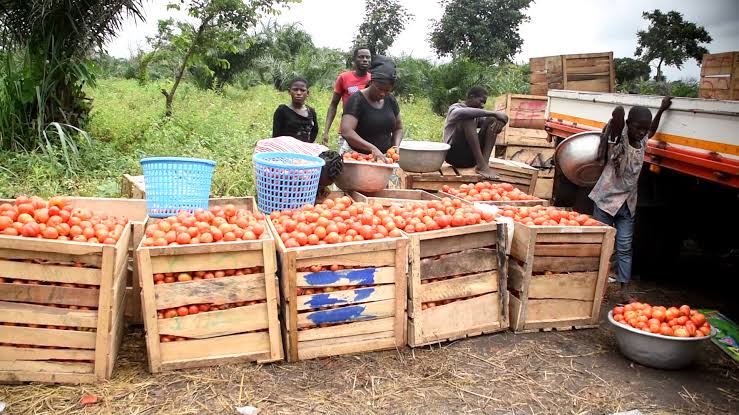
Until a few months ago, consumers endured the hike in prices of food produce, especially tomatoes, a must-have ingredient in most Ghanaian homes. Irrespective of the fact that the country consumes a lot of fresh tomatoes, it is largely imported mostly from neighboring Burkina Faso and the paste and concentrate from Ghana to meet its domestic demand.
However, it’s usually heartbreaking during the peak season for majority farmers as they struggle to sell off their harvests.
Even though the situation has improved now, tomato farmers across the country appealed for support from both the government and individuals to help buy the produce in order to recoup their investments.
A box (adaka) of tomatoes which increased by more than 360% in less than six months: January 2024 – GH¢1,500, June 2024 GH¢6,000 to GH¢7000 and around the same figure in 2025 sold at GH¢500 to GH¢700 in markets in Accra and as low as GHC100 at farm gates.
Recently farmers in Agortime Ziope in the Volta Region lament over post-harvest losses as they were unable to get buyers to offload their harvest for even GH¢100. Some farmers in the community claimed they have abandoned their farm because continuing to harvest is not worth it.
The ordeal of these farmers in a country that heavily relies on tomato imports to meet its domestic needs has become an annual cycle. Governments upon governments have made promises to address the situation by building processing centres for value addition but these proposed interventions have not become a reality. Those that were established became white elephants after a short period, largely due to mismanagement and lack of raw material all-year to feed the factories.
According to the Minister of Food and Agriculture in an interview with Citi FM in April 2025, “every year, we spend GH₵4 billion on the importation of tomatoes from Burkina Faso. If Burkina Faso is able to produce tomatoes, why is it that we cannot do it here in Ghana, in spite of the fertile soil that we have and all the agricultural endowment.”
The conversation on establishing processing facilities is rife again with some Ghanaians on social media calling on the Mahama-led administration to intervene.
This followed a news publication which said the President had ordered 1,000 boxes of fresh tomatoes to be supplied to Senior High Schools, a move to support farmers who are crying over their loss.
A $16 million wholly-owned Ghanaian Weddi Africa Tomato Processing Factory set up in the area under the One-District-One Factory (1D1F) initiative of the previous administration in the Bono Region was shut down from commercial operation because of lack of fresh tomatoes to feed it.
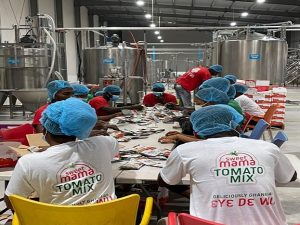
Situated in Berekum West District, one of places known for commercial tomatoes production, it was processing 40,000 metric tons of fresh tomato per annum, which translated into 720 crates of tomatoes per shift per day, with the factory also possessing a 500-metric ton cold room facility to store fresh tomato fruits.
Farmers in the area believe revamping the factory under the President John Mahama-led government’s 24-hour economy, would not only make the sector attractive but also boost local employment.
Earlier this year, the Ministry of Food and Agriculture gave another assurance of ending tomato imports from Burkina Faso with the launch of the Feed Ghana programme. Local farmers will be given the needed support to produce on large scales. However, processing centres to make the sector more attractive is equally important to avoid losses.
According to the Minister of Food and Agriculture, Eric Opoku, the government is targeting this through a wide-range agricultural programme that also includes new irrigation projects, a soya processing plant, and a decentralised buffer stock system.
Until Ghana finds a way to process tomatoes during the peak season, farmers will continue to make losses thereby defeating the agribusiness drive agenda. There needs to be a transformative drive to also enable all-year production to create more job opportunities.
